
The FBI captured a fraud suspect living under an alias in Jamaica and brought her back to the U.S. to face charges tied to an alleged $32 million COVID relief theft, while officials note this arrest is part of a wider effort to recover people accused of pandemic-era scams.
The woman identified as Elaine Angene Escoe, 41, was living in Jamaica as “Harley Newman” when authorities arrested her and returned her to face a federal indictment. She was charged in 2025 with conspiracy to commit wire fraud, conspiracy to commit money laundering, and multiple counts of money laundering tied to COVID relief programs.
Escoe is accused of stealing roughly $32 million in emergency funds intended for struggling businesses and individuals during the pandemic. When she failed to appear in court in May 2025, a judge issued an arrest warrant and the FBI followed a tip that led to her arrest overseas.
“This Most Wanted Fraudster allegedly obtained tens of millions in COVID-19 relief, stealing critical resources from legitimate businesses during a national crisis,” acting Attorney General Todd Blanche said. “She fled the country believing she could escape justice but ultimately could not,” he added. “Those who exploit taxpayer-funded programs will be held accountable by this Department of Justice, no matter how long it takes or where they attempt to hide.”
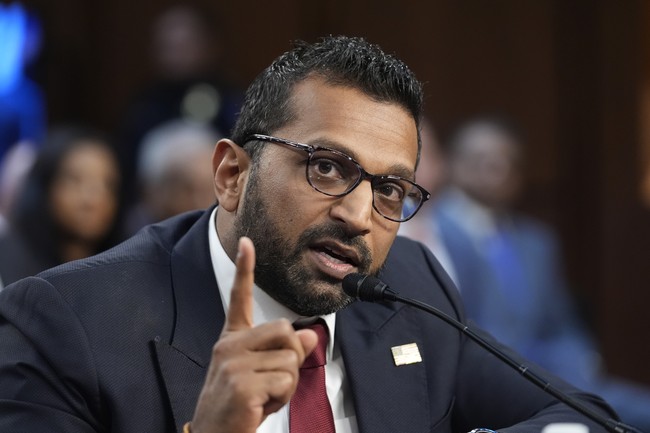
FBI Director Kash Patel emphasized that Escoe is the fourth person on the bureau’s list of alleged Most Wanted Fraudsters apprehended in the last five weeks. Patel framed these arrests as a coordinated success by the FBI and its partners to return high-value targets to the United States to face charges.
https://x.com/FBIMiamiFL/status/2081159240358511084
“The historic success of the ‘Most Wanted Fraudster’ list continues as the FBI, and our partners just captured our fourth Most Wanted Fraudster in 5 weeks, and yet another high value target returned to the U.S. by this FBI,” Patel said. “Elaine Angene Escoe, on the run since May 2025, was captured in Jamaica while living under a fake identity of ‘Harley Newman’ — and returned to the United States today to face justice.”
Patel also pointed out that the four suspects recently arrested on fraud allegations were accused of schemes that together involved nearly $1.8 billion in stolen taxpayer dollars. Those totals, while large, sit against estimates that pandemic-relief fraud could be far greater when undetected schemes are included.
Government watchdogs and audit reports have produced striking estimates for total losses tied to rushed relief programs. One watchdog identified figures that put potential fraud at hundreds of billions, and some government analyses have suggested losses in the neighborhood of $300 billion across major pandemic programs.
Those rough calculations translate to a heavy burden on households if the losses were distributed evenly. Using a $300 billion estimate, the implied cost per household is in the low thousands of dollars, and even higher if larger fraud estimates are accepted as plausible.
Authorities and watchdogs point to a mix of factors that allowed fraud to flourish: a rapid rollout of emergency programs, desperate need for speed over rigorous verification, and oversight gaps that bad actors exploited. The result was a massive transfer of funds that, in critics’ views, lacked sufficient controls or follow-up.
Arresting a handful of high-profile suspects demonstrates law enforcement activity, but it does not resolve the systemic weaknesses that allowed widespread abuse. The scale of alleged losses has prompted calls for stronger processes, tighter auditing, and more transparent accountability when federal funds are distributed in emergencies.
Critics argue that private sector financial accountability differs sharply from the public system, noting that corporate leaders face market and shareholder discipline that rarely exists for government spending. In contrast, government programs can rely on borrowing and tax mechanisms that reduce immediate pressure for fiscal discipline.
The COVID relief programs remain one of the most scrutinized spending efforts in recent memory, and the debate continues over whether prosecutions and improved enforcement are sufficient. Many observers say structural reforms are required so taxpayer dollars are better protected during future crises.
The FBI’s international arrest highlights ongoing cooperation among law enforcement agencies, but it also underscores the scope of investigative work necessary to pursue alleged fraudsters across borders. For now, Escoe’s return to the United States will begin the judicial process to determine her criminal liability in connection with those pandemic-era relief funds.

Add comment