
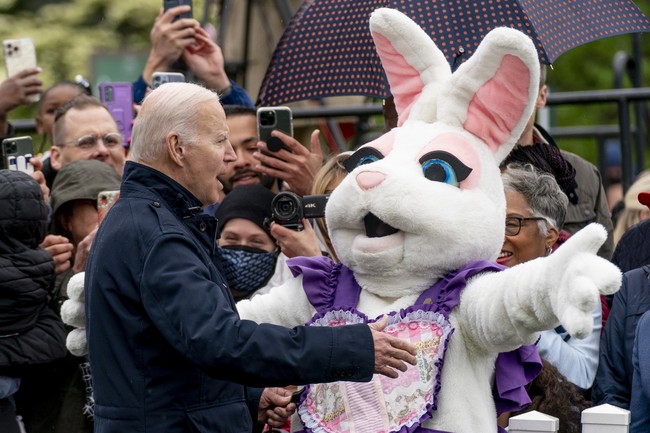
The Democratic National Committee posted an Easter image that, intentionally or not, highlighted the contrast between past and present leadership and raised questions about who they chose to spotlight and who they chose to ignore.
The post showed Barack Obama with the Easter Bunny looking toward the Washington Monument, a choice that sent a clear message about whom the party wanted tied to the holiday image. That decision is striking because Obama’s foreign policy record, especially regarding Iran, is often pointed to when discussing the messy situation America inherited. By featuring Obama, Democrats reminded people of an era many conservatives blame for emboldening hostile regimes and creating headaches for today’s commanders in chief.
There was a conspicuous omission: Joe Biden. Leaving him out of the holiday post feels less like neutral editing and more like selective memory. You have to wonder whether the absence was deliberate, a subtle way to avoid acknowledging a recent White House tenure marked by controversies that critics say damaged credibility and security.
Some Democratic-aligned accounts have leaned into nostalgia for Obama while side-stepping the Biden years, even asking if people missed someone with a “functioning brain” while pairing the question with images of Obama. That tactic highlights a lesson in political optics: nostalgia can be powerful, but it also exposes gaps in accountability when current problems are ignored. For voters who care about competence and results, the omission raises questions about what the party wants to remember and what it wants to forget.
Critics point to several moments from the Biden years that make erasure tempting for Democrats, including the infamous Easter Bunny incident where aides stepped in to manage his interactions. That episode became iconic for opponents because it seemed to underscore concerns about cognitive decline and the administration’s ability to handle high-pressure moments. Political opponents argue that when a party shields its own leader from scrutiny, it does a disservice to the public and to the standards voters expect of national figures.
Beyond viral moments, the Biden administration’s record on policy invites scrutiny. The withdrawal from Afghanistan left many Americans shaken and raised questions about planning and priorities, while immigration and economic struggles remained front-of-mind for voters worried about stability at home. Conservatives use these examples to argue that strong, competent leadership matters not just in headlines, but in lives and livelihoods.
Contrast that with how the current administration framed its weekend: focused messaging, attention on mission-critical matters, and a clear line about leaving no one behind during rescue operations. Supporters say this kind of leadership shows seriousness about national security and an ability to act decisively. They view the difference as evidence that the country is safer and more respected when leaders prioritize action over optics.
When Democrats post a sentimental image and avoid drawing attention to a recent president from their own party, it signals a priority: controlling the narrative. But narratives have limits, and voters remember outcomes. The choice to highlight a past president while leaving out a recent one sends a message that not all administrations are treated equally when history is packaged for public consumption.
The reaction to the post quickly turned into commentary about accountability and memory. For conservatives, the omission reinforces the argument that Democrats protect their own at the expense of transparency. For independents watching the political theater, it raises a practical question: which leaders are being celebrated and why, and which are being quietly shelved?
Politics is as much about symbolism as it is about substance, and holiday posts are part of the symbolism toolbox. But symbols can cut both ways, especially when the public links them to real-world consequences like foreign-policy failures, domestic turmoil at the border, and perceptions of leadership competence. Choosing which leader to showcase on a national holiday is not trivial; it reflects priorities and shapes perceptions.
In the end, the Easter image became a small but telling moment: a reminder that political messaging is carefully curated and that omissions are as revealing as inclusions. For critics, it highlights the need for honest conversation about past and present leaders and the real effects their policies had on America’s standing in the world and the safety of its citizens.


Add comment