
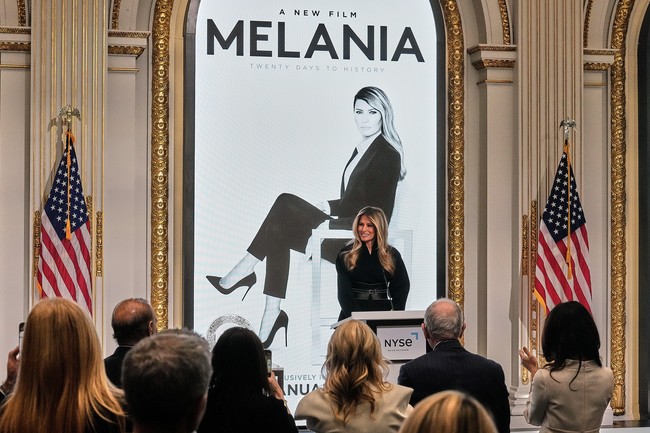
The new documentary Melania has sparked a fierce culture-war response: critics panned it, audiences loved it, and a high-profile reviewer admitted he refused to watch the film he reviewed. This piece looks at how entertainment press bias, Rotten Tomatoes’ review system, box office numbers, and theater polling combined to create a story about perception more than substance. I’ll walk through the critic controversy, the aggregate scores, the movie’s actual opening weekend performance, and why politics is coloring every takeaway. The result is less about the film itself and more about how Americans and media outlets interpret cultural events through partisan lenses.
The opening salvo came from the usual industry quarters: elite film critics who often treat politically charged projects as a test of their cultural bona fides. In that context, Melania was a guaranteed target, since anything tied to this administration invites instant tribal reaction. One reviewer, Keith Uhlich, went further than most by confessing he would not even see the documentary yet still published a scathing commentary. That confession undercuts the pretense of impartial criticism and exposes a weakness in how some outlets and platforms record “reviews.”
Full disclosure: I will never watch “Melania”. And my sole comment on it is that pondering fellow NYU alum and perennial no-talent Brett Ratner’s reinvention as idjit Leni Riefenstahl gets me all a-titter, with heartier guffaws if I imagine him on-set looking like semi-doppelgänger Jonah Hill in the “Married Your Cousin” scene from “The Wolf of Wall Street.”
That exact quote landed on Rotten Tomatoes, a site many still cite as an objective bellwether, even though the platform’s aggregation can mask bias when critics refuse to engage with the work. The critics’ average on that site plunged to a single-digit percentage, while audience responses ran almost the opposite way. Those competing figures—critics in the low single digits and audience scores near perfect—show how divided perception is, not necessarily how divided the film actually is.
Audience scores on any aggregator deserve scrutiny, since organized review-bombing and verified-ticket policies complicate interpretation. Sites have responded by restricting or verifying who can post, but the bigger problem is when credentialed reviewers act like armchair trolls. When a paid or verified critic declares he will not see a film yet submits a review-style dismissal, the distinction between professional critique and partisan venting collapses.
Box office gives a different set of facts. Melania opened in roughly 1,700 screens and earned about $7 million its opening weekend, outpacing conservative expectations for a political documentary. By documentary standards that is a notable debut, especially considering snowy weather and other factors that depress turnout. It also outperformed initial projections of about $4.5 to $5 million, positioning it as the best opening for a documentary in over a decade when measured against studio and release norms.
Polling conducted at theaters paints a clearer picture of who the film actually served. Exit polls and audience-measure services recorded strong marks: an A grade from one mainstream survey, five stars on another, and a very high “definite recommend” percentage from a third measurement service. Those independent measures suggest the film connected with viewers who watched it, which is fundamentally what matters to distributors and streaming partners rather than the pre-baked judgment of distant critics.
Critics have seized on production costs and marketing spend to argue the film must be a flop: the budget figure cited in coverage approaches $40 million and with marketing could be pushed toward $70 million. That math matters for theatrical profit, but it misses essential context: this was an Amazon-MGM production intended to feed a streaming pipeline as much as box office. For studios with streaming deals, theatrical dollars are only one revenue stream among several, so theatrical “loss” headlines are often misleading.
Claims that ticket sales were inflated by bulk buying also failed to hold up under closer inspection. The stronger markets were outside the expected liberal urban centers, and a large percentage of tickets reportedly sold the day of screenings rather than as presales. Those patterns are inconsistent with coordinated bulk campaigns and more consistent with genuine, last-minute audience interest.
At the end of the weekend the biggest takeaway isn’t artistic judgment so much as media behavior. A film about a political figure was greeted by both organized praise and organized scorn, and too many of the scornful responses came from critics who never actually watched the piece. That tells you more about the state of cultural gatekeeping than it does about the documentary itself.


Add comment