
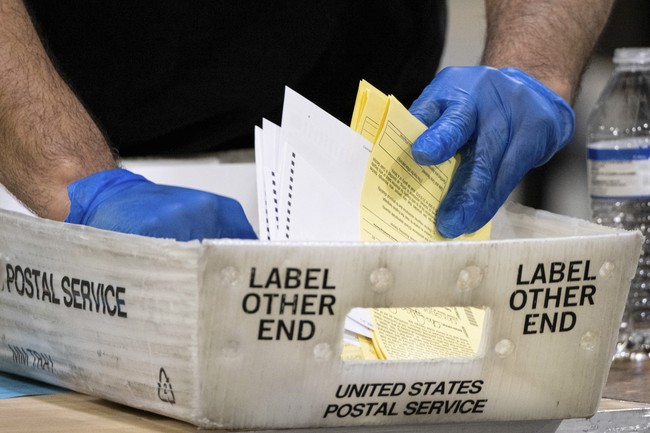
California Republicans have collected 1.35 million petition signatures to force a voter ID constitutional amendment onto the November ballot, aiming to codify proof of citizenship at registration and require government-issued photo ID at the ballot box. The move comes after Democratic lawmakers in Sacramento rejected the measure, so supporters pushed straight to voters with a large volunteer effort and a campaign that says it already validated signatures as it went. Proponents argue this is straightforward common-sense election integrity, while opponents warn it risks disenfranchising some voters. The outcome will land on the ballot, where Californians will decide.
Republican Assemblyman Carl DeMaio’s campaign gathered signatures to put a constitutional amendment before voters that would require proof of U.S. citizenship for initial voter registration and a government-issued photo ID when casting a ballot. The measure would also require mail ballots to include identifying information tied to a valid government ID in addition to signature verification, and it would authorize of voter rolls. Supporters say they submitted 1.35 million signatures to ensure the roughly 880,000 valid-signature threshold is reached under the state’s rules.
DeMaio brought the plan to the legislature first, where Democratic leaders rejected it, so activists launched a statewide petition drive instead. Organizers report thousands of volunteers collected signatures, and they claim they validated those signatures during the drive to clear the required threshold. Once submitted, county election officials will random-sample the petitions; if the projected validity rate is high enough, the Secretary of State will certify the initiative for the ballot.
Supporters frame this as fixing basic vulnerabilities in California elections that Democrats refuse to acknowledge. They point to incidents such as stolen mail-in ballots found in a homeless encampment and cases of outright fraud, including people charged with registering ineligible voters. Those examples feed a narrative that the current safeguards are not consistently enforced and that codifying stricter ID rules is a commonsense fix to restore public confidence.
“What the politicians refuse to do, the citizens must now enact on our own. And that’s when we launched our signature drive, and getting a million signatures in the state of California, not easy, particularly when you don’t have a lot of funding. There’s no muddied interest behind voter ID, it’s just good government.”
Democrats in Sacramento argue that extra ID requirements could disenfranchise eligible voters who lack certain documents, and voting rights advocates warn stricter documentary standards may disproportionately affect low-income and marginalized communities. Still, many Californians across party lines say presenting a government-issued photo ID would be easy, and poll numbers cited by proponents show substantial support for requiring proof of citizenship at registration and ID at the ballot box. Supporters say that popular backing makes this an appropriate place to settle policy differences.
DeMaio directly challenges the Secretary of State’s assurances that current protocols already secure the system. He notes that while officials say various checks exist, the fiscal office estimated millions would be needed to implement the reforms the initiative requires, creating a contradiction he presses publicly. His team asks whether the safeguards are truly in place or whether properly enforcing them would actually require significant new spending.
“I think the best way to prove that she’s not telling the truth is, while she says we’re already doing this, she then told the fiscal analyst that in order to do all these new requirements and reforms it would cost millions and millions of dollars.
“So my question to the Secretary of State is, which is the lie? Are you already doing it, or are there so many new requirements in this that it’s going to cost you money?”
Those who back the initiative point to concrete examples they say show enforcement gaps, such as a San Joaquin County official who pled no contest to multiple felonies after registering ineligible voters and even casting ballots that were not valid. Cases like that are used to argue that the existing system’s checks can be circumvented and that statutory clarity and ID requirements would close loopholes. The campaign emphasizes that voter ID is not about politics but about ensuring one person, one legal vote.
Polling cited by proponents indicates broad support among Californians for proving citizenship at registration and for showing ID when voting, including a majority of Democrats in some surveys. That bipartisan support, supporters argue, should give Sacramento pause for resisting reforms that voters appear to favor. With the initiative headed to a public vote if certified, the debate will move out of backroom committee fights and into the open, where every voter will have a say.
Now the question is whether California lawmakers who fought this proposal will defend their votes to the electorate or whether voters will enshrine those guardrails into the state constitution at the ballot box.


Add comment