
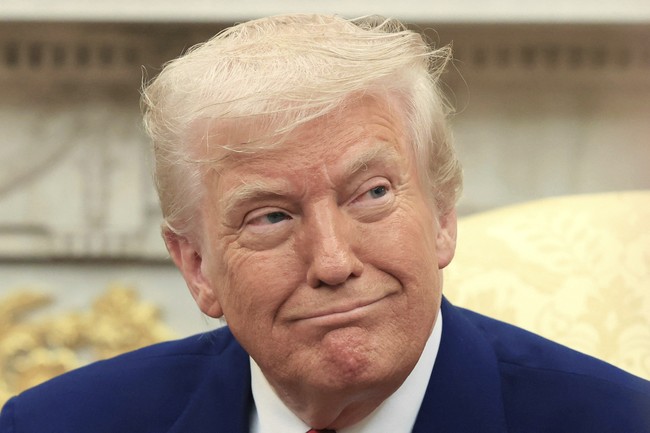
The September inflation report surprised markets by coming in at a 3% annual rise, under Wall Street expectations, and that news sent stocks higher while the White House warned Democrats are risking the gains by holding a shutdown fight over healthcare for undocumented immigrants.
The report, delayed by the Schumer Shutdown, showed inflation below the 3.1% forecast that many had expected, and pre-market trading immediately reacted with major indexes climbing toward record territory. Investors are now pricing in a stronger chance of Federal Reserve rate cuts, a shift that could lower borrowing costs and give businesses and households some breathing room.
Lower interest rates have long been a priority for conservatives who argue that making credit cheaper helps economic growth, and President Trump has repeatedly pushed for cuts to spur the labor market and investment. Markets responded as if the administration’s policies, including tariffs, have had a meaningful impact on investor confidence and the broader economy.
“Futures in all three major indexes — the S&P 500, Dow Jones Industrial, and Nasdaq — are all at least a half point in the green in pre-market trading, and reaching toward record highs,” the original report noted, reflecting the market’s upbeat reaction to the inflation print. That kind of move is not trivial; it signals renewed optimism about corporate earnings and consumer demand going into the final months of the year.
CNBC anchor Joe Kernen pointed out that dire predictions about tariffs proved exaggerated, arguing the market has been contradicting alarmist takes since “Liberation Day.” He highlighted a roughly 36 percent gain in the market since that turning point, framing tariffs as less damaging than many contemporaries predicted.
The piece pushed back on the idea that expert consensus is always right, drawing a parallel to how conventional wisdom around COVID and other big policy questions shifted over time. In this telling, the “settled” math on tariffs reversed as real-world outcomes diverged from theory, and investors rewarded policies that fostered growth and stability.
The White House framed the CPI results as proof that its economic agenda is working, saying the numbers show wages beating inflation and declaring, “Under President Trump, America is back — but inflation is not.” That language stresses a political narrative about restoring American prosperity and strength through tough trade stances and pro-growth measures.
President Trump echoed that message on social platforms, celebrating the stronger stock market and crediting tariffs for improved economic performance. “The United States is wealthy, powerful, and nationally secure again, all because of tariffs!” he wrote, reinforcing the claim that a firmer trade posture has returned leverage to the U.S. economy.
Despite the upbeat data, the administration warned that the Schumer Shutdown threatens to stall momentum by disrupting routine economic reporting and creating policy uncertainty. Officials argued that keeping the government closed could prevent an October inflation report and leave markets, businesses, and the Fed without timely information.
White House Press Secretary Karoline Leavitt said, “Inflation came in below market expectations in September thanks to President Trump’s economic agenda. This is good news for American families, and it’s a shame the Democrats are using them as ‘leverage’ to fund health care for illegal aliens.” That statement framed the shutdown as a political tactic that puts policy progress and everyday Americans at risk.
Democrats’ willingness to sustain a shutdown as leverage came into sharper focus when a senior House Democrat described the shutdown as one of the few bargaining chips remaining, acknowledging that families would suffer while pursuing political goals. Critics on the right seized on that admission as proof the opposition values leverage over ordinary Americans’ welfare.
The Senate recently rejected a GOP stopgap spending bill again, deepening the stalemate and leaving economic policy and routine reporting in limbo. Polling has shown voters increasingly prefer the Republican approach to the economy, and party strategists note that concrete economic wins like a below-expected CPI print can reshape public attitudes.
Republicans argue that the data vindicates a focus on growth, strong borders, and an America-first trade stance, contending that successful economic outcomes follow from policies that restore leverage and protect domestic industries. Those who back the administration say markets are sending a clear message: policies that put American workers and businesses first are working.
Still, the political fight over funding priorities continues to threaten the fragile progress seen in markets and inflation metrics, and both voters and investors will be watching how the standoff affects economic stability in the weeks ahead. The stakes are immediate: delays and uncertainty can ripple through hiring, investment, and consumer confidence without warning.


Add comment