
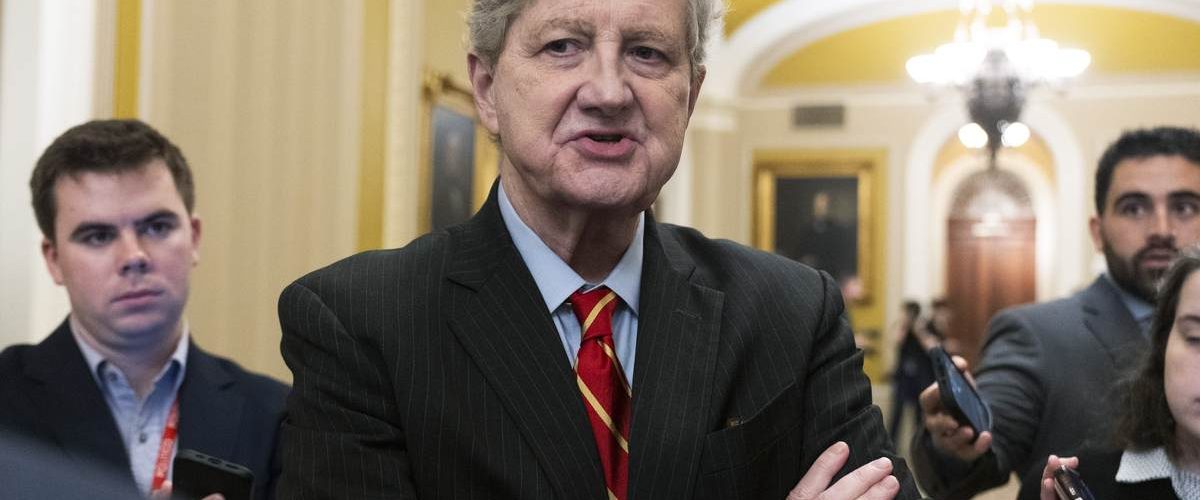
The U.S. is applying intense economic and military pressure on Iran, cutting off funds, targeting overseas assets, and keeping shipping lanes open despite Tehran’s threats; Senator John Kennedy offered a blunt, colorful assessment of Iran’s condition and why current measures are working to stop Iranian nuclear ambitions.
The Biden-era Treasury team has been relentless, pursuing Iranian finances and foreign holdings under Operation Economic Outcast, squeezing the regime’s lifelines. Currency collapse, runaway inflation, and logistical choke points have the Iranian economy spiraling. Their ability to pay even basic obligations, including parts of their security apparatus, is strained by sanctions and interdiction efforts.
At the recent G20, Treasury Secretary Scott Bessent signaled the U.S. has traced many of the regime’s accounts and properties abroad and plans to act on that intelligence. Those comments, paired with targeted military pressure, show a coordinated squeeze designed to deny the regime the revenue and freedom to act aggressively. The naval measures and interdictions have added a kinetic edge to the economic campaign, limiting Tehran’s room to maneuver.
Iran tried to leverage the Strait of Hormuz as a bargaining chip, but U.S. presence and allied shipping operations have largely blunted that tool. Commercial traffic is resuming, and insurance routes and convoys are finding ways through despite Tehran’s attempts to bully maritime traffic. That undermines one of Iran’s last practical levers and keeps global energy markets calmer than they might otherwise be.
Senator John Kennedy was asked what advice he’d give the president, and he gave a plainspoken take that lines up with the hard-line approach. He compared the Iranian leadership to a “wild bunch of howler monkeys” and made clear he supports actions that keep U.S. advantages in place. His language was blunt, and his point was simple: the regime cannot be trusted and must be prevented from rebuilding nuclear capability.
“You can’t take their word for anything. And even if they mean it today, they may think God spoke to them overnight, and they’ll change their mind tomorrow.
Number two, the way Iran is acting is the reason we had to go in in the first place.
https://x.com/SenJohnKennedy/status/2094792622204223573
Number three, we have totally degraded that country. It’s held together with duct tape and spit. So as far as I’m concerned, we’ve achieved our (unintelligible).”
Kennedy followed up on his terser line with a practical warning: if Iran restarted its nuclear weapons program, the U.S. would detect it almost immediately and be positioned to strike. He argued the main objective is denial — to stop Tehran from getting a bomb — and said U.S. operations have left Iran with few defenses and even fewer options. That blunt assessment reflects confidence in current monitoring and strike capabilities.
The blockade and targeted strikes have been effective at disrupting the flow of materials and cash, and they have also sent a clear signal to allies and adversaries about U.S. resolve. Even if Tehran fires missiles, launches drones, or plants false reports about mines, the diplomatic and military picture is changing in favor of keeping global commerce moving. The regime’s attempts at coercion look less potent when convoys keep sailing and oil keeps moving.
Domestically and internationally, Iran’s leadership is under pressure both from economic hardship and from political isolation. Public admissions within the regime acknowledge the deteriorating situation, and the population’s patience appears limited after years of mismanagement and repression. Those factors increase the chance that internal fractures could widen, though the timing and outcome remain uncertain.
Critics on the left will spin the narrative differently, but from the perspective of national security and deterrence, the current mix of financial targeting and limited military action is aimed squarely at preserving U.S. and allied interests. The goal remains to keep Iran from becoming a nuclear-armed regional power and to protect maritime commerce from intimidation. Kennedy’s colorful commentary underscores how vulnerable Tehran looks to those who follow its finances and movements closely.
This is not a posture built on wishful thinking; it rests on tracking assets, following money, and maintaining a credible strike capability. That layered approach forces Tehran to choose between concessions or continued deterioration. If the regime doubles down on threats, the U.S. retains the tools to respond; if Tehran seeks to de-escalate, the pressure makes diplomacy more likely to stick.


Add comment