
The hearing on the House Homeland Security Committee turned explosive when Rep. Bennie Thompson called the deadly ambush of two National Guard members an “unfortunate accident,” prompting sharp Republican pushback and fierce exchanges over how the suspect entered the country and who bears responsibility.
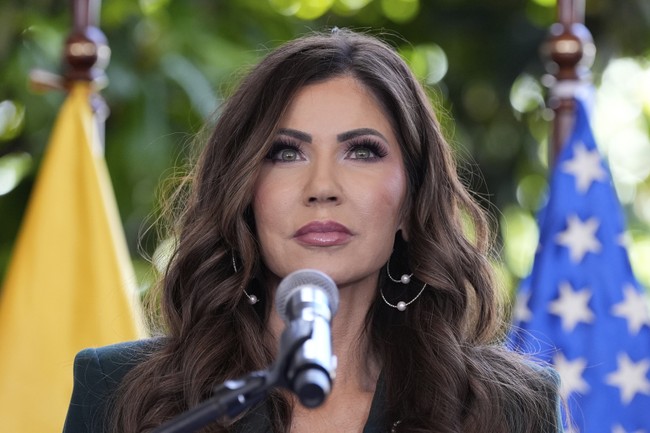
The session featured DHS Secretary Kristi Noem alongside National Counterterrorism Center Director Joe Kent and the FBI’s Michael Glasheen, and quickly zoomed in on the attack that left 20-year-old Sarah Beckstrom dead and 24-year-old Andrew Wolfe fighting for his life. Noem and other Republicans made it clear they view the shooting as a terrorist act, not a mischaracterized mishap. Emotions ran high as lawmakers argued over vetting, asylum approvals, and administration failures.
When Rep. Bennie Thompson referred to the shooting as an “unfortunate accident,” Noem pushed back immediately, asking, “You think that was an unfortunate accident?” and pointing out, “It was a terrorist attack. He shot our National Guardsmen in the head.” That exchange set the tone for a hearing where accountability and rhetoric collided. Republicans in the room treated the description as not just wrong, but deeply disrespectful to the fallen and wounded.
Thompson attempted to shift the focus toward the prior administration’s handling of related immigration processes, but Republicans redirected attention to how the suspect, identified as 29-year-old Rahmanullah Lakanwal, entered the U.S. in 2021 under programs connected to the Afghanistan withdrawal. The core dispute became whether failures in vetting and policy under the Biden administration allowed a known threat to get inside the country. Claims about special immigrant visa procedures and asylum approvals were central to the criticism.
Joe Kent bluntly said, “The individual was vetted to serve as a soldier in Afghanistan, and that vetting standard was used by the Biden administration as a ruse to bring him here,” and added that if Standard Operating Procedures for special immigrant visas had been followed, “that individual and none of the (others) … would have come to America. That’s on Joe Biden.” Those comments framed the administration as negligent and politicized the debate over immigration and national security. Republicans used Kent’s words to argue systemic failures produced real, deadly consequences.
As the hearing progressed, Thompson tried to regain control by pressing Noem about who approved the asylum application for the suspect, then interrupting to prevent a response. Noem responded that the asylum claim was approved based on information provided by the Biden administration, reinforcing the GOP critique that responsibility lies with current policy choices. The interruptions and procedural wrangling added to the charged atmosphere.
Representative Ogles delivered one of the sharpest rebukes, calling Thompson out for his language and saying, “Point of order, Mr. Chairman, that was a murder that took place in D.C., it was not an ‘unfortunate incident,'” and then condemning the remark as “effin disrespectful.” His outburst was cut off, but it captured the visceral anger many Republicans felt at what they described as a dismissal of violence against servicemembers. That outrage focused on both the language used and the perceived failure to prioritize security.
Kent warned the country faces a much larger risk, estimating about 18,000 “known and suspected terrorists” entered the U.S. in recent years, and stressing, “That’s just what we know of.” He framed the unknown numbers as the real danger and blamed lax border policies for creating uncertainty about who is inside the country. Republicans seized on that point to argue for stricter entry controls and accountability for past decisions that opened pathways for large numbers of foreign nationals.
Throughout the hearing, references to the victims kept returning. Beckstrom’s death and Wolfe’s injuries were presented not as politics but as consequences that demand serious response and fitting language from lawmakers. Republicans pressed that labeling the attack anything other than a terrorist act was an insult to service members who put themselves between citizens and danger. The emotional weight of the victims’ stories added urgency to calls for policy changes.
Procedural spats and threats of perjury were part of the theater, with Thompson repeatedly trying to control exchanges and challenge witnesses, while GOP members countered with accusations that the Biden administration had facilitated the entry of dangerous individuals. The argument over whether vetting standards were followed, who signed off on asylum or visa approvals, and whether policy choices amounted to negligence was raw and uncompromising. The hearing left clear divisions about responsibility and the nation’s approach to border and immigration security.
Republicans left the hearing emphasizing the need for accountability and changes to prevent similar tragedies, arguing that strong language matters when describing attacks on American troops. The debate was less about semantics and more about who will answer for policies seen as enabling threats. At its core, the clash highlighted how national security, immigration policy, and respect for service overlap in today’s fraught political environment.


I just came across this amazing way to earn $6,000-$8,000 a m0nth 0nline! No selling, no struggle—just a simple system that anyone can follow. Kelly Richards did it, and so can you! Don’t miss out on this life-changing 0pportunity.
Here is I started_______ EarnApp1.Com