
This article examines the deadly Southern California freeway crash tied to a truck driver identified as an illegal immigrant, outlines how state policy enabled his access to a commercial vehicle, presents official statements and source claims, and raises direct questions for Governor Gavin Newsom about licensing and public safety.
Jashanpreet Singh, described as a 21-year-old illegal alien from India, is in custody with the San Bernardino County Sheriff’s Department on suspicion of DUI causing great bodily harm and gross vehicular manslaughter while intoxicated. Authorities link him to a catastrophic collision on October 21, 2025, where a semi-truck plowed into slow-moving traffic near the I-10 and I-15 interchange in Ontario, California. The crash killed three people and injured four others, two critically, and dashcam footage shows the truck failing to slow or take evasive action before impact.
Video obtained from the truck’s dashcam shows the semi barreling into stopped cars, a sequence that leaves little room for doubt about the driver’s behavior in the moments before the disaster. A clear warning accompanies the footage: strong content that may be disturbing to some viewers, and the reporting reproduces that advisory exactly.
Soon after the crash, reports circulated that Singh had been “caught and released” at the California border during the Biden administration, a claim attributed to multiple ICE sources. The reporting notes federal involvement and describes ICE placing a detainer request with the San Bernardino County Sheriff’s Department while criminal investigation proceeds.
Per multiple ICE sources, Jashanpreet Singh, the semi-truck driver suspected of killing three people in a DUI crash on the 10 freeway in Ontario, CA yesterday, is an Indian illegal alien who was caught & released at the CA border by the Biden admin in March 2022. DHS photo of him attached via federal sources.
I’m told ICE is placing a detainer request on Singh with the San Bernardino County Sheriff’s Department, where he is in custody on suspicion of DUI causing great bodily injury and gross vehicular manslaughter while intoxicated. He has not been formally charged yet.
Police say Singh was speeding and under the influence, never hitting his breaks, when he crashed into slow moving traffic on the freeway, causing a devastating and deadly chain reaction crash that killed 3 people. The victims have not been identified yet.
Beyond the immediate criminal case, this incident exposes policy failures that allowed someone without legal status to operate a commercial vehicle. The state of California has policies in place that do not require proof of legal residency to obtain a driver’s license or state ID, and those policies have consequences when commercial driving is involved. The practical reality is that giving access to licenses without stricter verification makes it easier for vulnerable public spaces to be put at risk.
Commercial driver’s licenses carry federal implications, especially when access to federal facilities or certain cargo is required, and a REAL ID is the standard tied to those federal checkpoints. California’s approach to issuing licenses and IDs has reduced barriers for noncitizens to obtain driving privileges, while also complicating enforcement efforts that rely on interoperable identity verification. The policy choices here are not theoretical — they intersect with public safety on highways every day.
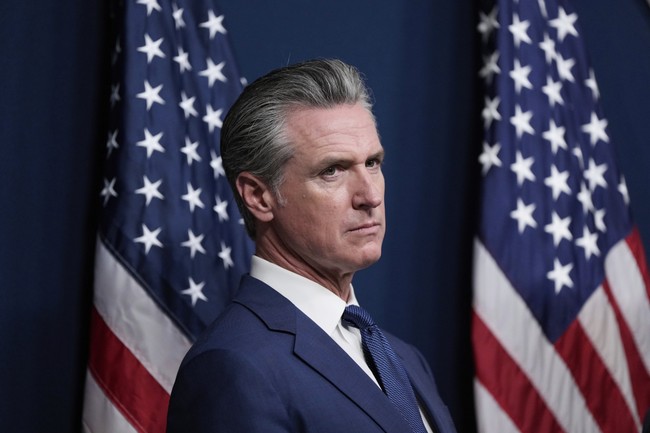
The question Republicans and concerned citizens must ask is simple: why did state policy prioritize convenience over safety in a way that may have allowed an alleged offender to command a large commercial vehicle? Governor Gavin Newsom signed legislation that broadened access to IDs without requiring proof of legal presence, a move the reporting links directly to the environment that made this crash possible. Those are policy choices with real-world costs, and leaders need to explain them plainly.
Officials and law enforcement, federal and local, have responsibilities that cross jurisdictions, but state-level decisions about identification and licensing are squarely within a governor’s authority. When tragic events occur, voters deserve straightforward answers about whether those decisions made roads less safe and whether any regulatory oversights contributed to the loss of life. Accountability matters when policies intersect with public safety failures.
This story also highlights a larger federal enforcement question tied to border processing and removal practices. If someone was identified by federal agents and released without adequate follow-up, then procedures at the border and subsequent interagency coordination must be scrutinized. Effective enforcement requires clear standards and follow-through, especially when public safety is at stake.
The victims in this crash deserve attention, and the public deserves clarity about how similar tragedies can be prevented. Policymakers should review the licensing framework, federal-state coordination, and the practical safeguards around commercial driving privileges. Direct answers from those responsible for the policies in question are necessary for rebuilding trust and restoring confidence in road safety rules and enforcement.
Add comment