
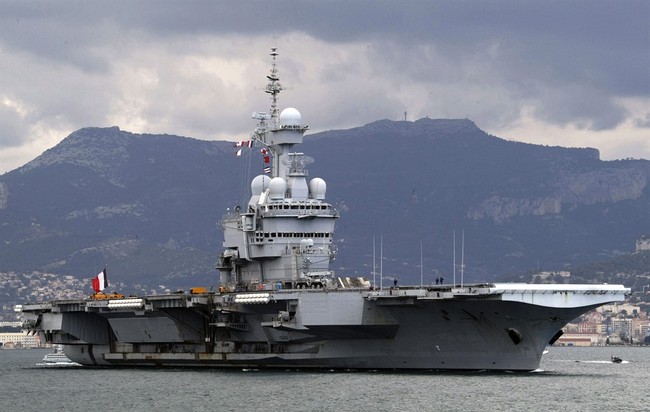
The French aircraft carrier Charles de Gaulle is heading toward the southern Red Sea to position for a possible mission around the Strait of Hormuz, and that movement has stirred questions about timing, purpose, and how this multinational effort might fit with U.S. interests and ongoing regional tensions.
France says the carrier group will be ready to help restore navigation through the Strait of Hormuz if called upon, aiming to send a signal about capability and resolve. The ship’s nuclear propulsion gives it endurance that can matter in an extended operation, even if it is smaller than the latest American carriers.
The announcement came from an aide to President Emmanuel Macron and was framed as pre-positioning rather than an immediate intervention. Officials have emphasized the mission would be defensive and tied to the broader diplomatic situation, particularly any cease-fire or de-escalation in the region.
France’s aircraft carrier the Charles de Gaulle was on Wednesday heading towards the southern Red Sea to pre‑position for a possible mission to restore navigation in the Strait of Hormuz, Paris said.
The move was intended to send “a signal that not only are we ready to secure the Strait of Hormuz but that we are also capable of doing so”, an aide to President Emmanuel Macron told reporters.
Traffic in the strategic waterway, through which around one-fifth of the world’s crude oil normally transits, has all but stopped since conflict erupted in the Middle East in late February.
Macron and British leaders are pitching a multinational plan to reopen the waterway, promising that any operation would be defensive and only begin once fighting subsides. That framing raises practical questions about timing and effectiveness, because organizing and deploying an international force takes time and political coordination.
Macron and British Prime Minister Keir Starmer are leading a multinational mission towards restoring freedom of navigation in the Strait of Hormuz, which they say would be entirely defensive and only deployed once the war ended.
Macron said on X he told his Iranian counterpart Masoud Pezeshkian on Wednesday of his “deep concern” at escalation in the Gulf region amid stalling peace talks.
The United States has signaled conditions for any cease-fire that address Iran’s interference with shipping, and that condition shapes the debate about who will secure transit lanes afterward. From a Republican perspective, the key question is whether allied deployments will complement U.S. strategic objectives or complicate them.
There are also direct incidents feeding urgency. A French container ship was reportedly struck in the Strait of Hormuz, with injuries among the crew and damage to the vessel, and French sources described the vessel as having been targeted for attack. Those events increase pressure on capitals to show they can protect commercial shipping and deter future strikes.
French shipping giant CMA CGM confirmed to POLITICO that its vessel, the San Antonio, was targeted, as a ceasefire between the United States and Iran has frayed in recent days.
“The CMA CGM Group confirms that one of its vessels … was the target of an attack yesterday while transiting the Strait of Hormuz, resulting in injuries among crew members and damage to the vessel,” the company said in a statement, adding that injured seafarers have been evacuated and are receiving medical care.
Roughly 40 countries have either joined or are considering participation in a peacekeeping or security mission for the Strait once shooting stops, but the form and rules of engagement remain unclear. Critics argue that post-cease-fire deployments are reactive and risk arriving after the immediate threat has passed, while supporters say a multinational presence would deter future aggression.
For Americans watching this unfold, the calculus is about strategic priorities: ensuring freedom of navigation, protecting energy flows, and making sure allied action aligns with U.S. deterrence goals. The French move is a reminder that allies will act on perceived national interests, and coordination will be essential to avoid mixed signals or redundancy.
Political leaders in Europe stress diplomacy and signaling, but hard power remains the physics of deterrence at sea. The Charles de Gaulle’s presence will be symbolic and operational, but it will only matter if it is part of a clear, enforceable plan to safeguard vessels and crews transiting the Hormuz chokepoint.
Editor’s Note: Thanks to President Trump and War Secretary Pete Hegseth’s leadership, the warrior ethos is coming back to America’s military.


Add comment