
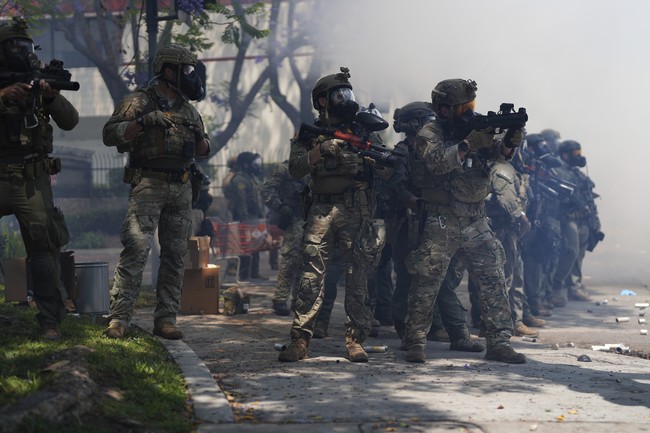
The Department of Justice won a preliminary injunction in federal court that temporarily stops Virginia from enforcing its new Mask/Identity statute against federal immigration officers, a ruling a judge says likely conflicts with the Constitution’s Supremacy Clause and federal authority over immigration enforcement.
DOJ Scores Early Court Win Against Virginia’s New Anti-Mask Law
Late Tuesday, U.S. District Judge Robert Payne granted the Department of Justice’s motion for a preliminary injunction, pausing Virginia’s enforcement of the new law when it comes to federal immigration agents. The move was narrowly focused: it prevents state officials from applying the statute against federal officers while litigation proceeds, not a final ruling on the law’s constitutionality. For supporters of federal law enforcement, the injunction underscores a basic federalism reality: states cannot pick fights with federal agents carrying out national duties.
Virginia’s statute, Va. Code § 19.2-83.6:1, broadly bars officers from wearing masks to hide their identities while on duty and requires visible identification, including during immigration enforcement actions. The state framed the measure as a public-safety and accountability rule for officers operating within Virginia’s borders. The Justice Department responded by suing, arguing the law improperly targets federal immigration officers and meddles in federal duties the state cannot control.
https://x.com/BillMelugin_/status/2072076373921837232
Judge Payne issued a concise, three-page order that temporarily blocks enforcement against federal immigration officers while the case moves forward in federal court. The judge concluded the DOJ had met the four-part test for a preliminary injunction, finding a strong likelihood the U.S. would prevail on the core constitutional issues. That focus on the Supremacy Clause and intergovernmental immunity reflects long-standing doctrines that protect federal operations from state interference.
BREAKING: Federal judge Robert Payne has just issued a preliminary injunction that blocks Virginia from enforcing its new law that bans ICE agents from wearing masks on the job. Judge Payne writes that VA’s law likely violates the Supremacy Clause of the U.S. Constitution by trying to regulate the conduct of federal law enforcement. The law was set to take effect tomorrow.
California’s unmasking law was recently struck down for the same reason.
VA is now blocked from enforcing their unmasking law while the underlying merits of the case play out, as the judge finds the DOJ is likely to succeed on the merits of their argument.
In laying out his decision, Judge Payne said the Virginia law appears to directly regulate federal officers engaged in immigration enforcement and likely runs afoul of intergovernmental immunity. That doctrine prevents states from hampering federal functions, especially when state rules would obstruct federal officials on the job. The judge drew a direct parallel to a similar California law that was struck down for the same constitutional conflict.
The court also found the United States would suffer irreparable harm if the injunction were not granted, noting the law could impede federal enforcement and might expose officers to danger during sensitive operations. Payne pointed to risks to public safety and to the ability of federal agents to perform their duties without state-imposed constraints. Those practical concerns mattered to the judge along with the legal analysis.
Payne balanced the equities and deemed the public interest to favor the injunction, reasoning that maintaining clear lines between state and federal responsibilities serves the broader public. The preliminary relief preserves the status quo so federal immigration operations can continue without state-imposed handicaps while the courts sort the legal issues. The decision is limited and procedural; it bars enforcement only for federal officers pending the outcome of the case.
Critics of the Virginia law argued it was a political stunt that interfered with national immigration policy and threatened officer safety during critical operations. Defenders insisted the state was protecting residents and demanding accountability. The federal court’s temporary block signals that when states try to impose rules that reach federal agents doing federal work, courts will take the constitutional questions seriously.
This ruling is an early win for the Justice Department and the Trump administration’s position on federal primacy in immigration matters, but it is not the final word on the statute. The injunction preserves federal authority for now and ensures federal agents will not be subject to the state restriction while the merits of the constitutional claims are litigated. The case will proceed, and the underlying questions about state limits on federal enforcement remain to be resolved in court.
The legal battle highlights a broader tension between state efforts to assert control over law enforcement conduct and the constitutional limits that protect federal functions. When states enact laws that potentially regulate federal officers, courts must weigh precedent and the practical impacts on public safety and federal operations. This ruling reaffirms that federal supremacy in matters of immigration enforcement will be a key theme as the case moves forward.


Add comment