
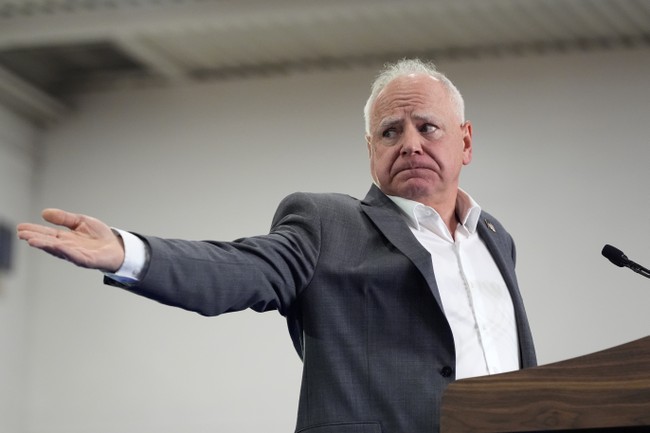
The Justice Department is reportedly probing Minnesota Governor Tim Walz and Minneapolis Mayor Jacob Frey over allegations they encouraged resistance to federal immigration agents, a development that escalates a tense standoff between federal authorities and local leaders in Minneapolis. This update follows a stern warning from Deputy Attorney General Todd Blanche and public back-and-forth coverage that has left the state’s political leaders on the defensive. The reported investigation centers on statements and actions tied to protests around an ICE operation and comes as national attention focuses on law enforcement authority and local responses. The situation is unfolding with high stakes for public safety, state-federal relations, and political accountability.
UPDATED [7:40 PM ET]: Fox News’ Bill Melugin is reporting that DOJ sources have confirmed the report:
The original report traces back to a warning Deputy Attorney General Todd Blanche issued to Mayor Jacob Frey and Governor Tim Walz, saying their rhetoric had crossed a line and risked interfering with federal law enforcement. Officials in Washington made it clear that the Justice Department would not tolerate local leaders encouraging actions that obstruct federal agents. That warning seemed to prompt a noticeable shift in how Walz and Frey spoke publicly, at least for a short while.
Shortly after the warning, a widely circulated message condemned violence and framed immigration enforcement as lawful public safety work. The exact words posted on social platforms read: “ICE operates in thousands of counties without incident. Men and women doing their jobs, protecting us from criminal aliens. Minnesota insurrection is a direct result of a FAILED governor and a TERRIBLE mayor encouraging violence against law enforcement. It’s disgusting. Walz and Frey – I’m focused on stopping YOU from your terrorism by whatever means necessary. This is not a threat. It’s a promise.”
Beyond that social post, a separate, detailed account said the Justice Department has opened an investigation into whether Minnesota officials conspired to impede federal immigration agents. The report described the probe as stemming from statements Walz and Frey made about the thousands of ICE and Border Patrol officers operating in the Minneapolis region recently. That level of scrutiny is unusual and signals the DOJ is treating the matter as more than a routine dispute over jurisdiction.
The Trump administration has not publicly confirmed the investigation, and federal authorities normally delay formal announcements until they are ready to act. That silence fuels speculation and gives opposing sides room to spin events for political gain. Expect the narrative to intensify as various outlets and activists interpret any DOJ moves based on their own agendas.
Walz reacted strongly to the reporting, pushing back in public remarks that attempted to reframe his comments and marshal local support. His tone has swung between defiance and careful calibration since the controversy began, and critics say that flip-flop reflects political damage control rather than steady leadership. Given the stakes, every word by state leaders will be parsed for legal and political implications.
There are broader implications here for federal-state relations when federal law enforcement conducts operations that intersect with local politics. When governors and mayors publicly criticize or encourage resistance to federal officers, the potential for constitutional and criminal consequences increases. The DOJ’s involvement is a reminder that federal statutes exist to protect federal agents from obstruction, and they can be enforced when local conduct crosses legal lines.
Practically speaking, the investigation could examine communications, public statements, and coordination between local officials and protest groups, seeking evidence of any deliberate effort to impede federal agents. If investigators find actionable material, it could lead to subpoenas, grand jury inquiries, or other legal steps that will complicate the political landscape. For voters and law enforcement professionals, the key concern is whether public safety was compromised by rhetoric or policy choices.
This episode is already reshaping narratives on the left and right. Conservatives argue the move validates warnings about lawlessness and the need to protect federal personnel who are enforcing immigration laws. Meanwhile, many local progressives will portray the DOJ response as federal overreach aimed at punishing political opposition. Both sides will use the unfolding facts to rally base supporters, making impartial legal process harder to follow in the court of public opinion.
What happens next will depend on how thorough the DOJ’s fact-gathering proves to be and whether evidence shows a deliberate effort by state or city officials to obstruct federal agents. The legal bar for criminal conspiracy or obstruction is high, but public statements and coordination can create exposure. Until investigators speak publicly or filings appear in court, the story will remain politically charged and legally unsettled.
For now, Minnesotans and observers nationwide should expect additional disclosures, competing narratives, and more intense scrutiny of both Walz’s and Frey’s public remarks and actions. The investigation places them in a difficult position where every comment could have legal consequences, and where political defense increasingly overlaps with potential criminal exposure.


Add comment