
Operation Absolute Resolve pulled off a high-stakes capture of Nicolás Maduro in the predawn hours of January 3, and it showcased the hard edge of American military power—stealthy insertion, coordinated cyber and air support, and soldiers and aircrew willing to finish the job even after taking hits. This piece recounts the mission’s risky helicopter assault, a Chinook pilot who was wounded three times yet completed the flight, and the broader implications for U.S. military resolve under the current administration.
The raid unfolded as a complex, multi-domain operation that combined cyber disruption, air strikes, and special operations forces. Aircraft flew low over the sea and into Caracas, with fighter jets suppressing air defenses so helicopters could move in under cover. The result was the capture and transfer of Nicolás Maduro to U.S. custody, accomplished without the loss of American lives in the operation itself.
Even though U.S. troops returned and matériel was preserved, the battlefield was bloody for the regime’s defenders. There were multiple casualties among Venezuelan and Cuban forces, and Americans were not untouched by the fight. One of the helicopter pilots, a mission planner and flight leader, sustained three gunshot wounds to his leg during the insertion but kept flying.
In the early hours of Saturday morning, U.S. Army helicopters skimmed 100 feet above the sea and then over Caracas, Venezuela’s capital, racing toward their target. Their stealthy pathway had been cleared by an American cyberattack that darkened the city, and by radar-evading U.S. fighter jets that pounded Venezuela’s Russian-built air defenses.
Initially, the helicopters, carrying dozens of Army Delta Force commandos, flew undetected.
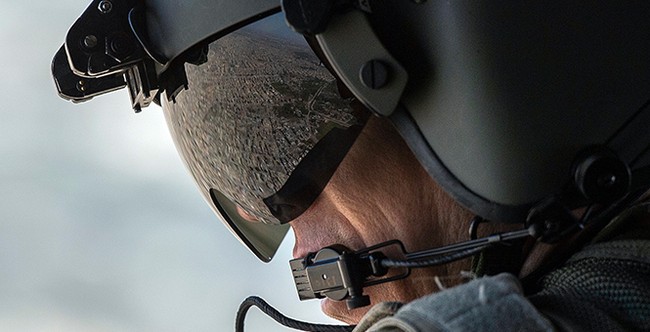
But as they approached Mr. Maduro’s lair, the aircraft came under fire and shot back. The first helicopter in the assault, a giant twin-rotor MH-47 Chinook, was hit but remained flyable. The flight leader, who also planned the mission and was piloting the Chinook, was struck three times in the leg, said current and former U.S. officials, who spoke on condition of anonymity to discuss sensitive matters.
The damaged Chinook was a test of training, equipment, and leadership under fire. With its airframe hit and wounded crew aboard, the helicopter still had to deliver operators to a high-value target deep inside enemy-held terrain. The pilot’s decision-making under those conditions prevented disaster and kept the operation moving forward when momentum mattered most.
That danger extended beyond a single aircraft. The mission involved more than 150 aircraft drawn from about 20 bases across the region, and every loss could have cascaded into a much larger catastrophe. The team on the scene had to weigh whether to press the assault, adjust to damage and casualties, or abort and risk letting a dangerous dictator escape once more.
As the damaged helicopter struggled to stay aloft and deliver its troops to their target, the success of the entire operation, called Absolute Resolve, involving more than 150 aircraft launched from 20 different land and sea bases in the region, hung in the balance.
History offers harsh reminders of what can happen when helicopters go down in hostile cities, but in this case the worst-case scenarios were avoided. The Chinook crew disembarked its troops who completed the capture, and the aircraft was later flown back to the amphibious assault ship Iwo Jima. The pilot and at least one other soldier were seriously injured and are receiving treatment in a U.S. hospital.
The mission’s success reflects leadership priorities at the top and a return to a warrior ethos across the force. Commanders synchronized cyber, air and ground assets and accepted the operational risks necessary to remove a malign leader from power. For those who support a strong posture abroad, this operation will be seen as a clear demonstration that decisive American action still works.
“Editor’s Note”: Thanks to President Trump and Defense Secretary Pete Hegseth’s leadership, the warrior ethos is coming back to America’s military.
The captured dictator now faces the U.S. Justice system in New York, and the operation will be studied for lessons on joint planning, risk acceptance, and the resilience of crews under fire. The wounded Chinook pilot’s refusal to abandon the mission underlines a simple fact: trained Americans finish what they start, even when the price is personal injury.
This episode will be debated across political lines, but from a defense perspective it reinforces how layered capabilities—cyber attack, stealthy aviation, and elite troops—can combine to produce strategic results. It also serves as a reminder that when national leadership sets clear objectives, the military can and will carry them out decisively and effectively.

Add comment