
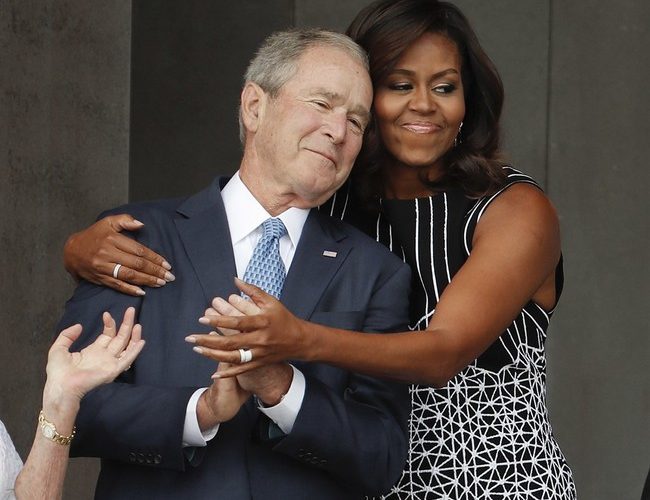
The piece examines a report that the Bush family may be plotting a return to influence inside the Republican Party after Donald Trump, arguing that the GOP has changed and that a Bush comeback faces steep obstacles from a base that no longer aligns with their brand of politics.
Reports suggest members of the Bush family are quietly lining up for a potential 2028 run, expecting the party to reopen if Donald Trump steps aside. The notion is that a post-Trump Republican Party could be fertile ground for legacy candidates, but that assumption ignores how much the GOP has shifted. Those pushing the idea seem to believe Washington-era pedigrees still carry the same weight they once did.
One version of this story even relies on unnamed insiders and murmurings about ending the so-called exile of the Bushes from GOP relevance. The narrative paints a “shadow Republican Party” waiting to take over when current leadership exits the scene. That vision glosses over the grassroots energy that has reoriented the party toward populist themes and issues that resonate with working-class voters.
Even within conservative circles there is skepticism. Former Republican National Committee figures have reportedly urged George W. Bush to be more active again, claiming his voice would reach broader audiences. But endorsements like that reveal a disconnect; many rank-and-file voters feel those endorsements come from an era the party has moved past.
A nested report captures the tone of these rumors exactly as they were presented:
There are allegedly “rumors” stirring that there is a “plot to end the so-called ‘Bush Exile’” as part of an effort to take control of the GOP from Trump and his Make America Great Again (MAGA) policies, according to the Daily Mail:
Now, rumors are stirring of a plot to end the so-called ‘Bush Exile’ and take back the GOP from the so-called scourge of Trumpism.
Behind the scenes, and still with deep connections around the country, a shadow Republican Party is lying in wait to take over when Trump is gone.
And, while the former president is determined not to publicly criticize Trump – much to the frustration of some of his former aides – he may not be averse to quietly helping to shape the Republican Party’s long-term future.
That passage, quoted verbatim above, illustrates how the storyline depends on whispers rather than on concrete political momentum. The repeated use of “rumors” and “allegedly” should give pause to anyone treating this as a forecast rather than gossip. The GOP today prizes clear messaging and a demonstrated connection with voters over establishment nostalgia.
One unnamed “former Bush official” reportedly conceded there would be no third term for Trump and said Vice President JD Vance “has a head start” on 2028, leaving “a big open field with the Republican Party.” That quote suggests opportunity, but it also assumes the electorate will gravitate back toward pre-Trump conservatism. It is far from certain that voters will embrace that return.
As one commentator bluntly put it, the Bush era is over and the party has been transformed:
Okay, enough. This isn’t going to happen, and frankly, the Bush family has already left the stage, and they should remain off it. Their time is over. It’s done. Second, the base isn’t receptive to their brand of Republican politics anymore. The base is more blue-collar: folks who aren’t supportive of the free-trade bonanza Bush II ran. If the GOP base wasn’t high on Jeb in 2016, what makes you think the 2028 Republican base would go ga-ga over another Bushie running? This isn’t a phase or a fad, guys. The GOP has been transformed under Trump, and it’s not going back.
That assessment hits at the core of the issue: political branding matters and the party’s identity has shifted toward economic populism and outsider appeal. Working-class voters who supported Trump for his focus on trade, sovereignty, and jobs are not automatically going to rally behind country-club Republicans. The base now evaluates candidates through a different lens.
There are also optics that make a Bush return awkward for parts of the modern GOP coalition, including past relationships that sit uneasily with the movement’s rhetoric. Such ties remind voters that establishment politics and old alliances remain part of the Bush legacy, which can alienate those who see a clear break with the uniparty model as essential.
Ultimately, the report serves as a reminder that there are still Never Trumper factions hoping to reclaim the party for a more traditional conservative agenda. But hope and networking do not equate to winning primary voters who have shifted their priorities. The road for any family dynasty hoping to reassert control runs through a base that has reshaped itself and is unlikely to revert to the status quo ante.


Bush is a lying evil Globalist and look who he plays with the homosexual evil minded lunatic!
He like his nefarious daddy who promoted the NEW WORLD ORDER!!!