
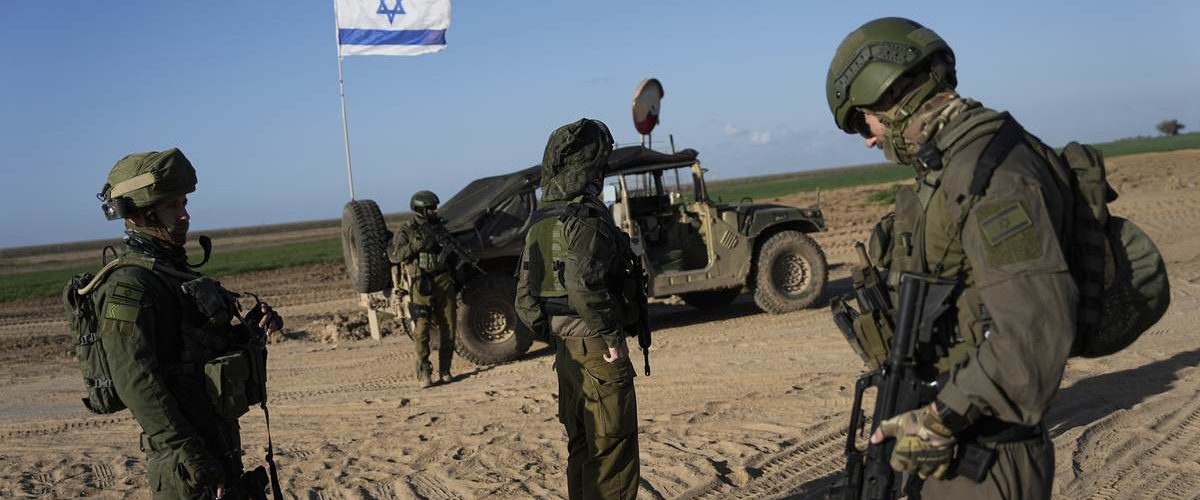
This article reports on a bold Israeli operation that captured Muein al-Arabid, described as the head of Hamas’s internal security apparatus, inside Gaza; it covers the raid’s reported casualties among his bodyguards, Prime Minister Benjamin Netanyahu’s statement naming al-Arabid’s alleged roles, video and eyewitness notes about the extraction, analysis of what this means for Hamas’s command structure and communications, and speculative context about informants and Israeli tactics during the post-October 7 campaign.
Israeli security services conducted a daylight raid that ended with Muein al-Arabid in custody and several of his bodyguards killed. The operation combined Shin Bet counterintelligence teams and Israel Defense Forces units moving inside Gaza to seize a high-value target and remove him across the border. Eyewitnesses and footage circulated afterward, with conflicting claims about whether al-Arabid was wounded during the extraction. Hamas officially denies the capture and insists Israeli forces failed, while Israeli authorities say otherwise.
Prime Minister Benjamin Netanyahu released a statement praising the teams and laying out the rationale for the arrest. He said, “I commend the Shin Bet and the IDF, who in a bold operation arrested today the head of Hamas’s internal security apparatus near his home in Gaza.” Netanyahu described al-Arabid as “one of Hamas’s most senior leaders, was responsible for hiding and moving our hostages, hiding senior Hamas officials, force build-up, and attempting to restore the capabilities of the terror organization. Recently, he was engaged in efforts to restore Hamas’s governance in Gaza, in deception regarding the issue of demilitarizing the Strip, and assisted in carrying out terror attacks against our forces and our civilians.”
Local and international outlets showed video clips of the raid and the departure of the raiding party, with analysts pointing out moments that could identify al-Arabid among the men seen on the ground. Some observers flagged a figure crawling at about 0:18 in footage as plausibly being al-Arabid, though identification from such clips is rarely definitive. The footage of the withdrawal showed coordinated covering strikes, suggesting the extraction was planned with both ground teams and air support to ensure safe egress.
This capture fits into a broader Israeli strategy that intensified after the October 7 attacks, when targeted operations focused on dismantling command networks and hunting those who participated in the mass violence. Reports since then have credited special teams with tracking and eliminating many perpetrators tied to the October 7 infiltrations, with numbers cited in Israeli media reaching into the thousands. Those operations combined intelligence gathering, targeted raids, and strikes to degrade groups that planned or executed attacks.
Al-Arabid’s responsibilities, as described by Israeli officials, included managing secure communications, moving leaders between hideouts, running safe houses, and overseeing internal security matters such as identifying and punishing alleged collaborators. Capturing someone who oversaw those systems is significant because it can expose networks, methods of concealment, and the physical locations of other operatives. Removing that level of operational control complicates any effort to reconstitute the same capabilities quickly.
There is also reason to consider this arrest beyond a conventional kill-or-capture mission. Israel has previously combined lethal strikes with covert intel extractions and has relied on assets embedded in adversary ranks to obtain actionable information. If al-Arabid had been compromised internally or if the raid also served to extract an asset, that would explain a highly successful takeover with relatively few friendly casualties. Intelligence inside hostile organizations has been decisive in past counterterrorism successes worldwide.
Another practical result of taking a senior security chief alive is the potential intelligence value. Interrogation can reveal communication methods, safe-house networks, gateway operatives who moved people and materiel, and even the identities of those who managed hostage concealment. Even limited debriefing can generate leads that make subsequent operations more focused and reduce collateral risks when targeting other cells.
https://x.com/clashreport/status/2094851554784301260
Still, the operation raises questions about escalation and retaliation. High-profile captures tend to provoke political and military responses from the adversary’s leadership or rank-and-file, and the environment in Gaza is volatile enough that knock-on actions are likely. Israeli authorities appear to weigh the intelligence and disruption benefits of such raids against the possibility of renewed exchanges and the wider diplomatic fallout.
For now, the arrest is being presented domestically as a tactical win and a blow to Hamas’s internal policing and command structure. Whether it leads to a broader collapse of capabilities or simply forces adaptation depends on how much actionable intelligence was harvested and how quickly Hamas can plug the gaps. Either way, the operation underscores an approach that mixes precise raids, intelligence exploitation, and sustained pressure on hostile networks in the aftermath of the October 7 campaign.
Add comment