
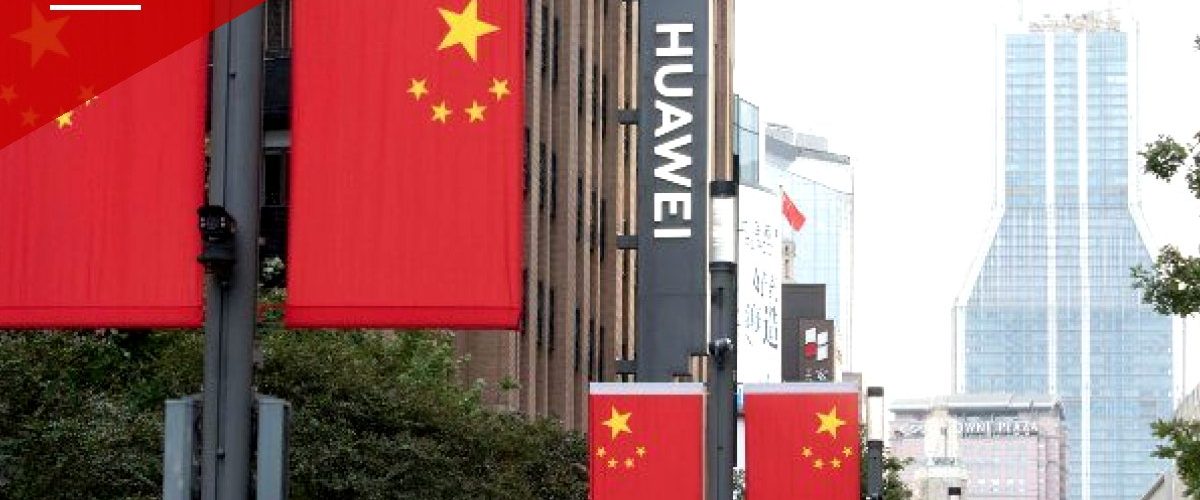
Huawei’s long-delayed criminal trial began this week in federal court in Brooklyn, with a Justice Department prosecutor accusing the Chinese telecommunications giant of running a decades-long scheme to steal from American companies and dodge U.S. law.
“Theft, lies, cover-up,” said Taylor Stout, a trial attorney with the Department of Justice, in the government’s opening statement Wednesday. “For 20 years, that’s how Huawei, a massive Chinese telecommunications company, victimized American companies and abused the American financial system, all in an effort to dominate the telecommunications industry around the world.”
Huawei faces a broad set of federal charges, including racketeering, bank fraud, wire fraud, money laundering, theft of trade secrets, and violations of U.S. sanctions on Iran and North Korea.
The case dates back to 2019, when U.S. prosecutors first filed charges against the company, shortly after Huawei’s chief financial officer, Meng Wanzhou, was arrested in Canada. The prosecution stalled during the Biden administration but has been revived under President Trump’s Justice Department.
A Former T-Mobile Executive Testifies
Jurors have already heard testimony from a former T-Mobile executive who described three incidents in 2013 in which Huawei employees allegedly violated agreements governing access to the company’s testing labs, including the theft of a component from a phone-testing robot nicknamed “Tappy.”
The trial gives Huawei’s alleged corporate victims a formal opportunity to present their case to a jury — something that has not happened before with a company of Huawei’s size and standing.
National Security Concerns Loom Over the Case
The proceeding is also expected to test broader claims that Huawei operates as an arm of the Chinese state, part of what U.S. officials describe as a wider campaign of espionage against American companies and infrastructure. The FBI has previously warned that Huawei’s equipment could be used to disrupt the U.S. nuclear arsenal, and the U.S. government has formally designated the company a national security threat.
How closely Huawei is tied to Beijing remains a matter of dispute. Under Chinese law, all technology companies operating in the country are required to cooperate with state intelligence services and hand over personal data on request. Chinese President Xi Jinping has repeatedly praised Huawei, as has former Venezuelan leader Nicolás Maduro.
Years of Pressure From Washington
The trial arrives after years of escalating U.S. action against Huawei. In 2019, the Trump administration’s Commerce Department placed the company on its Entity List, barring American firms from doing business with it. Trump also banned Americans from using Huawei equipment and imposed export controls preventing the company from buying semiconductors and other components built with American technology.
During his second term, Trump has directed loans to American companies building competing 5G networks and backed a merger between Hewlett-Packard Enterprise and Juniper Networks, explicitly framed by his intelligence agencies as a way to give Huawei global competition. Democratic attorneys general in California and Colorado — Rob Bonta and Phil Weiser, respectively — sought to block the merger, but a federal judge ruled in August that it served the public interest.
China has faced repeated accusations of infiltrating American institutions in recent years, including a recent FBI disclosure of a Chinese hacking effort targeting the U.S. power grid. Individual Chinese nationals have been criminally charged before, but Huawei’s trial marks the first time a company of this scale has had to answer to an American jury.
The trial is expected to run roughly three months — a timeline that overlaps with a planned visit to Washington by Xi Jinping to meet with President Trump.



Add comment