
The Senate map heading into the 2026 midterms still favors Republicans, but recent polling quirks and a few surprising primary results have tightened some contests and forced reassessments of race ratings. This article reviews the polling bias patterns, outlines key state matchups, flags campaign weaknesses, and explains why the GOP remains on offense even as Democrats chase a net gain of four seats to take control.
Longstanding polling issues surfaced again this summer, and GOP pollster Patrick Ruffini documented the trend: “the average polling error across all polls was D+3.7, and 73% of polls released overstated the Democrat relative to the election result. Again, that’s across more than 3,000 polls, so that’s hardly just statistical noise.” That systemic Democrat skew has repeated across the last six cycles, and it helps explain why many public surveys look encouraging for Democrats even when underlying fundamentals favor Republicans.
Some of the summer advantage for Democrats historically shows up in warm-weather polling, a phenomenon noted back to the late 1980s when summer leads evaporated by Election Day. Beyond seasonal swings, pollsters still over-sample a highly motivated, highly educated left-of-center white cohort that inflates progressive turnout and distorts primary and general-election pictures. That dynamic popped up in a recent Michigan primary and elsewhere.
https://x.com/PatrickRuffini/status/2091267005663822252
There have also been outright examples of bad actors in the polling world, with firms publishing deceptive or experimental numbers that pushed progressive candidates. Fraudulent or manipulated poll data undermines confidence in the polling industry and tends to bias narrative coverage toward Democrats. When the mechanics of polling favor one side, campaigns have to counter with ground game, targeted persuasion, and effective messaging rather than relying on headline numbers.
The arithmetic in the Senate is straightforward: Republicans hold 53 seats to Democrats’ 47, with 35 seats up in 2026. Democrats must net four seats to flip control, but most GOP-held seats at risk are in reliably Trump-leaning states. Only Maine and North Carolina among Republican-held targets look genuinely competitive, while about 20 GOP seats sit in states Trump won by double digits. Winning a seat that Democrats lost by double digits is rare, and modern history offers precious few examples of such dramatic flips.
Alaska deserves attention after its jungle primary produced a tight result favoring Democrat Mary Peltola with 48 percent to Dan Sullivan’s 43 percent, while a fake Republican name-splitter complicated the field. Peltola previously won a primary majority and then lost in the general, so history suggests caution about extrapolating the primary outcome. A Department of Justice grand jury inquiry into alleged manipulation of the vote adds more chaos. For now, the matchup looks closer than expected and I’m moving this race from Lean R to Tilt R.
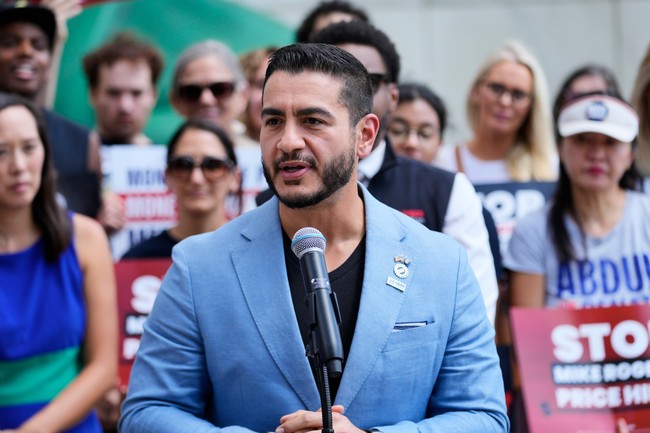
Michigan is a glaring Toss-Up after the Democratic primary selected Abdul El-Sayed to face former Congressman Mike Rogers. El-Sayed’s record and rhetoric have drawn criticism from mainstream Democrats and independents alike, and several high-profile Democrats have publicly questioned him. Rogers benefits from crossover endorsements and a likely Republican spending edge, so this seat is very much in play. Given El-Sayed’s vulnerabilities and the broader polling issues that favored him in the primary, I’m shifting this contest from Lean D to Toss-Up.
Minnesota remains Likely D despite a Republican candidate with stronger fundraising and a Democratic nominee who leans left. The state has trended Democratic at the statewide level with a string of narrow GOP losses, and the baseline environment still favors Democrats there. Local corruption concerns and cash-on-hand advantages give Republicans potential openings, but Minnesota’s consistent blue lean prevents an immediate rating change.
North Carolina looks Lean D on current averages, with Democrat Roy Cooper outraising Republican Michael Whatley and holding an edge in aggregated polling. Still, the state’s modern Senate history favors Republicans and Whatley’s campaign can exploit Cooper’s weaknesses on crime and sanctuary issues. Expect the GOP and allied groups to aggressively counter Cooper’s fundraising advantage and highlight substantive vulnerabilities in his record.
Across the board, Republicans retain the structural edge in the Senate map. Democrats need four net pickups, a tall order given the distribution of vulnerable seats and the historical rarity of flipping double-digit Trump states. Good polling hygiene, disciplined messaging, and a focused ground game should allow GOP candidates to convert structural advantages into electoral outcomes despite summer polling noise and isolated primary upsets.
Campaign money will flow heavily into contested states, and while individual Democrat candidates may outraise their opponents in certain matchups, coordinated Republican spending plus better-aligned fundamentals make GOP control of the Senate a realistic outcome. The coming months will hinge on turnout, candidate competence, and whether polling houses correct for the persistent Democrat tilt that has misled observers for years.
Add comment