
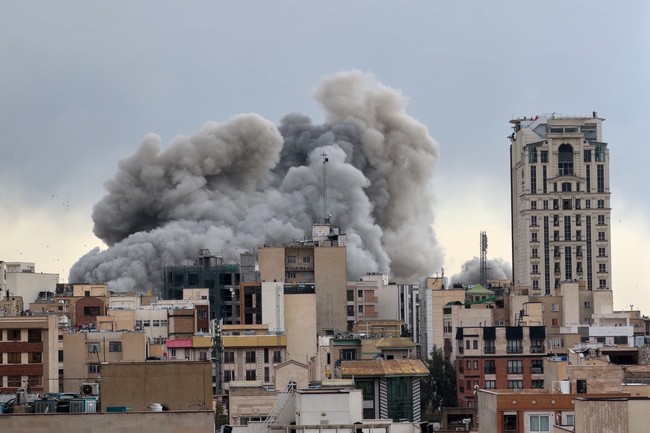
President Trump announced an ultimatum to Iran over the Strait of Hormuz, then said talks had produced “major points of agreement” and he would pause planned strikes for five days while negotiations continue, though Iranian state media denied any agreement and questions remain about who in Iran is actually negotiating with the U.S.
Trump told reporters he issued a hard ultimatum: open the Strait of Hormuz or face strikes on Iranian power infrastructure. He framed the move as decisive action to restore freedom of navigation and punish obstruction by Tehran, signaling that pressure has been applied across diplomatic and military channels.
Late Saturday the president set a deadline, and by Monday morning he reported that diplomacy was making progress and that he would delay strikes for five days to let talks proceed. He spoke to reporters before boarding Air Force One, noting a planned stop that day and indicating the administration was working the phones to resolve the crisis quickly.
They’d better make a deal, he declared, or we’ll just keep bombing them:
In his remarks, Trump said the U.S. would speak with Iranian leadership and predicted the situation could be resolved within a short window if discussions “goes well.” He stressed that the administration had found “major points of agreement” but declined to name the Iranian figures involved in the conversations.
President Donald Trump‘s administration will speak with Iran’s leadership later Monday after the two sides found “major points of agreement,” the president says.
Trump made the comments while speaking to reporters before boarding Air Force One on Monday. He did not name the Iranian officials engaged in talks, but said he had not spoken with Mojtaba Khamenei, who was formally installed as Iran’s supreme leader earlier this month.
“We’re gonna get together today,” Trump said, saying the meeting will be by phone. He predicted that the war could end in the next 5-day period if the exchange “goes well.”
The president was deliberately vague about who on the Iranian side was participating in the talks, and he specifically denied that he had spoken with Mojtaba Khamenei. That lack of clarity feeds into broader uncertainty about Tehran’s internal command structure after recent leadership shifts and disruptions to the regime’s communications.
He brushed off speculation that Mojtaba Khamenei, who has not been publicly visible since reports about the new leadership, was the U.S. interlocutor. Instead, Trump suggested other figures inside Iran’s fractured power network were engaging with U.S. officials, and he emphasized that destabilization of Iran’s communications could be causing confusion inside Tehran’s official media.
The administration portrayed the pause as conditional and tactical, not a retreat. Officials and the president framed the five-day suspension of strikes as an opportunity to secure concrete concessions, while making clear that force remains an option if talks fail or if Iran continues to threaten navigation and regional stability.
Iranian state outlets quickly issued denials that any deal or meaningful contact was underway, and Tehran’s public posture remained defiant. The conflicting messages between Washington and Iran undercut any immediate sense of a breakthrough and leave open multiple paths forward depending on how the next days unfold.
Trump insisted the pressure campaign has created leverage, saying confusion inside Iran’s official ranks reflects the effects of U.S. actions and degraded Iranian infrastructure. From the Republican perspective, that leverage is progress—proof that firm policy and readiness to act force consequences that can bring adversaries to the table.
Conservative commentators will point to the administration’s posture as evidence that strength produces negotiation on American terms, while opponents will warn about the risks of escalation. For now, the situation rests on the outcome of phone discussions and whether Tehran responds to the pressure by reopening the strait and ending hostile interference with maritime traffic.
Iran rejected the U.S. account of imminent agreement, and state media denied ongoing talks, which the White House dismissed as a result of internal confusion. The next five days will determine whether diplomacy backed by credible force ends the standoff or whether the pause is only a temporary reprieve before further escalation.


Add comment