
President Donald Trump says he’s probing a troubling cluster of deaths and disappearances involving about 10 U.S. scientists tied to government work over the past three years, raising questions about national security and oversight while families and colleagues search for answers.
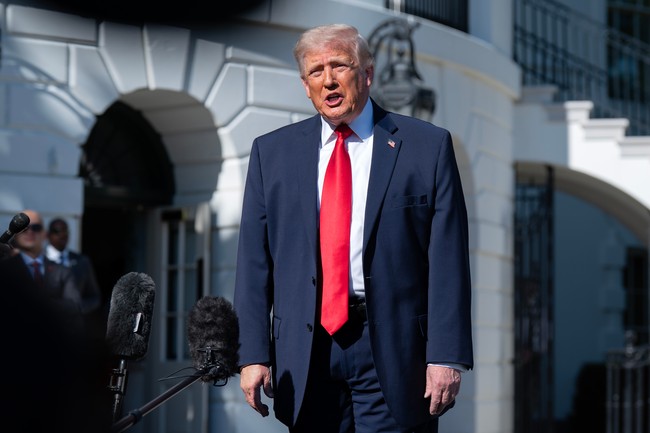
As he departed the White House for Las Vegas, Trump told reporters he is looking into the circumstances behind the deaths or disappearances of ten scientists over the last three years. The group includes researchers connected to nuclear energy, aerospace programs, and other government-funded projects, which has focused Republican attention on whether more scrutiny is needed of federal programs and contractor security.
Most of the professionals named either worked directly for government labs or on government-funded research at institutions like Los Alamos, NASA’s Jet Propulsion Laboratory, and Caltech. That concentration of expertise in sensitive areas is what prompted questions from press and lawmakers about whether these incidents are isolated or part of a larger problem.
Trump was asked by Fox News’ Peter Doocy, “Based on what you’ve been briefed, do you think is happening here, and do you think that this is connected or totally random?”
He responded bluntly and kept a careful tone.
“I hope it’s random, but we’re gonna know in the next week and a half.
“I just left a meeting on that subject. So, pretty serious stuff… hopefully, I do’nt know, coincidence, whatever you want to call it, but some of them were very important people, and we’re going to look at it over the next short period.”
Five of the scientists vanished without trace, and several reportedly left home without phones, keys, or other personal items. That pattern—people simply walking away from their residences—has alarmed family members and raised questions among officials about how these disappearances went unnoticed for critical early hours or days.
- Gen. William McCasland, 68, left his Albuquerque home in late February carrying only a firearm.
- Monica Jacinto Reza, 60, a leading developer of a nickel-based superalloy used in rocket engines, disappeared while hiking with friends in June 2025.
- Steven Garcia, 41, reportedly walked away from his New Mexico home in August 2025 with only a pistol.
- Anthony Chavez, 79, walked away from his New Mexico home in May 2025.
- Melissa Casias, 54, walked away from her New Mexico home in June 2025.
Some of those who vanished were tied to facilities that handle highly sensitive materials or technologies, including components related to national weapons systems and advanced aerospace projects. That has spurred GOP lawmakers to call for federal probes to determine whether intelligence, counterintelligence, or security failures played any role.
The other half of the group suffered violent or suspicious ends, which complicates the picture and increases the urgency among conservatives to demand transparency from agencies that fund and oversee these programs. The cases range from outright murder to sudden, unexplained deaths in retirement.
- Nuno Loureiro, 47, a nuclear physicist whose fusion research was noted by his institution, was murdered in his Boston home in November 2025.
- Carl Grillmair, 67, a Caltech astrophysicist who studied distant planets, was shot dead at his desert home in February 2026.
- Michael Hicks, 59, a recent retiree from NASA JPL who worked on asteroid deflection testing, died unexpectedly in July 2023.
- Frank Maiwald, 61, a NASA JPL researcher credited with work that could aid detection of life on other worlds, died unexpectedly in 2024.
- Jason Thomas, 45, a pharmaceutical researcher, disappeared from his Boston-area home in December 2025 and his body was found in a lake in March 2026.
The circumstances surrounding Jason Thomas’s departure from home mirror the New Mexico vanishings in unsettling ways, according to accounts from his wife. Small, unexplained departures late at night followed by missing phones or wallets have left families baffled and asking hard questions about safety and surveillance near sensitive facilities.
When the couple got home [from having dinner with friends] on December 12, they took care of the dogs, letting them out and giving them treats, before heading upstairs to their bedroom. According to Kristen, everything seemed normal. But after turning away for just a moment, she was surprised to find Jason had disappeared. She called out and he didn’t respond, so she went looking for him.
Institutions tracking these scientists have noted the value of their work. One obituary highlighted contributions to magnetized plasma dynamics and confinement, research relevant to fusion energy goals and the design of future fusion devices. Those kinds of achievements underscore why the loss of expertise matters for national research priorities.
His research on magnetized plasma dynamics, magnetic field amplification, and confinement and transport in fusion plasmas helped inform the design of fusion devices that could harness the energy of fusing plasmas, bringing the dream of clean, near-limitless fusion power closer to reality.
The White House press office acknowledged the issues are “worth looking into” and some Republican members of Congress have already pressed federal agencies for investigations. Those calls reflect Republican concerns about protecting sensitive research and ensuring accountability in federal programs that touch national security.
Families and colleagues want answers, and Republicans in Washington want clear lines of inquiry and swift accountability if government oversight failed. This cluster of cases has put a spotlight on the intersection of high-value research, contractor relationships, and the need for strong protective measures around critical scientific talent.

Add comment