
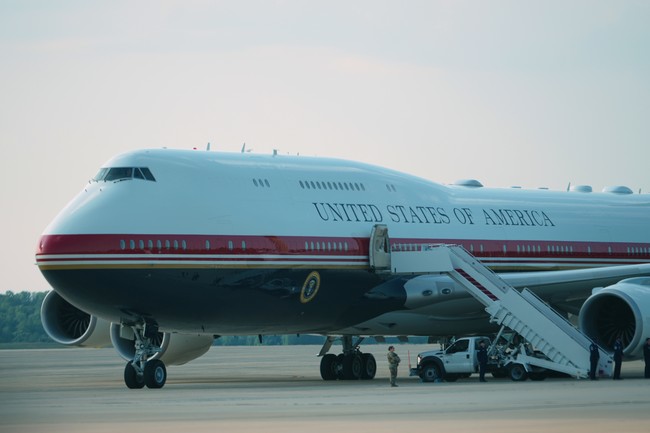
The Secret Service is under intense scrutiny after reports that three officials were escorted from their offices and placed on “do not admit” status amid a criminal probe into leaks of classified information, possibly tied to details about Air Force One. Sources say the FBI and CIA are involved, and the development raises fresh concerns about operational security, whistleblowing, and accountability inside a critical federal protectee agency. This piece lays out the known facts, the context around the alleged Air Force One disclosures, and reactions from retired insiders, all from a perspective that prioritizes national security and institutional integrity. The investigation’s outcome could reshape how tightly the government controls sensitive movement and who answers for unauthorized disclosures.
On Tuesday evening, journalist Susan Crabtree reported on X that three unidentified Secret Service officials had been walked out of their offices and designated “do not admits” while authorities pursue a criminal leak probe. Two sources reportedly corroborated that claim, and the FBI and CIA were named as participants in the investigation. If accurate, the development suggests the leak is being treated as a serious breach, not a routine personnel matter.
The timing and context point toward the broader controversy surrounding President Trump’s movement after the NATO summit in Turkey, where reports say a credible Iranian threat forced the use of a different aircraft for presidential travel. The press uproar over so-called decoy maneuvers intensified after media outlets published details implying the White House used subterfuge to protect the president and confuse potential adversaries. From a Republican viewpoint, protecting the commander in chief through necessary operational secrecy is not just prudent, it’s mandatory.
Exactly who leaked what remains unclear, but there are precedents that raise eyebrows. The Pentagon reportedly stripped an official’s top secret clearance over an “unauthorized disclosure of classified information regarding Air Force One’s capabilities to a media outlet,” underscoring that misuse of sensitive information has real consequences. When details about secure movements appear in public outlets, they endanger lives and undermine the very agencies charged with protection.
https://x.com/susancrabtree/status/2092391292018032855
🚨🚨@RCPolitics EXCLUSIVE and BREAKING: Three Secret Service officials/agents were walked out of their offices on Monday and made “do not admits” as part of a criminal investigation into leaked classified information to the media, according to two sources familiar with the matter.
It’s unclear if the leaks to the media pertained to the controversy over President Trump’s secret evacuation from Turkey because of intelligence about a surface-to-air missile threat to Air Force One from Iran.
The FBI and the CIA are involved in the investigation, one source told RCP.
Calls to Secret Service Communications Director Anthony Guglielmi were not immediately returned.
An email to the Secret Service press office also was not immediately returned.
DEVELOPING…
Retired officers and experienced aides are worried, and not because they fear political fallout; they fear for operational security and for the safety of people on the ground. A retired Air Force officer who served as a military aide warned that only a few people truly know the full plan for such movements, meaning any leak likely originated from someone inside the process. That insider risk is precisely what makes this situation dangerous: when limited knowledge is shared beyond a tight security circle, adversaries gain opportunities.
Public reaction has been mixed, but the central point for national security conservatives is simple: unauthorized disclosures that expose protective measures are intolerable. The Secret Service exists to shield the president and other protectees from threats, and operational details must stay within a very small, vetted group. Breaches like these, whether intentional or careless, erode trust and could force agencies to adopt even stricter compartmentalization that complicates coordination.
There is also a legal and institutional angle: criminal investigations, FBI involvement, and potential clearance revocations signal this is not a jurisdictional squabble but a formal inquiry with possible prosecution. Agency insiders who betray classified programs face penalties because the stakes are high. The message from security professionals is consistent—leaks jeopardize mission success and personal safety, and they must be addressed decisively.
Politically, Republicans tend to view this through the lens of law, order, and protection of the presidency. The public deserves transparency about outcomes where appropriate, but not at the cost of exposing methods that keep leaders and missions safe. That balance between accountability and secrecy is delicate, but when leaks cross the line into criminal territory, the law should take its course without partisan gamesmanship.
Observers will be watching how investigators proceed, whether any charges are brought, and what internal reforms the Secret Service might implement if systemic vulnerabilities are confirmed. The agency’s credibility depends on its ability to secure classified information and to hold accountable anyone who undermines that trust. Until the investigation concludes, facts should be judged carefully and the priority should remain clear: protect lives, enforce the law, and restore the integrity of sensitive operations.
“I go by Secret Service and the military. They wanted me to go on a different flight, different plane.”
“I hope that they prosecute this to the fullest,” one retired aide said. “Whoever leaked that, in my opinion, and having been involved in this, was highly placed in that process.” He added, “There’s only a few people who actually know exactly what’s going down, and that’s by design. So if somebody leaked it, it was somebody involved in the process, and that scares the hell out of me.”

Add comment