
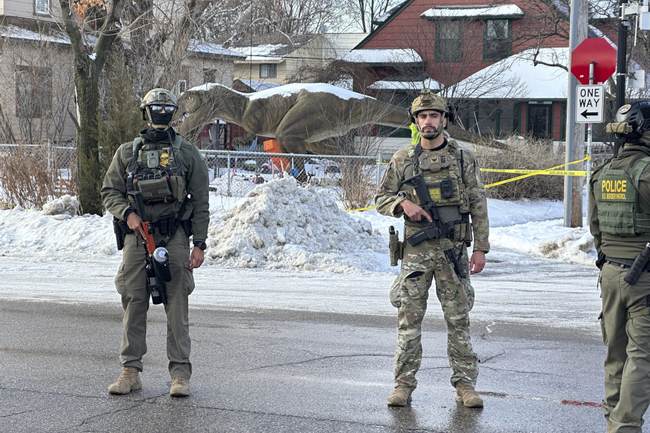
This article examines a recent incident in Minnesota where anti-ICE activists confronted and harassed people they believed were federal agents, highlighting the confusion, civic consequences, and the role local officials played in creating an atmosphere that encouraged aggressive public policing of strangers.
Minnesota’s situation has become a tense mix of activism and vigilantism, with state leaders criticized for appearing to side with protestors over everyday citizens. Reports say Governor Tim Walz and other officials have sided with anti-ICE demonstrators, and that stance appears to have given some activists the confidence to escalate encounters in public. That political signaling matters because it shapes how people interpret acceptable behavior on the streets of Minnesota.
The episode centers on independent journalist Hailey West, who described being followed for more than an hour by multiple vehicles before stopping to confront those tailing her. The followers apparently believed the car she occupied had been “confirmed” as ICE and acted on that belief. When West stopped, the confrontation intensified into vocal accusations and demands for identification from people who were not law enforcement.
A man in the group erupted at them, shouting, “Confirmed ICE!” and ranting about “the people they were abducting.” Another carried a sign that said “no one is illegal” and loudly demanded, “Where are you from?” The protesters insisted that if someone showed up in a database as ICE, then that person must be ICE, and therefore he had the right to demand IDs and proof of residence. Those exact words and actions are on the record from witnesses to the encounter.
The group’s behavior included whistle-blowing and aggressive questioning that mimicked tactics used against actual enforcement officers, despite the absence of uniforms, badges, or official markings. Activists continued to press for identification and to assert their right to interrogate anyone they suspected of being federal agents, apparently treating database checks and rumor as sufficient proof. The interaction shows how quickly suspicion can become confrontation when fueled by activist certainty rather than evidence.
There is an obvious disconnect between the rhetoric some on the left promote about respecting personal boundaries and the on-the-ground behavior of certain anti-ICE factions. These activists claimed they were protecting their neighborhood, yet the methods they used involved cornering and intimidating people in public spaces. That inconsistency has left ordinary Minnesotans worried about being misidentified and harassed simply for going about their day.
Local officials’ responses to similar incidents have added to the alarm. When elected figures appear to endorse or excuse harassment of suspected agents, it lowers the threshold for aggressive citizen action and makes public spaces less safe. Communities rely on clear lines between lawful protest and unlawful intimidation, and blurring those lines invites more chaotic encounters.
The consequences extend beyond the immediate victims of these confrontations. When citizens see mobs challenging strangers, it erodes trust in public order and encourages retaliation, escalation, and misdirected anger. People who are falsely accused or forced to prove their identity in public may feel targeted, vulnerable, and powerless, which undermines civic cohesion and the rule of law.
Independent reporting and witness accounts matter in these moments because they provide a check against rumor-driven vigilantism. Hailey West’s account is one example that surfaced publicly, showing how quickly suspicion turned into public shaming and demands for proof without due process. That kind of documentation helps communities understand what actually happened instead of relying on secondhand claims.
At stake is the balance between legitimate protest and unlawful harassment. Citizens have a right to raise concerns about federal enforcement actions, but they do not have the right to seize authority on the streets and demand identification from people they suspect. The line between advocacy and coercion must be defended to keep neighborhoods safe and to ensure political disagreement does not become an excuse for public intimidation.


Add comment