
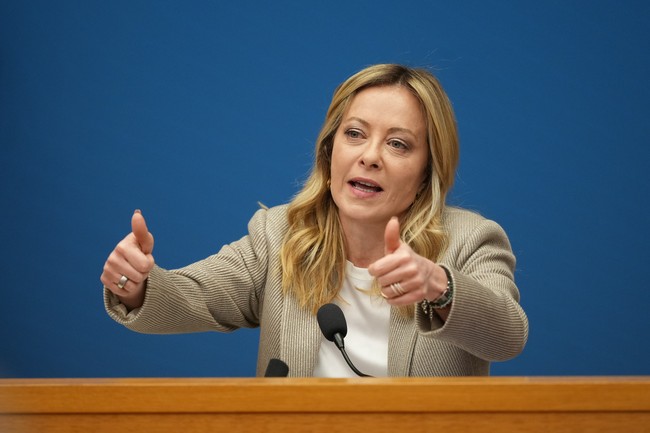
Giorgia Meloni has shifted toward the European establishment by restricting U.S. military use of an Italian base and ending a longstanding security agreement with Israel, moves that risk alienating the conservative backers who helped her rise and may not win her favor with Brussels or the European left.
Italian Prime Minister Giorgia Meloni’s recent decisions signal a clear tilt toward the European elite, a move that looks like appeasement rather than strategic leadership. She has blocked U.S. military access to a Sicilian airbase and has allowed a long-standing security arrangement with Israel to lapse. These steps are framed as diplomatic gestures, but they will be read by many as political positioning aimed at European opinion makers.
Meloni’s supporters on the Western right, including figures who publicly backed her rise, will see this as a puzzling retreat from firm alliances. Those alliances were instrumental during her ascent, and abandoning them risks betraying the people who stood by her when the left attacked. Political loyalty is not easily rebuilt by small concessions to critics who once accused her of extreme ideologies.
The practical effect of ending the security agreement with Israel is limited because it was largely one-sided, with Italy receiving more technical and intelligence support than it provided. In operational terms, Israel’s capabilities in military and intelligence technology remain far stronger, and the pact often favored Italian needs. So the move reads as symbolic rather than strategic, intended to placate critics rather than address concrete defense shortfalls.
Meloni seems to be pursuing electoral triangulation ahead of elections that must occur by September 2027 and could happen sooner. Domestic polls show many Italians feel the country is headed in the wrong direction, and that political pressure likely drives her outreach to Brussels and other European centers of power. But making overtures to hostile elites rarely transforms them into allies; past denunciations do not evaporate because of a few policy shifts.
Domestically, Meloni has a record that conservatives can point to with real pride: reductions in the debt-to-GDP ratio, lower unemployment, and economic performance that at times has outpaced peers like Germany and France. Those are tangible results that show right-leaning governance can deliver where left-dominated establishments have often stalled. Yet those accomplishments risk being overshadowed if her foreign policy signals confuse or alienate her base.
The larger risk is that Meloni trades credibility for acceptance, losing the political capital that made her a disruptive force in Italian politics. The European left and Brussels bureaucracy are unlikely to stop their attacks simply because she offers conciliatory moves. Those who labeled her with the worst epithets are not on a fast track to forgiveness, and voters who supported her for firm stances may interpret these steps as capitulation.
Strategically, leaders facing hostile elites have two choices: double down on their core supporters or try to appease their critics. Meloni appears to be attempting the latter, and history suggests that approach rarely secures lasting favor from either side. The elites will remain skeptical, and grassroots supporters will grow increasingly uneasy if they believe their champion is bending to outside pressure.
There is also an irony in sacrificing strong bilateral ties that paid political dividends during her rise. Israel’s public backing in 2022 and support from parts of the American right were important counterweights to European antagonism. Abandoning those relationships now undermines the alliances that proved politically useful and strategically beneficial when Meloni needed them most.
Political survival matters, but survival without independence is hollow. If Meloni believes European courtiers will accept her once she makes symbolic concessions, she risks a painful lesson. Voters vote for leadership that reflects their values and priorities, and empty gestures to opponents rarely change long-held perceptions.
Editor’s Note: Do you enjoy RedState’s conservative reporting that takes on the radical left and woke media? Support our work so that we can continue to bring you the truth.


Add comment