
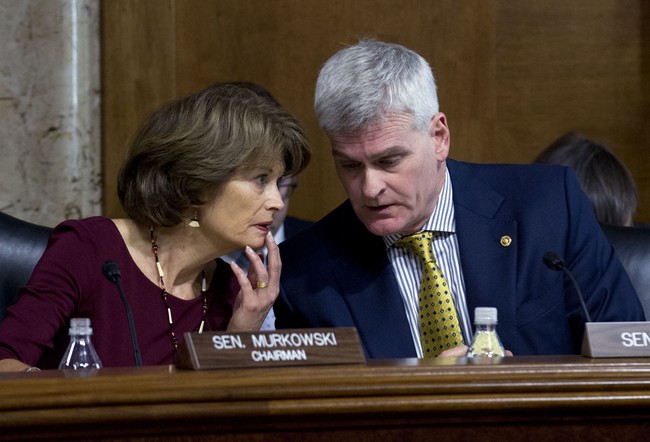
Senator Bill Cassidy heads into Saturday’s closed Republican primary in Louisiana facing a real risk of finishing third and ending his Senate career. Polling shows a split field with John Fleming and Julia Letlow ahead or close, and the race has been reshaped by Trump’s endorsement, a changed primary system, and a campaign that has not gone Cassidy’s way. Money and incumbency have not delivered the expected advantage, and if Cassidy fails to make the runoff, his time in elective office could be effectively over. Voters will decide whether his record or the impeachment vote matters most.
Cassidy’s vote to convict after January 6 remains the political hangover he cannot shake with hard-right Republican primary voters. That single action has given his opponents a clear angle to use against him for years, and it has become a central theme in this campaign. In a closed Republican contest, that grievance carries more weight than it would in a jungle primary against Democrats.
Recent polling paints a grim picture for the incumbent. Surveys show John Fleming and Julia Letlow trading the lead while Cassidy sits in third in many results, with a significant portion of voters still undecided. Those undecideds make the final outcome uncertain, but the trend lines favor a runoff without Cassidy if he can’t move the needle quickly.
“The key thing to keep in mind is that Bill Cassidy, an incumbent who has won statewide in two previous elections, is so far behind,” Hogan said. “Some of the polls indicate that he’s third.” That assessment from an LSU political scientist underscores how unusual this weakness is for a two-term senator. If Cassidy finishes third, it would be a rare and decisive rebuke from his own party’s base.
Donald Trump’s intervention changed the early dynamics when he endorsed Julia Letlow in January, and Gov. Jeff Landry followed. The expectation was that the field would consolidate and produce a clear Trump-backed challenger to Cassidy, but John Fleming refused to step aside. Fleming’s decision to stay in reshaped the contest into a three-way fight that splits the anti-Cassidy vote and almost certainly guarantees a runoff.
Fleming’s argument to voters leaned on his service in the White House in 2020 and early 2021, stressing loyalty and continuity during January 6. “What people expect from an endorsement from President Trump is really a candidate like me, but what they got was a candidate very similar to Cassidy,” Fleming said, and he reminded voters, “There were a lot of resignations in that White House on Jan. 6. I stood there, stayed there, and did not leave my post.” That narrative helped him pick up support from voters skeptical of Letlow’s difference from Cassidy.
Cassidy entered the race with a financial advantage and establishment backing, but cash alone has not produced momentum. Super PAC spending and abundant cash-on-hand shaved into his lead on paper yet failed to translate to voter enthusiasm in the polls. Many primary voters view his Senate record and institutional ties as liabilities rather than assets this cycle.
National Republicans have kept most of their distance, confident the seat will remain in GOP hands regardless of the nominee. Trump’s team, however, made this a pointed primary fight and reportedly targeted Cassidy as one sitting Republican senator they wanted to unseat. That focus amplified the stakes and turned local grievances into national headlines.
Cassidy’s campaign opted out of a high-profile conservative radio debate where Fleming and Letlow squared off, leaving the two challengers to define themselves and contrast with him in front of a conservative audience. Letlow called Cassidy’s impeachment vote the “worst mistake that Cassidy could have made” and insisted Louisiana voters “have never forgotten it.” Fleming spent the debate arguing Letlow offered little substantive distance from Cassidy.
On the stump, Cassidy emphasizes tangible deliverables, including work on infrastructure that he credits with billions for Louisiana, and his record on conservative priorities such as pro-life positions and Second Amendment rights. He also points to his role on Senate committees and his engagement on national issues, and offers a line meant to neutralize personal attacks: “I don’t really think President Trump likes me that much, but we work really well together,” he said while recounting a conversation with a voter.
The mechanics of this election are new for Cassidy’s incumbency: Louisiana shifted from a jungle primary to closed partisan primaries for U.S. Senate this cycle. That change removes Democrats from the Republican primary and concentrates power in the hands of conservative primary voters, the same group most likely to punish Cassidy for his impeachment vote. Under these rules, only the top two move on if no one clears 50 percent.
With polling pointing to a three-way split and a probable runoff on June 27, Cassidy’s path forward is narrow and immediate. He must persuade conservative Republicans that his governance outweighs the impeachment grievance and that his record delivers for the state in practical, measurable ways. If he cannot do that quickly, Saturday could mark the end of his tenure in the Senate.


Add comment