
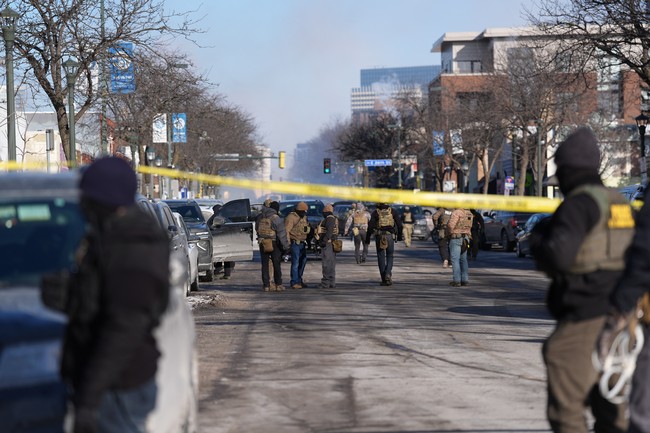
The temporary restraining order tied to the federal evidence in the Alex Pretti shooting has been dissolved by Judge Eric Tostrud, who found federal preservation policies and testimony adequate to show evidence was being kept; the ruling stops short of deciding the underlying merits and notes exigent circumstances likely explain some loss of scene evidence.
The shooting took place on January 24, 2026, and a TRO was entered that same night by Judge Tostrud at the request of Minnesota authorities. That order only required federal agents not to destroy or alter evidence, a restriction that many argued simply reiterated existing obligations. From a Republican perspective, the TRO always felt like judicial micromanagement for theater rather than a necessary restraint on federal investigators doing their jobs.
In his new 18-page opinion and order, Tostrud explains that federal agencies already have formal evidence-preservation practices under the Federal Records Act and their own protocols. Multiple federal officials provided testimony that items such as body-worn camera footage and physical evidence were being preserved according to those procedures. The judge concluded there was no clear proof federal defendants would destroy or improperly alter evidence if the TRO were lifted.
The court’s analysis emphasizes that an on-scene, abbreviated investigation flowed from a volatile, dangerous situation, not from intentional failures by federal officers. Judge Tostrud said the record shows loss or spoliation of some evidence likely resulted from exigent circumstances rather than deliberate misconduct. That matters: courts should avoid assuming the worst about officers who face chaotic scenes while trying to protect themselves and others.
The federal officers’ abbreviated on-scene investigation seems best understood as resulting, not from anything investigating officers did or did not do, but from a volatile situation and reasonable safety concerns. Plaintiffs do not suggest or identify evidence showing Defendants are to blame for failing to prevent the scene from being overrun. In other words, though it appears likely that evidence was lost or spoliated at the scene of Mr. Pretti’s shooting, the record here shows the loss or spoliation more likely resulted from exigent circumstances, not from Defendants’ substandard evidence-gathering or preservation activities.
…
Plaintiffs filed evidence of public statements made by federal executive-branch officials and the Department of Homeland Security, ECF No. 21, whose ICE/HSI branch was tasked initially with the federal investigation into Mr. Pretti’s shooting, Zito Decl. ¶ 11. In Plaintiffs’ view, these statements show that these officials and the Department of Homeland Security decided the day Mr. Pretti was killed that the federal officers who shot him did nothing wrong. For example, Stephen Miller, White House Deputy Chief of Staff for Policy and Homeland Security Advisor, described Mr. Pretti in a January 24 X post as a “domestic terrorist [who] tried to assassinate federal law enforcement.” ECF No. 21 ¶ 2; ECF No. 21-1 at 2. That same day, the Department of Homeland Security posted on its X account that the incident “looks like a situation where an individual wanted to do maximum damage and massacre law enforcement.” ECF No. 21 ¶ 3; ECF No. 21-2 at 2. Kristi Noem, Secretary of Homeland Security, was reported to have said essentially the same thing. ECF No. 21 ¶ 5; ECF No. 21-4 at 4. These statements are troubling. They reflect, not a genuine interest in learning the truth, but snap judgments informed by speculation and motivated by political partisanship. To make a difference here, however, Plaintiffs must show the statements are probative of Defendants’ intent to destroy or spoliate evidence related to the investigation of Mr. Pretti’s shooting. I conclude that connection is too remote for the statements to justify an ongoing preservation order. No evidence or information suggested Deputy Chief of Staff Miller or Secretary Noem would have been directly involved in the investigation when HSI was leading it, much more that either of them would have been responsible for the destruction or spoliation of evidence. On this record, those conclusions would depend on speculation. Regardless, as noted, it has been widely reported that the FBI is now leading the investigation, further removing these officials from involvement in it. The statements and reporting Plaintiffs cite do not justify the continuing relief they seek.
…
Other considerations dampen my level of concern regarding the continuing existence and ongoing integrity of the evidence in Defendants’ possession. Putting this case aside, Mr. Pretti’s shooting alone almost certainly triggered Defendants’ duty to preserve evidence that may be relevant to any excessive-force civil suit or proceeding brought on his or his survivors’ behalf, and in that proceeding, non-preservation or spoliation would pose significant, perhaps dispositive consequences….And Defendants’ declarations show that Defendants implemented reasonably prompt measures to comply with the temporary restraining order. Zito Decl. ¶¶ 6–7; Egerton Decl. ¶ 7.
…
Favoring Plaintiffs, the temporary restraining order’s terms are not meaningfully different from Defendants’ preservation policies. That seems obvious. On the other hand, an ongoing preservation order—and the contempt power that accompanies it—would overlay, not just Defendants’ preservation polices, but any investigative measures that might alter evidence. Examination and testing often leave evidence in a different condition after testing than it was before. Legitimate concerns over whether those types of investigative measures comply with a preservation order might reasonably prompt Defendants to seek judicial direction. That, in turn, would inject the court into Defendants’ investigation, not just their evidence preservation. Burden considerations do not favor either side.
The opinion also notes plaintiffs’ concerns about handling of Mr. Pretti’s firearm, but it explicitly states this ruling is not a resolution on the merits and does not determine whether state entities will gain access to particular evidence. Judge Tostrud’s job here was narrow: weigh the factors that justify an ongoing preservation order. He found plaintiffs failed to meet that burden.
With the TRO dissolved, federal investigations continue under established agency protocols, now reported to be led by the FBI. From a conservative angle, that is a welcome outcome: investigators can do their work without a court overlay that risks disrupting evidence testing and the normal course of a criminal probe. The case itself, and any civil claims that follow, will sort through the facts and accountability in due time.



YES! About time we see that Federal Law Enforcement takes precedent and supersedes all this commotion coming from these renegade Mayors and Governors that have absolutely been supporting and encouraging Criminal Behavior and especially Illegal Alien Invasion by the millions, with a kind of Carte Blanche Preferential Treatment of said Illegals and those American Citizens who wrongly are interfering or otherwise attempting to dampen and completely stop these appropriate Legal Law Enforcement Actions by our U.S. Government!
The old Harry Truman saying fits; the Buck Stops Here, they need to butt-out now or pay the consequences of those improper and illegal actions!
Get with the program!
In California lets not forget Newscum had the rioters throwing bricks and other projectiles at Federal Law Enforcement vehicles! That’s an attack and bricks is a prelude to gunfire, Molotov cocktails or bombs!
Are we going to become a Third World Shit-hole country?
I say no way!!! Can’t be allowed to happen!