
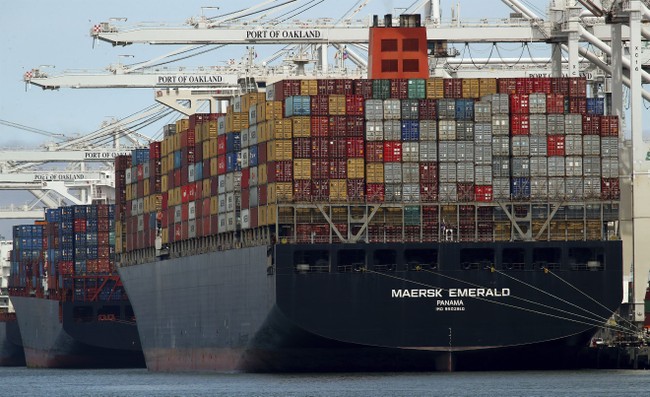
The Senate moved this week on a resolution to terminate President Donald Trump’s global tariffs, with four Republican senators joining every Democrat in support; the outcome looks largely symbolic, but the vote spotlights intra-party tension over trade strategy, looming Supreme Court review, and how the White House plans to use tariffs as leverage in negotiations with China and other partners.
Four GOP senators—Rand Paul, Mitch McConnell, Susan Collins, and Lisa Murkowski—joined all Democrats to approve a resolution to end sweeping tariffs the president imposed under emergency authority. That alignment underscores a persistent split on the right between lawmakers who favor aggressive trade tools and those who worry about economic fallout or presidential power. The vote followed earlier moves on tariffs affecting Canada and Brazil, signaling a concerted effort by opponents to roll back the administration’s leverage.
On the Senate floor the measure was framed as a check on unilateral tariff authority, while supporters of the tariffs argued they are corrective actions after years of unfair trade practices. President Trump has been negotiating deals that would modify some levies in exchange for market access, commitments on illicit drugs, and other concessions, and his team says the tariffs are a bargaining chip. Critics counter that the tariffs raise costs for American families and businesses and risk retaliation.
Supporters of the resolution used a procedural maneuver tied to the International Emergency Economic Powers Act to force the vote, bypassing standard Senate GOP leadership control. The move made the measure a show vote in the short term, because it is unlikely to survive or advance in the Republican-controlled House. Even so, the political optics matter: the resolution puts a spotlight on which Republicans prioritize limiting presidential emergency trade powers.
The Senate on Thursday voted to terminate President Trump’ssweeping global tariffs, after passing two resolutions seeking to repeal the levies in Canada and Brazil earlier this week.
Four Republican senators voted with Democrats to approve the bipartisan resolution ending the steep rates on allies such as the European Union, Japan and South Korea.
Not every Republican broke ranks. Some senators emphasized the temporary and strategic nature of the tariffs, saying they are corrective measures to confront other countries’ longstanding trade barriers. Others warned that rescinding tariffs would remove leverage before the White House finishes negotiating concrete commitments. That argument was echoed by lawmakers concerned about preserving bargaining power ahead of ongoing talks.
Sen. Mike Crapo argued forcefully against the resolution, warning that the move would harm families and businesses. He said, “…at this juncture, this resolution is counterproductive to helping American families and businesses of all sizes.” Crapo added, “It’s no secret that for decades, countries around the globe have raised tariff and non-tariff barriers against Americans and against American business, and have raised the cost for Americans and American businesses without response from the United States. President Trump is now responding,” Crapo said. “The president’s negotiations are bearing fruit.”
Those defending the tariffs point to recent deal outlines with China and other Asian nations that would roll back some duties in exchange for enforcement commitments, curbs on illicit fentanyl flows, and assurances on critical mineral exports. The administration portrays tariffs as a temporary pressure tactic that produced concrete offers from trading partners. Opponents view the same moves as reason to constrain presidential authority and return trade decisions to Congress.
Legal questions add another layer of uncertainty. The constitutionality of the tariffs is now before the Supreme Court, with expedited review slated to begin this fall. How the justices rule could reshape the reach of presidential emergency powers over trade and determine whether future administrations can use the same tools. That pending decision means the debate is not purely political; it has real legal stakes that could outlast the current dispute.
For now, expect continued tension inside the GOP between lawmakers who see tariffs as practical leverage and those who see them as overreach. The vote served as a marker for where individual senators stand on presidential authority, economic risk, and trade strategy. Whether the strategy changes will depend on the outcome of negotiations, market reactions, and the Supreme Court’s eventual ruling.
Add comment