
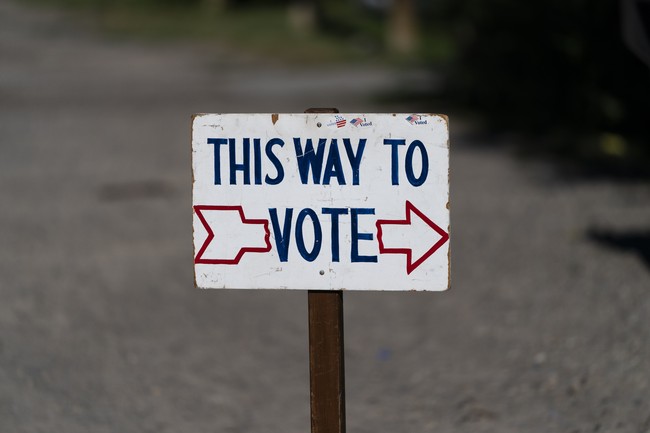
I’ll explain what’s at stake, outline the political clash, quote the key demand that sparked outrage, show how Republicans are responding, and note similar state-level moves. This article focuses on whether immigration enforcement should be limited near polling places and why Republicans are pushing back hard.
Democratic leaders recently called for limits on immigration enforcement near what they labeled “sensitive locations,” including polling places, and that request set off a political firestorm. From a Republican perspective, that move looks like a direct effort to shield noncitizens from accountability in places where voting integrity matters most. Voters deserve clear answers about why any group would be given special protection around the ballot box.
The letter from House and Senate Democratic leaders included the line: “Prohibit funds from being used to conduct enforcement near sensitive locations, including medical facilities, schools, child-care facilities, churches, polling places, courts, etc.” That exact wording has become the focal point of the debate, and it is quoted here unchanged because it highlights what Republicans say is a dangerous refusal to allow enforcement where it intersects with elections. Americans should ask why immigration enforcement would be constrained where votes are cast or results are tallied.
Republican lawmakers see this as more than a policy disagreement; they view it as an existential threat to election integrity. Senator Katie Britt and other GOP members of the Homeland Security Appropriations Subcommittee have demanded full funding for DHS and pushed for legislation that would require verification of voter eligibility. Those steps, Republicans argue, are commonsense measures to prevent noncitizens from affecting federal elections.
In committee hearings and public statements, Republicans have repeatedly asked whether Democrats really intend for immigration enforcement to stand down near polling locations. If enforcement is blocked within certain perimeters, critics say that creates a legal loophole where illegal presence could go unchecked near sites where votes are cast or where election officials meet to certify results. That is exactly the concern driving the GOP pushback.
On the legislative front, GOP senators are pressing for the SAVE Act, the Safeguard American Voter Eligibility Act, which aims to ensure only citizens vote in federal elections. Republicans describe the bill as a protective measure to restore public confidence in the franchise and to close obvious vulnerabilities. Democrats, by contrast, have labeled the initiative differently, and that partisan framing has only deepened mistrust between the parties.
At the state level, similar proposals have emerged, and those moves add fuel to the national argument. For instance, a Virginia bill circulated recently would bar immigration enforcement within a set distance of polling places and other election-related venues. To Republicans, that kind of statute looks like an invitation to confusion and potential abuse on election day, not a solution to any genuine public-safety issue.
Critics point out that elections require transparency and that allowing sanctuary zones around polling sites conflicts with the need to verify eligibility and keep the process lawful. Republicans are asking straightforward questions: Who benefits from these protections, and why are they necessary at places where votes are counted? Those questions are at the heart of the GOP critique and are not rhetorical wings of paranoia but practical concerns about rules that should apply equally everywhere.
Democrats say their aim is to protect vulnerable people and to prevent intimidation at places like schools and hospitals. Republicans counter that protecting polling places from intimidation can be done without hamstringing immigration enforcement or creating special exemptions. A consistent national approach, GOP leaders insist, is both possible and preferable to ad hoc protections that complicate enforcement and invite partisan controversy.
Beyond immediate policy details, the dispute has political consequences heading into upcoming elections, where trust in the system is already strained. Republicans argue that the party pushing to limit enforcement at polling sites is effectively prioritizing partisan advantage over election security. That message resonates with voters who want borders enforced and ballots protected by clear, enforceable rules.
The debate over “sensitive locations” and polling places will keep playing out in committee rooms, on the Senate floor, and in state legislatures. For Republicans, the goal is simple: insist on full funding for DHS, pass laws that verify voter eligibility, and reject measures that create immunity zones around places where votes are cast and counted. The questions raised by the Democratic demand remain and deserve direct, public answers from those who proposed the limits.

Everybody can earn 250$h+ 1k$ daily… You can earn from $6000-$13600 a month or even more if you work as a full time job…It’s easy, just follow instructions on this page, read it carefully from start to finish….. It’s a flexible job but a good earning opportunity. Go to this site home tab for more detail thank you .
Join This Right Now ____________ Www.EarnApp1.Com