
The article examines warnings from conservative economists and commentators about a proposed $25 federal minimum wage, arguing it would boost labor costs, cost millions of jobs—especially in the Sunbelt and service sectors—and reflects a broader clash over economic competence between Democrats and conservatives.
Ronald Reagan once said, “The trouble with our liberal friends is not that they’re ignorant; it’s just that they know so much that isn’t so.” That critique frames the piece’s view that many on the political left misunderstand basic economic trade-offs. Advocates for dramatic minimum wage hikes promise sweeping benefits, but critics point to real costs for businesses and workers. The debate turns on whether policy helps people who need work or instead makes work scarcer.
https://x.com/PetrellaReports/status/2089788353159806991
Rebekah Paxton, an economist and research director at the Employment Policies Institute, warns a federal $25-per-hour minimum wage set by 2031 would be a “job killer.” She argues that doubling or tripling local minimums would sharply raise labor costs for employers and force responses that harm employment. Businesses could try to pass on costs through higher prices, but many will trim staff or hours instead, reducing opportunities for entry-level workers.
“When you’re talking about doubling or tripling the minimum wage, you’re talking about doubling and tripling labor costs for businesses in those areas. There may be some businesses that try to absorb that through higher prices, but ultimately what we know from economists, business owners, and workers themselves is that it doesn’t always work. In a lot of ways, it means business owners are going to have to slash jobs and reduce the number of hours that folks are able to work. Our report shows that that’s going to cost almost five million jobs across the country.”
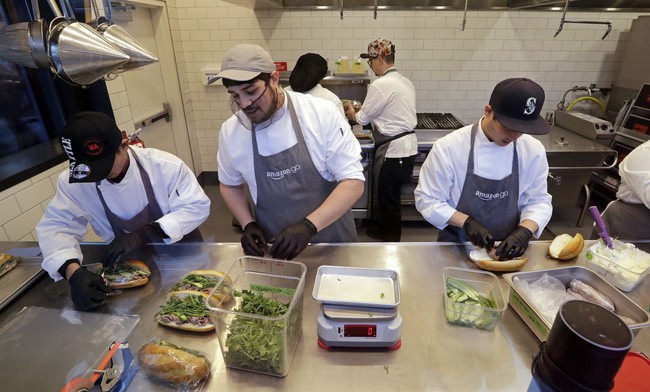
The projected loss of nearly five million jobs is not abstract; the estimate includes about 1.2 million tipped workers, concentrated in restaurants and hospitality. Those industries rely on flexible staffing and tipping to keep entry-level roles viable, so a large pay floor disrupts long-standing business models. Paxton emphasizes Sunbelt states like Texas, Georgia, North Carolina, and Florida would feel the greatest pain because those regions combine rapid growth, lower wage baselines, and large service-sector workforces.
When a federal mandate blasts through local labor markets, it does more than raise paychecks on paper. It changes incentives for businesses deciding whether to hire, invest, or automate. Higher mandated wages can speed adoption of labor-saving technologies and thin margins for small employers, squeezing thin-profit restaurants, family-run shops, and local service providers. The net effect, critics say, is fewer hours, fewer hires, and fewer opportunities for inexperienced workers to learn skills.
Supporters of a $25 minimum wage paint it as a unifying reform, claiming broad appeal across ideological lines. But skeptics dispute that narrative and highlight the political risks of imposing a one-size-fits-all federal floor. Economies vary by region, and what might be feasible in a high-cost city can be disastrous in lower-cost counties where small businesses operate on tight budgets. Uniform federal mandates erase those local adjustments and push up costs where market wage levels are far below the proposed federal floor.
Democratic Socialists and other left-leaning groups back big wage hikes and legislation like living-wage proposals in Congress, arguing fairness and shared prosperity. From a conservative perspective, the concern is that ideology often outruns economic reality: policies aimed at redistribution must reckon with incentives and unintended consequences. If the political momentum toward a steep federal wage floor grows, the fallout will be measured not by slogans but by employment statistics, small-business failures, and automation trends.
Practical economics shows trade-offs are unavoidable: raise labor costs and some jobs vanish, reduce costs and employers can hire more. That trade-off matters most for younger workers, recent entrants to the job market, and those seeking flexible, part-time roles. When entry-level opportunities dry up, long-term career prospects and skill development can suffer—outcomes at odds with the stated goals of many wage advocates.
Policy debates often separate grand intentions from ground-level results, and this one is no different. A federal $25 minimum wage would be a dramatic change to the U.S. labor market, and conservative analysts argue the risk of large-scale job losses is substantial. The larger lesson for policymakers is to balance compassion with economic discipline, designing reforms that expand opportunity without triggering widespread layoffs or accelerating automation.


Add comment