
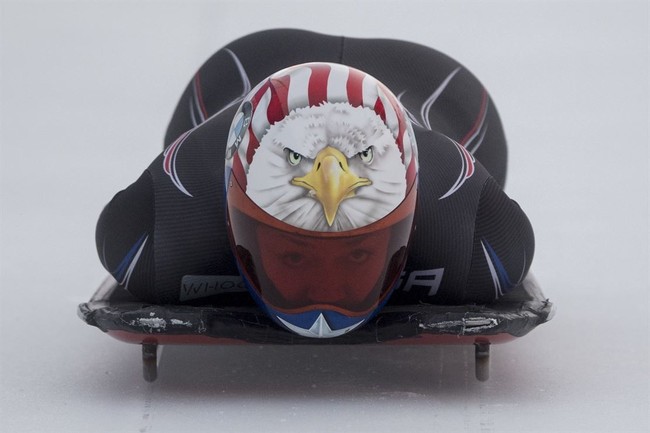
The dispute over Katie Uhlaender’s shot at the Milano Cortina 2026 skeleton team has blown up into an international spat, with allegations that Team Canada strategically withdrew athletes to reduce points and block U.S. competitors, an IBSF investigation saying the Canadians’ actions were “intentional and directed to reducing the points available to athletes who slid at the final Lake Placid NAC,” and Uhlaender pushing back publicly as lawmakers and fans weigh in.
Katie Uhlaender, a five-time Olympian chasing a sixth Games, now faces an uncertain path after a late set of withdrawals at the North America Cup in Lake Placid changed the math that decides Olympic berths. The claim is that when Canada pulled four entries, it lowered the event’s point value and made it impossible for some rivals to earn the qualification points they needed. That left Uhlaender and others shut out before they even had a chance to race for the spots they trained for.
The International Bobsleigh and Skeleton Federation carried out an investigation and concluded the Canadian moves were deliberate, stating, “the action of the Canadians was intentional and directed to reducing the points available to athletes who slid at the final Lake Placid NAC.” That finding has fueled outrage among affected athletes and supporters who say sport should reward performance on the track, not strategic scheduling. For a veteran like Uhlaender, the timing and consequence felt particularly unfair given her long career and proven results.
Within national team rules that limit entries to two sliders per country, Canada effectively secured places for its top two athletes, Hallie Clarke and Jane Channell, while the U.S. roster situation remains unsettled. The U.S. has Kelly Curtis and Mystique Ro in place and hopes for clarity on whether Uhlaender will claim a berth. Athletes on both sides of this dispute argue the integrity of selection systems matters, because the Olympics are about competition, not gamesmanship.
Uhlaender has taken her fight public and is leading a broader protest on behalf of athletes she says were harmed by the manipulation of results. “I am fighting for what is right. I am fighting for my rightful Olympic opportunity. But more importantly, I am fighting for every athlete who has been harmed by competition manipulation. I am far from the only athlete affected by these actions,” she said, voicing a grievance that resonates beyond a single team or nation. That statement has rallied attention from athletes, fans, and some lawmakers.
Republican Representative Jeff Hurd weighed in from the political side, calling out the situation and highlighting the unfairness of manipulating events to keep competitors out. He emphasized that Olympic competition should reward skill and performance, not tactical withdrawals meant to alter the scoring landscape. His public comments have amplified the debate and added a political lens to what many expected to be a purely sporting dispute.
Canada has pushed back, with coach Joe Cecchini saying he’s puzzled by the uproar and sympathetic to disappointed athletes, but resisting the idea that his team acted improperly. “I feel really bad for the athletes in trying to understand why people are so potentially angry. There’s a voice from an athlete who’s been in multiple Olympics and is carrying a certain clout. And it’s been really hard and it has challenged myself, my staff,” Cecchini said, acknowledging the emotional fallout without accepting blame. He also pointed out a long personal history with Uhlaender, casting the situation as complicated and personal as well as procedural.
“I totally can understand how skeleton is a huge part of her life as it is mine. And so I can see how she can be upset and disappointed,” Cecchini said.
“But being disappointed and upset with the decision of another nation, or expecting another nation to go to do something extra for you so that you can have a certain performance, I don’t think it is fair to put that onto another nation and to be so disappointed in a decision that someone does to take it as personally as she has.”
Some Canadian athletes defended the coach’s call, saying withdrawals were made with team qualification strategy in mind rather than malice toward individual competitors. One Canadian slider explained that the decision came down to points calculations and the best interest of securing two Olympic spots for their team. That defense frames the moves as tactical but within the bounds of managing national entries, even if the consequences impacted other nations.
An IBSF hearing was scheduled to examine the matter further, leaving athletes and teams waiting on a formal ruling that could reshape who competes in Milan and Cortina. Until the federation issues its decision, uncertainty persists and athletes remain in limbo about travel, preparation, and the emotional cost of missing an Olympic shot. The dispute has already shifted attention away from training and toward governance and fairness in international sport.
For many observers the core issue is simple: selection systems should be robust enough to prevent strategic maneuvers from denying athletes their earned opportunities. Fans and competitors alike want clear, enforceable rules that reward on-track performance and protect athletes who invest years to qualify. The coming IBSF determination will matter not only for Katie Uhlaender but for the integrity of the sport going forward.
The Winter Games will run from February 6 thru February 22.



Add comment