
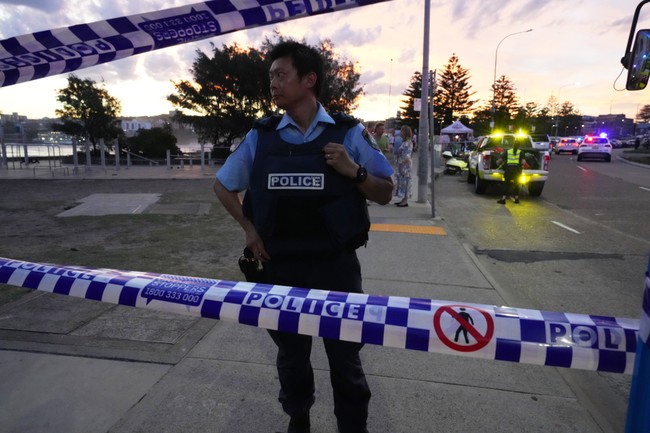
The Bondi Beach attack brought sudden horror, but it also revealed a string of civilians who acted with raw courage under fire; this article follows the actions of those who intervened, the sequence of events caught on video, and the human cost felt by families and bystanders in the aftermath.
Early on, Ahmed al Ahmed made headlines by tackling one of the attackers and seizing a firearm, a move that likely saved lives even as he was wounded in the struggle. That act was widely shared and discussed, but it was only one thread in a larger tapestry of people who stepped in to help. Witness accounts and footage that emerged afterward painted a clearer picture of how multiple civilians tried to stop the violence. Their efforts unfolded in seconds and cost some of them everything.
One of the first and most heartbreaking stories involves Boris and Sofia Gurman, a married couple in their 60s celebrating Hanukkah on the beach. As an attacker stepped from a vehicle displaying an extremist flag, Boris and Sofia confronted him, and a passerby’s dashcam captured Boris struggling to take a weapon from the suspect. Their quick decision to try to disarm a gunman is being remembered as instinctive, protective courage that rose from a lifetime together.
Tragically, the couple were shot when the attacker produced another firearm, and they died holding each other. Their family released a statement that preserved their voice in full: “While nothing can lessen the pain of losing Boris and Sofia, we feel an overwhelming sense of pride in their bravery and selflessness,” their family announced afterward: “This encapsulates who Boris and Sofia were — people who instinctively and selflessly tried to help others.” Those words have become a focal point for how many are choosing to remember them.
Another civilian who drew attention in the footage was Reuven Morrison, who acted quickly as the situation unfolded and moved to identify the threat to others. In one clip, he points directly at an attacker to warn people and later threw an object at the retreating suspect, actions that show how bystanders switched from alarm to action in an instant. Morrison then joined Ahmed behind a tree, attempting to assist in subduing the assailant and dealing with a chaotic, deadly scene.
Family members later described Morrison’s actions in blunt terms, and his daughter’s words were included verbatim: “I believe after Ahmed managed to get the gun off the terrorist, my father had then gone to try and unjam the gun, to try and attempt shooting. He was screaming at the terrorist,”. Those details underline how people improvised under pressure, trying to take whatever steps they could to stop more carnage. Unfortunately, Morrison was shot and killed in the course of trying to help, joining others who paid the highest price that day.
The videos from the attack show moments of vivid bravery and also raise tough questions about the official response. In some clips, police officers can be seen taking cover nearby, and that has sparked criticism about how quickly armed responders engaged the scene. Two officers were reported injured during the attack, and public debate continues about tactics, timing, and the challenges of confronting sudden violence in crowded public spaces.
Across the footage and witness testimony, the pattern is clear: multiple ordinary people moved toward danger to help complete strangers. Some actions were improvised and last-ditch, others more deliberate, but all reflect a willingness to intervene when lives were at stake. The human cost is enormous, and the community has been left with grief alongside admiration for those who tried to make a difference.
Many of the accounts seen in public videos do not capture everything that happened in those minutes, and family members have had to piece together events from footage and witness statements. Those reconstructions have helped identify who acted and how, but also remind us that every face in a clip represents a life and a family. The Gurmans, Morrison, Ahmed, and others now figure prominently in the way people remember the day.
The wider conversation that followed has focused on honoring those who intervened and on learning from the response to prevent future tragedies. People across town and beyond have spoken about courage and duty, and public officials along with community leaders are wrestling with ways to support victims’ families and examine emergency protocols. The images and quotes that remain will continue to shape how this event is understood and how similar situations are handled going forward.
Editor’s Note: Do you enjoy RedState’s conservative reporting that takes on the radical left and woke media? Support our work so that we can continue to bring you the truth.

Add comment