
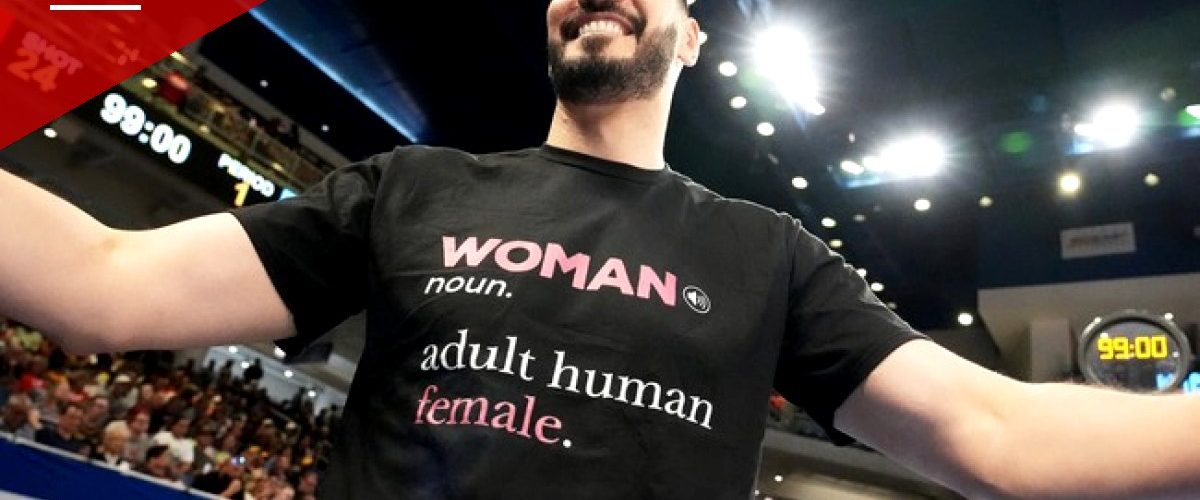
Former NBA player Enes Kanter Freedom has filed a federal lawsuit against the Chicago Sky, the Metropolitan Pier and Exposition Authority (MPEA) and the City of Chicago, alleging he was unlawfully ejected from a WNBA game for exercising his First Amendment rights.
The lawsuit stems from an Aug. 23 game between the Chicago Sky and Indiana Fever at Wintrust Arena, where Freedom was removed from his courtside seat and later banned from future Sky home games. The incident followed an on-court confrontation in which Sky player Natasha Cloud approached Freedom after a play, and he stood up, taking roughly two steps forward with his arms extended.
Sky team owner Michael Alter later described Freedom as a “threat,” comparing him to someone carrying a gun with harmful intent. Freedom rejected that characterization and said afterward he was considering legal action.
He followed through on Thursday, naming the Sky, MPEA and the City of Chicago as defendants. Wintrust Arena is owned by MPEA, a public entity, which forms the basis for Freedom’s constitutional claim.
“The Chicago Sky; MPEA, through Wintrust Arena Security; and the City of Chicago, by its Police Department, worked together to eject Plaintiff in retaliation for protected expression, and continue to work together to enforce the ongoing, unconstitutional ban of Plaintiff from Wintrust Arena, which is public property owned by MPEA,” the lawsuit states.
Freedom announced the filing on X:
SEE YOU IN COURT!!! Just filed a federal complaint.
I’m taking legal action over my ejection from the @chicagosky game while peacefully exercising my First Amendment rights.
My T-shirt did what the whole @WNBA apparently couldn’t: define a woman.
And somehow, that required a security escort.
You don’t have to agree with my speech but you don’t get to silence me for it.
I will not be intimidated. I will not be silenced.
I will continue to stand for women and defend free speech.
Freedom is being represented by a legal team from the America First Policy Institute (AFPI). The suit centers on the legal question of whether a public entity’s ownership of a sports venue subjects private actors operating there to First Amendment constraints — a principle rooted in the Supreme Court’s 1961 ruling in Burton v. Wilmington Parking Authority, which held that private conduct closely tied to government property can be treated as state action.
The case adds Chicago to the list of venues now facing scrutiny over how WNBA arenas, many built or operated with public funds, handle fan speech related to the debate over transgender athletes in women’s sports.


Add comment