
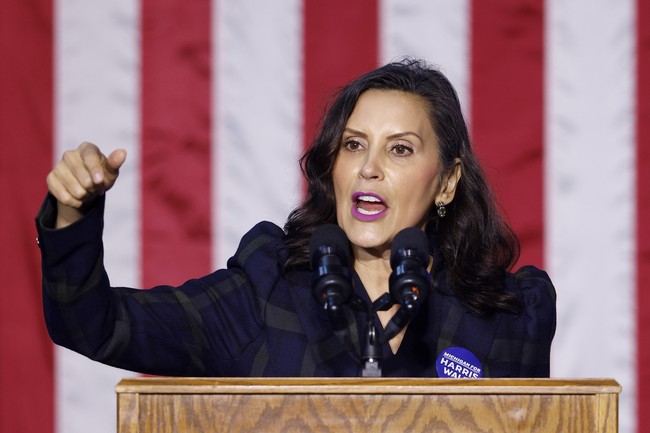
Gretchen Whitmer’s endorsement of Haley Stevens in the Michigan U.S. Senate race has stirred reactions across the state, highlighting party unity, intra-left tension, and polling that suggests the governor’s backing still matters to Michigan Democrats.
The Democratic primary in Michigan is drawing attention because a sitting governor has stepped in with a high-profile endorsement. Whitmer’s move signals an effort to consolidate establishment support against insurgent candidates who have attracted more progressive and anti-establishment voters. This endorsement changes the tone of the contest and forces voters and operatives to reassess their strategies ahead of the primary.
Whitmer announced her pick directly, framing the decision around practical governance rather than ideological purity. “As governor, I’ve had one strategy: Get things done. And that strategy informs everything that I do, and that’s why I’m endorsing Haley Stevens for the U.S. Senate,” Whitmer said. That line puts competence and results at the center of her rationale, and it sends a clear message to Democrats who prioritize electability in a swing state.
— Haley Stevens (@HaleyforMI)
Haley Stevens responded warmly to the endorsement and made a short, upbeat statement. Stevens said she was “thrilled” with the endorsement. Her immediate embrace of Whitmer’s support aims to lock in donors, volunteers, and voters who look to the governor for cues on who can win a statewide race in 2026.
Not everyone on the left welcomed the move, and some progressive activists reacted with frustration or anger at an establishment favorite getting the nod. The campaign atmosphere quickly showed strains between pragmatists and ideologues, with online voices and local activists debating whether Whitmer’s influence should override grassroots momentum. The friction plays out both in public posts and private conversations, shaping the messaging each campaign will use going forward.
https://x.com/TrackAIPAC/status/2080742976888754374
Polling details complicate the narrative and give Whitmer’s endorsement measurable weight. According to recent surveys, Whitmer enjoys very high favorability among likely Democratic primary voters in Michigan, a factor that complicates any insurgent case. The poll numbers suggest the governor remains a powerful figure for shaping outcomes within her party.
Detroit News: “Across all of the poll participants, including those who already preferred a candidate, 34% — about one in three — said Whitmer’s endorsement would make them more likely to support a candidate.”
“About 87% of the likely Democratic primary voters surveyed said they had a favorable view of Whitmer, the top Democratic official in Michigan.”
Those figures matter because endorsements only move votes when the endorser is trusted and popular. With about 87 percent favorability in the poll for Whitmer, her preference is likely to recalibrate support among undecided voters and those weighing electability. An endorsement from a well-liked governor can also tilt donors’ decisions and media coverage, giving Stevens an immediate, tangible advantage.
Still, the primary fight isn’t over because endorsements can energize opposition as much as they consolidate support. Some activists have doubled down on alternative candidates, arguing that a different coalition better represents their priorities on issues ranging from foreign policy to economic justice. Expect both more heated online exchanges and targeted outreach in communities where progressive candidates think they can gain traction.
The Michigan contest will be watched closely for signs of how the Democratic Party balances electability with ideological signals from its base. Whitmer clearly chose to emphasize experience and delivery as the path to winning a competitive Senate seat, while her critics stress ideological alignment and grassroots energy. That tension will shape messaging, ad buys, and turnout strategies in the months ahead.
Campaigns now have to translate endorsements and polling into action: field operations, fundraising, and targeted persuasion. Whitmer’s backing gives Stevens a narrative about governing experience, but it also hands opponents a foil to rally against. How each campaign converts words into votes will determine whether the endorsement proves decisive or merely one more headline in a crowded primary.



Add comment