
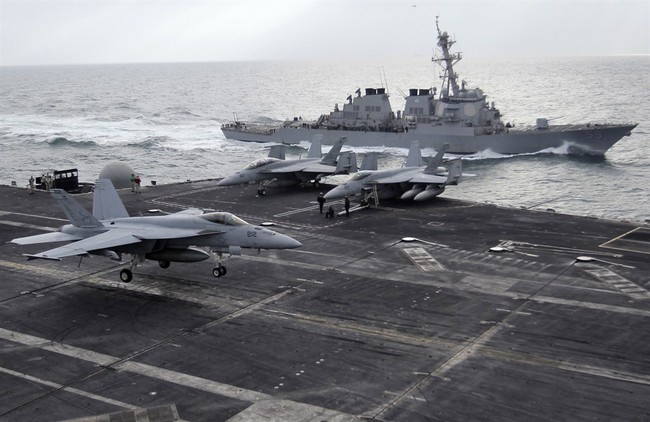
The media frenzy over conditions aboard the USS Abraham Lincoln spiraled into national noise, and a recent exchange between the Pentagon and a Washington Post reporter highlighted how coverage can stray from context and facts; this piece walks through the timeline, official pushback, a reporter’s misstep, and why the broader narrative matters for how we treat our sailors and their sacrifice.
The carrier has been deployed for an extended period, operating more than 260 days with limited port calls in a tense region while the U.S.-Iran standoff continues. Long deployments strain crews and families, and acknowledging hardship doesn’t require turning every difficulty into a crisis. Still, some outlets amplified anecdotes into apocalyptic headlines that painted life aboard the ship as uniquely catastrophic.
The Pentagon responded firmly, noting the difference between real combat hardship and sensationalized reporting that turns logistics and morale issues into a narrative of collapse. Pentagon spokesman Sean Parnell framed the coverage as an unfair distortion and defended the sailors’ professionalism and resilience. His words called out the media trend of turning genuine family struggles into clickbait instead of balanced reporting.
I deployed for 485 days in Afghanistan with an 80 percent-plus casualty rate. We came under fire nearly every day. Combat deployments bring real hardship. That is simply the truth.
https://x.com/SeanParnellASW/status/2088380809460023737
We endured it. We held together. We finished the mission.
The media treatment of the USS Abraham Lincoln is something different. Legitimate challenges of a long combat deployment are being twisted into a false narrative, while the genuine difficulties faced by military families are being used for headlines.
That is shameful.
The Sailors aboard the Lincoln are doing what American warriors have always done: remaining resilient, focused on the mission, and proud of their service on this historic deployment.
We stand with them.
That public rebuke landed on the desk of several national reporters, and not all took it well. One Washington Post reporter tried to flip the script, posting a snarky response meant to score points against the Pentagon’s tone. The attempt to score media points backfired because it ignored an important fact: there had already been extensive behind-the-scenes coverage providing context to life on the ship.
A televised, in-depth piece aired in July that showed life aboard the Lincoln without the lurid flourishes some later pieces supplied, and it was not from the conservative outlets critics often blame for narrative control. That earlier report documented long days and tough conditions but did not depict a crew abandoning ship or widespread violence; it showed sailors carrying out the mission under strain. Ignoring that piece made the later scoff and chest-thumping look like it came from a reporter who hadn’t done his homework.
I watched those reports closely and did not see the exaggerated scenes some articles described, such as mass jumpings overboard or catastrophic food shortages. Amplifying isolated complaints into a picture of systemic collapse does a disservice to hard-working sailors and misleads readers about the reality of modern naval deployments. Responsible coverage should separate anecdote from trend, and that distinction was blurred in too many headlines.
When challenged about access and follow-up reporting, the same reporter offered a defensive reply claiming that access was sometimes denied and that the appreciative reception of earlier work was rarer now. That response amounted to a sidestep rather than an acknowledgment that the July coverage existed and contradicted the worst of the hysteria. A simple correction or mea culpa would have kept the conversation anchored to facts rather than letting it spiral toward point-scoring.
It’s appreciated. It’s also more rare than it used to be.
One example: I was at the border early in this administration. Story seemed appreciated and got no pushback.
Sought to go back again this spring for a follow-on story. Efforts were worked … and then denied at the Pentagon.
Coverage that prioritizes outrage over accuracy hurts readers and the people actually serving. Reporters who rush to frame a story as uniquely tragic without checking prior reporting or acknowledging nuance risk undermining trust and fueling partisan cynicism. Readers deserve reporting that reflects both the sacrifices of service members and the practical realities of extended deployments.
The broader lesson here is simple: context matters, and tone matters. When officials call out sloppy reporting, journalists’ first instinct should be to review the record and respond with evidence, not sarcasm. The public interest is better served when the press balances toughness with fairness and doesn’t turn hardship into a spectacle for clicks.

Add comment