
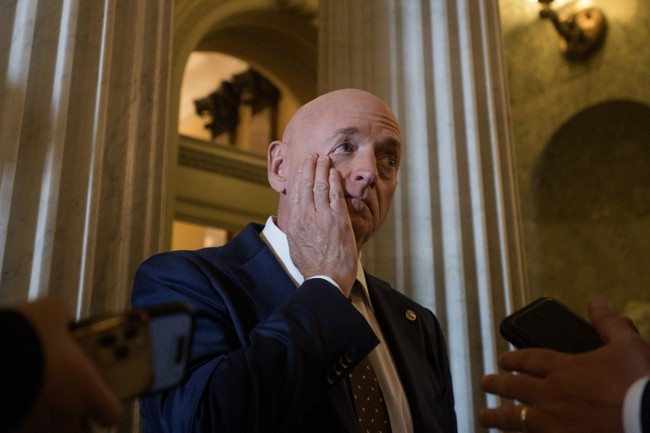
I will argue that Senator Mark Kelly, a veteran and former astronaut, crossed a line by lending his service reputation to a political campaign that, intentionally or not, undermines military discipline, inflames partisan divisions, and risks putting service members in harm’s way.
In The Two Towers, Tolkien wrote, “Wizards ought to know better: they do know better. There is no curse in Elvish, Entish, or the tongues of Men bad enough for such treachery.” That line fits a modern political moment where symbolic authority is used to push a narrative that weakens trust in the chain of command. When public figures who wore a uniform start casting doubt on lawful orders, the impact is not abstract; it ripples through units and into communities. Veterans understand that words carry consequences in ways civilians sometimes do not.
A recent campaign of congressional theatrics claimed that illegal orders were being issued to troops, even while admitting no unlawful orders actually existed. That strategy relied on implication and repetition to seed doubt and outrage among the public and rank-and-file members. Political operatives know how narratives harden into perceived facts when repeated across sympathetic media channels. The danger comes when those narratives encourage defiance or target the legitimacy of military leadership.
Senator Kelly, who left a traditional naval warfare career track for the astronaut program, has emphasized his veteran status while speaking about these matters. Standing up for service members is a genuine obligation for anyone who served, but using veteran credentials to cast suspicion on the military’s chain of command is a different thing. The contrast here is stark: honoring service is one thing, sowing suspicion about lawful orders is another.
When public officials, including veterans, push a narrative that frames routine or lawful orders as inherently suspect, they invite chaos into civil-military relations. The military depends on cohesion and clear authority to operate safely and effectively. Ambiguity encouraged from the outside risks paralyzing commanders and endangering missions. That paralysis can be exploited by enemies and opportunistic actors alike.
The violence that followed recent political agitation shows how quickly rhetoric can cross into tragedy. Those who paint government actions with the broad brush of illegality or tyranny create a climate where extremists feel justified in violent acts. Political talk that inflames and delegitimizes official institutions doesn’t stay in op-eds and cable segments; it filters into the minds of the unstable and the radicalized. Responsible leaders should be mindful of that causal link.
Public servants who trade on their military record must be careful not to convert earned trust into a political weapon. Veterans’ credibility is a public good earned through sacrifice and service. Squandering that credibility to score political points undermines the very honor that made it persuasive in the first place. For elected veterans, restraint and fidelity to institutional norms should guide public speech about military matters.
There is also a cultural element at work: phrases like cultural war and war of words are not metaphors when they prompt real-world consequences. Political campaigns that manufacture outrage aim to change behavior, not just opinions. Manipulating fear and distrust persuades some citizens that civil authorities are illegitimate, and that dangerous fringe responses are justified. That dynamic erodes the social fabric we rely on to solve disagreements peacefully.
https://x.com/SenMarkKelly/status/1993025671757807746
Some progressives have escalated matters further by seeking to identify and punish individual service members who carry out orders they disagree with. That approach weaponizes accountability itself and threatens to chill lawful action. When service members fear personal retribution for following orders, readiness and decision-making suffer. The long-term cost of such pressure is higher than any short-term political gain.
Veterans are not a monolith, but they share a commitment to the rule of law and to the professional norms that let the military function. Exploiting veteran status for partisan theater betrays that commitment and damages the institution veterans seek to protect. Those who choose public office owe more than rhetoric; they owe steady stewardship of public trust. A senator who flaunts his service while amplifying misleading claims about military orders undermines both trust and mission.
There are legitimate debates to be had about civil-military relations and the proper oversight of forces deployed in domestic settings. Honest argument matters, and elected officials should use their platforms to clarify facts, not muddy them. Veterans in office must choose whether to lead toward cohesion or to stoke division; choosing the latter is a betrayal of the oath they once swore.
The country needs leaders who temper partisan instincts with institutional responsibility, who defend service members from dishonest attacks while also ensuring proper civilian control of the military. Reckless insinuation and performative victimhood do not meet that standard. Senator Kelly once earned respect as an astronaut and a veteran; that record should compel him to act with care rather than fan the flames of controversy that put service members and civilians at risk.
Turning Point USA’s spokesman highlighted how violent acts flow from narratives that delegitimize government functions, and other commentators have pointed to specific threats against troops who follow orders. Those warnings matter because rhetoric shapes behavior. Public figures must reckon with the downstream effects of the stories they amplify.
When accused orders are framed as illegitimate without evidence, the landscape for both lawful enforcement and national security becomes more hazardous. Politicians should prioritize de-escalation and accurate information over viral outrage. The professionals in uniform deserve protection from politicized campaigns that make their jobs harder and their lives riskier.


The Navy and the USAF seem to produce a lot of democrat politicians, makes you wonder whose side they are really on!