
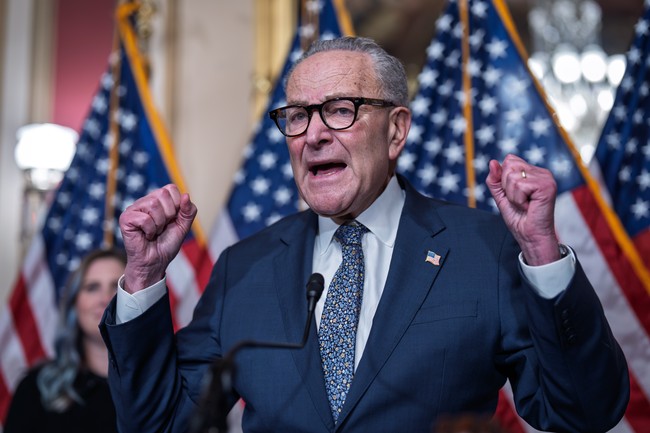
Short version: New York Democrats are facing a hard reality — the party’s leftward lurch has alienated long-time allies and even provoked public backlashes at high-profile events. Chuck Schumer being booed at a Pride parade is a clear sign that many voters, including part of his base, no longer feel represented by the current direction. This piece traces that fallout, points to recent progressive upsets in New York politics, and explains why the old guard is paying the price for enabling radical change.
This Is the World You Helped Create, Chuck: Schumer Mercilessly Booed at NYC Pride Parade
Watching the Democratic establishment cope with its own transformation has been revealing and a little savage. Once-dominant figures are being sidelined by a new cohort that pushes farther left on culture and policy, and the results are showing up at rallies, primaries, and public events. The mood in New York feels less like a smooth handoff and more like a messy takeover.
Alexandria Ocasio-Cortez’s 2018 primary upset was an early signal that the party’s center was fraying, and that signal has only grown louder. Local races that once relied on incumbency and pragmatic coalitions are now decided by activists who prioritize ideological purity over experience. That shift is producing winners and winners of a specific type — those who embrace a radical agenda and treat compromise as a dirty word.
Recent New York contests reflect that reality: insurgent, far-left candidates have taken down seasoned officeholders while cities welcome leaders who openly identify with socialist groups. The change hasn’t been subtle. The backstage decisions by leaders who failed to curb the rise of extreme factions are now coming back to bite them in public. Voters who supported mainstream Democrats feel squeezed by a movement that emphasizes identity and ideology above everyday concerns.
Senate Minority Leader Chuck Schumer found out just how sharp that squeeze can be when a crowd that should have greeted him warmly instead booed him loudly during a Pride parade. You’ve lost your fans, Chuck:
…the longtime New York political animal’s goodwill was mercilessly drowned out by a chorus of boos.
https://x.com/nicksortor/status/2071302762055229444
Chuck haters could be seen in the crowd giving the senator two thumbs down and frowning as he walked by, too.
The hissing and jeering went on for nearly 20 seconds in at least one spot.
The booing continued even as Schumer attempted to establish his long record supporting gay rights.
“So I was the first senator to ever march in this parade, 1999. And I haven’t missed one yet!” the senator said to an uncaring crowd before continuing the parade path.
That reaction is not an isolated outburst but part of a broader pattern of intra-left anger and impatience. Figures who assumed their liberal credentials would protect them have been surprised to learn that the new left demands absolute fealty on a long catalog of grievances. It is a factional purge by attrition: appeal to the movement first, governance second.
Other high-profile examples show the same dynamic. Candidates who press identity-forward agendas or take hardline stances on foreign policy and culture wars are being both elevated and attacked by factions that want ever-more radical purity. Leaders who once managed broad coalitions are now negotiating with a younger activist base that prizes confrontation over coalition-building. That leaves palace politics on one side and street politics on the other.
The consequences are predictable: alienated voters, fractured local institutions, and a party that looks less capable of delivering results for average people. When governing becomes a secondary concern to ideology, voters who want safer streets, better schools, and a functional economy notice the drift. Those voters are not disappearing — they’re simply growing more willing to show displeasure, even in settings that once felt reliably supportive.
At the same time, the rise of Democratic Socialists and DSA-aligned winners worries those who see the pattern as part of a broader national trend. Electing ideological purists can produce loud victories but also deliver long-term headaches when those victors prioritize slogans over service. The political price of that choice is now visible in parades, primaries, and public heckling.
If old-guard Democrats thought they could ride out this wave without consequence, the recent scenes in New York suggest otherwise. Public events have become referendum moments where loyalty is tested in real time. For leaders who helped enable a far-left takeover, the backlash is blunt and immediate, and it shows no signs of slowing down.
Meanwhile, the activists who drove this change have little patience for sentimental appeals to institutional memory or past accomplishments. The movement is forward-facing and unforgiving, and it measures loyalty in absolutes rather than in records. That posture creates political theater, and it creates problems for anyone who once assumed the center would hold.
For voters watching from the sidelines, the spectacle is a cautionary tale about what happens when a party prioritizes internal purity fights over broad-based governance. The result is angry crowds, shaken incumbents, and a political landscape that feels both unstable and decisive. The left’s internal struggle is now a public one, and the fallout is playing out in real time across New York and beyond.
It’s a messy, loud era for Democratic politics — and those who helped make it this way are beginning to see the bill come due.


Add comment