
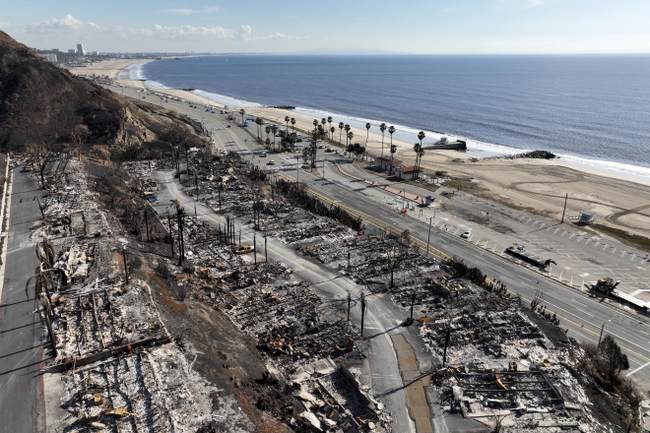
The newly revealed Wildfire Management Plan issued by California State Parks and linked to the Pacific Palisades fire raises hard questions about policy choices and political accountability, with evidence suggesting state guidance limited firefighter options and may have allowed a smoldering blaze to reignite into a catastrophe that destroyed thousands of homes.
Documents filed in civil discovery show a December 2024 Wildfire Management Plan that explicitly states: “Unless specified otherwise, State Parks prefers to let Topanga State Park burn in a wildfire event.” That sentence has a plain meaning: allow natural fire behavior instead of aggressive suppression near parklands, even when those parklands border neighborhoods. For many residents and firefighters, the line between preserving wildlands and protecting homes was suddenly crossed without satisfactory explanation.
Federal investigators concluded the massive Palisades conflagration was rekindled from the much smaller Lachman Fire on Jan. 1, a blaze prosecutors say was started by alleged arsonist Jonathan Rinderknecht, 29, of Florida. Local crews reportedly extinguished the initial blaze in the early hours of New Year’s Day and returned on Jan. 2 to ensure full suppression. Those actions are standard practice, and the accounts from firefighters indicate they believed the job was not finished when they were ordered off the scene.
Text messages and other evidence indicate firefighters warned that the ground was still smoldering and rocks remained hot to the touch, but they were nevertheless directed to leave. The Bureau of Alcohol, Tobacco, Firearms and Explosives later reported the fire persisted within plant root structures roughly 20 feet south of the original burn area, allowing it to spread underground until wind conditions and dryness turned it into a full-scale disaster. These technical findings line up with firefighter observations that hotspots underground can quietly persist and later flare up.
There is a political dimension to this story that cannot be ignored. The plan from State Parks was issued under Governor Gavin Newsom’s administration weeks before the January wildfire. The policy phrase about preferring to let Topanga State Park burn was not tucked away in a conversation; it was written guidance. When policy language effectively limits suppression, the consequences can be immediate and severe for adjacent communities.
State officials will point to multiple factors in any explanation: the arsonist who allegedly started the Lachman Fire, resource constraints, and the inherent unpredictability of wildfires in dry Southern California. Those arguments have merit, but they do not erase the fact that professional firefighters warned about remaining hotspots and that formal policy guidance appears to have deprioritized aggressive action in a park that sits next to homes. Accountability demands answers when a policy choice intersects with an emergency response and catastrophic loss.
Beyond attribution and blame, this controversy highlights a deeper clash over doctrine and priorities. One side argues for letting wildlands function naturally, accepting some burns as ecological processes. The other side stresses that when human settlements are adjacent, the calculus must shift toward protecting people and property. The State Parks language shows which side the policy favored, and that choice led to predictable outrage among impacted residents and first responders.
The legal fallout is ongoing. Plaintiffs in civil suits argue the manual and its implementation curtailed firefighter discretion and contributed to the disaster. Defenders of the state’s approach will argue any single document did not cause the chain of events and that arson and weather were decisive. Courts and investigators will have to sort through operational orders, communications, and timing to determine whether policy or implementation — or both — crossed a line that should trigger liability.
Firefighters on the ground deserve special attention in this debate because they brought practical, immediate knowledge to the scene. When trained professionals report smoldering hotspots and recommend continued suppression, those observations should weigh heavily in decisions made by officials. The account here suggests those professional judgments were overridden by policy directions that favored hands-off management in a park bordering neighborhoods, and that contrast fuels the anger and grief of affected residents.
The Palisades episode is a stark example of how written policies can shape real-world outcomes in dangerous and rapidly evolving situations. Moving forward, the key questions are straightforward: who authored and approved the management plan language, what was the rationale for its timing and content, and how will officials reconcile park preservation goals with the duty to protect nearby communities? Those answers will matter for public trust, emergency practice, and potential legal consequences.
Add comment