
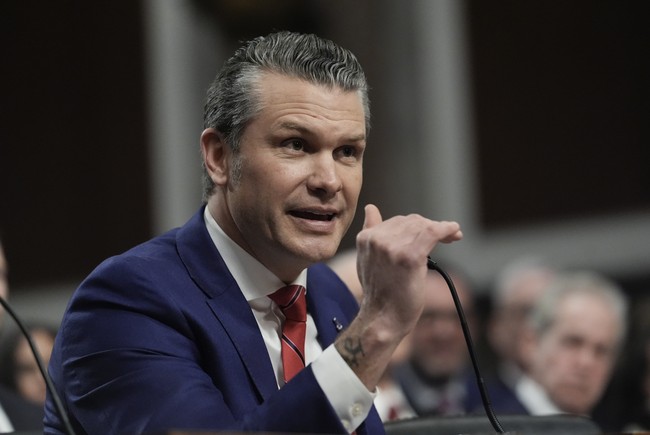
House Armed Services Chairman Mike Rogers has effectively declared the committee’s review of a September strike on an alleged Venezuelan drug-running vessel finished, backing the legality and impact of the action and signaling Republicans will not pursue further public probes despite Democratic calls for more hearings. Rogers reiterated that the strikes complied with U.S. and international law, credited the operation with reducing drug smuggling, and the committee characterized the matter as closed after a classified briefing for GOP members. That stance comes as the administration tightens pressure on Venezuela and as Democrats push for broader investigations into the incident.
The political theater around the strike has been loud, and Republicans say it’s time to move on to policy and results. Democrats portrayed the incident as a scandal, demanding full investigations and public hearings, but the Republican chair insists the committee has the answers it needs. The dispute has become a proxy fight over executive authority, military decisions, and how to handle cross-border narcotics threats.
Chairman Mike Rogers spoke directly on the House floor and to reporters, defending the operation and the president’s actions. He emphasized the legality of the strikes and their compliance with the Law of Armed Conflict. Rogers also said the strikes significantly curtailed drug-smuggling operations, making Americans safer as a result.
Those remarks were shared by Republican committee staff and on platforms used by the Department of War, which described the committee’s work as complete. After a classified briefing, Rogers told reporters, “It’s done,” and signaled no plan to expand the inquiry. That closure frustrates Democrats who wanted a public airing and possible further scrutiny.
Throughout the back-and-forth, a central claim kept coming up verbatim from Rogers and supporters: “These strikes are lawful under U.S. and international law and all actions are in compliance with the Law of Armed Conflict. But most importantly, these strikes have dramatically reduced drug smuggling operations. Americans are safer today because of the President of the United States’ actions.” This exact language has been used to defend both the legal basis and the operational success of the strikes.
Republicans frame the episode as a clear example of effective use of military power to protect the homeland and choke off the flow of narcotics. They point to observable results and the chair’s access to classified briefings as justification for ending the committee’s review. For the GOP, continuing political theater risks undermining the military chain of command and the willingness of commanders to act decisively against transnational threats.
Democrats argue that survivors of the strike were improperly targeted and demand transparency, with calls for public hearings and broader investigations. They insist that congressional oversight must be thorough when military force is used, especially in incidents with potential civilian harm. This clash is part of a larger partisan contest over accountability, oversight, and the limits of presidential authority in national security matters.
House Republicans counter that classified briefings gave them sufficient detail to evaluate legal and operational questions without public spectacle. They maintain that airing classified material or tactical deliberations for political points could damage national security. That reasoning, combined with Rogers’ declared closure, leaves Democrats with little procedural room to escalate the matter within the Armed Services Committee.
The timing of the chair’s declaration dovetails with recent executive actions tightening pressure on Venezuela, signaling a coordinated approach to degrade transnational criminal networks. Republicans highlight recent presidential orders against Maduro-aligned assets and shipping as part of a broader strategy to isolate criminal regimes enabling drug flows. That posture aims to demonstrate proactive governance rather than endless congressional wrangling.
Still, political attacks will not disappear overnight. Opponents on the left are likely to keep the issue alive in the press and on the campaign trail, framing the episode as evidence of executive overreach or lack of transparency. Republicans, however, are betting that clear legal arguments, classified briefings, and operational results will blunt those efforts and keep the focus on reducing drugs and securing borders.
At the center of the debate is a balancing act between oversight and operational security, with both parties asserting competing priorities. Rogers’ public statements and the committee’s posture make clear which side the Armed Services Committee leadership favors. For now, the committee chair’s declaration that “It’s done” sets the direction for the immediate congressional response to the strike.
The committee also posted a clip of Chairman Rogers’ remarks on its platform, underscoring the message that Republicans are satisfied with the answers they received. After the classified briefing and public comments, the Department of War echoed the chair’s view and announced the matter closed for now.

Add comment