
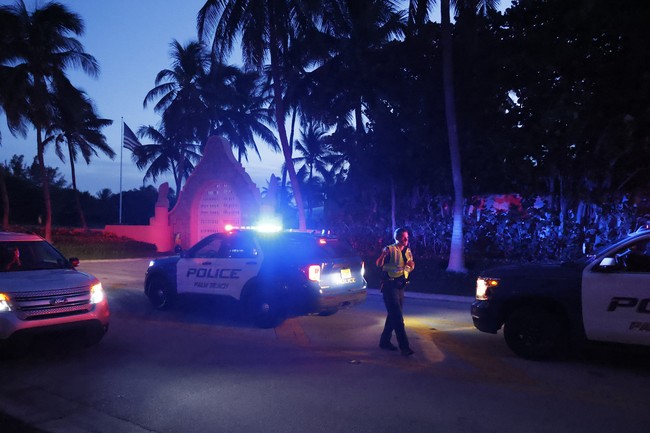
The newly released internal emails about the August 2022 Mar-a-Lago search show FBI agents expressing serious doubts that they had probable cause, yet the raid went forward, reportedly under pressure from the Justice Department; this article examines the emails, the internal objections, and the broader implications for accountability and the weaponization of federal power.
The image and spectacle of armed FBI agents executing a search at the home of former President Donald Trump is burned into recent political memory, and these emails add another layer: people inside the bureau worried they did not have the evidence to justify such an intrusive step. According to the communications, the Washington Field Office raised explicit concerns that probable cause had not been established, and that the case relied on limited, single-source information. Those doubts were not merely technical quibbles — agents warned the planned operation could be counterproductive and suggested less invasive ways to pursue the matter.
[One] email revealed that the FBI’s Washington Field Office did “not believe (and has articulated to DOJ CES), that we have established probable cause for the search warrant for classified records at Mar a Lago.”
“DOJ has opined that they do have probable cause, requesting a wide scope including residence, office, storage space,” an agent wrote.
The FBI believed that a raid would be “counterproductive,” and suggested “alternative, less intrusive and likelier quicker options for resolution” to reclaim any potential classified records.
The process moved forward, regardless of concerns.
Those emails portray a clash between career agents on the ground and Justice Department lawyers who insisted the case warranted immediate, broad action. One message captures the crux: field agents thought the factual record was thin, dated, and in need of corroboration before escalating to a full search. The tension was not hidden; it was spelled out in memo after memo, and yet senior leaders signed off and the operation proceeded.
Another internal exchange made the concern even clearer by pointing to a lack of suspects and recent evidence. “Very little has been developed related to who might be culpable for mishandling the documents,” an assistant special agent in charge wrote, noting the information appeared single-sourced and possibly stale. The message added that drafts of search warrant affidavits kept circulating despite those gaps, creating the sense of motion without new facts to back it up.
“Very little has been developed related to who might be culpable for mishandling the documents,” an FBI official serving as an assistant special agent in charge, wrote to another FBI official, Anthony Riedlinger. “From the interviews, WFO [Washington Field Office] has gathered information suggesting that there may be additional boxes (presumably of the same type as were sent back to NARA in January) at Mar-a-Lago.”
“WFO has been drafting a search warrant affidavit related to these potential boxes, but has some concerns that the information is single source, has not been corroborated, and may be dated,” the official continues.
Weeks later, agents noted they had not produced new corroborating facts and were stuck cycling through “draft after draft after draft” without solid, recent leads. One agent asked pointedly, “Absent a witness coming forward with recent information about classified on site, at what point is it fair to table this?” That question points to a central problem: when legal thresholds for searches are in doubt, rushing to execute a warrant risks eroding public trust and civil liberties.
Weeks later, an FBI agent writes an email stating: “We haven’t generated any new facts, but keep being given draft after draft after draft.”
“Absent a witness coming forward with recent information about classified on site, at what point is it fair to table this?” the agent writes. “It is time consuming for the team, and not productive if there are no new facts supporting PC (probable cause)?”
From a Republican perspective, this episode reinforces concerns about selective enforcement and a politicized Justice Department that treats opponents differently. When career investigators flag problems and the response is to escalate rather than pause and corroborate, it looks less like careful law enforcement and more like partisan theater. That perception does lasting damage: if federal power can be used unevenly against political rivals, public confidence in institutions frays.
These emails do more than criticize tactics; they suggest an institutional failure to heed internal warnings before taking dramatic action. Agents recommended “alternative, less intrusive and likelier quicker options for resolution,” yet the chosen path ignored those options and embraced the most aggressive route. The result was a headline-making raid that will be debated for years, and now we have written records showing officials inside the FBI questioned its necessity before it happened.
Accountability questions follow naturally: Who decided to override those cautions, on what basis, and with what political influence? Those are not hypothetical queries; they get to the heart of how power was exercised and whether safeguards held up when the stakes were highest. The emails are a reminder that transparency about decision-making matters if we want public institutions that operate fairly and without fear or favor.


Add comment