
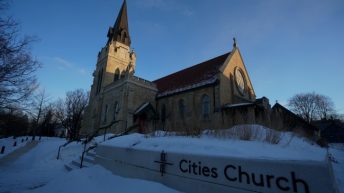
The church incursion in St. Paul involving Don Lemon and an organized Black Lives Matter group has set off heated debate, raised legal questions under the FACE Act, and exposed friction between local officials and federal enforcement; this article walks through the facts, the shifting narratives, the legal framework at issue, and the political implications for accountability and rule of law.
<pSocially visible activists disrupted a church service in St. Paul, and Don Lemon recorded and promoted the action before joining the crowd inside. Videos and eyewitness accounts show coordinated entry and confrontational behavior toward a pastor, which sparked outrage across social platforms and left many observers demanding clarity about intent and legal responsibility.
The participants framed their action as a protest against alleged connections between the church leadership and ICE, but the conduct inside the worship service crossed a line for many viewers. What began as a livestreamed stunt quickly morphed into a broader debate about whether the activity constituted criminal behavior that interfered with people exercising their religious freedom.
After the first wave of reaction, those involved changed their public position on the event. Don Lemon initially touted the disruption and said he would film it live; later, his description leaned toward being an observational journalist rather than an active planner. That flip in narrative has only intensified scrutiny over who knew what in advance and who encouraged the action.
Organizers of the action publicly acknowledged many participants, and those acknowledgments included praise for people who were on the scene. That admission has complicated attempts to claim purely spontaneous protest and raises questions about coordination that could matter for any legal analysis.
Federal attention moved quickly, with the Justice Department’s civil rights office and allies pointing at possible federal offenses tied to the incident. The central statute under discussion is meant to protect access to health clinics and places of worship, and investigators are weighing whether the conduct fits the statutory elements for prosecution.
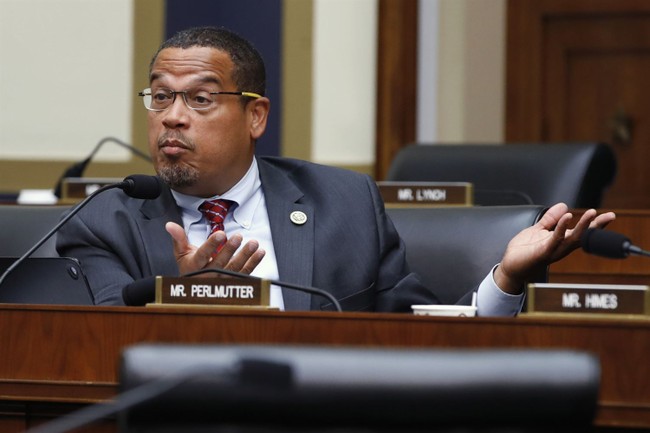
Minnesota’s Attorney General took a different tack, publicly minimizing the claim that the law applies to the church incident and suggesting the FACE Act should be narrowly read as protecting reproductive health sites. That interpretation conflicts with other readings of the statute and has inflamed critics who say the office is blurring the line between defense of protest and tolerance for intimidation.
“The FACE Act specifically says that you can’t use intimidation to interfere with one’s religious freedom in a place of worship.”
That sentence appears in video and text commentary around the case, and it underscores how plainly the statute names protections for worship settings. A head-scratching moment for many observers is watching a state law enforcement official publicly dispute a straightforward statutory text while meeting with a person who was at the scene.
Beyond elected officials, reporting surfaced that staffers connected to local prosecutors and city leaders were present among the protesters. Those ties, whether casual or active, fuel claims that political operatives are comfortable participating in or abetting confrontational public actions that disrupt private religious gatherings.
Legal commentators point to 18 U.S.C. §248 and related provisions that describe criminal penalties for anyone who, by force or threat of force or physical obstruction, injures, intimidates, or interferes with a person exercising First Amendment rights at a place of worship. That language is central to deciding whether charges are appropriate.
If prosecutors pursue charges, the outcome will test whether federal law can be enforced when local political leaders appear to offer tacit or explicit protection to activists. If enforcement is pursued and convictions follow, it will likely deter similar tactics; if enforcement is lax, it risks encouraging more aggressive incursions into private and sacred spaces.
The political stakes are obvious: conservatives argue this incident is symptomatic of a broader permissiveness toward lawbreaking by left-of-center activists and allied officials, while supporters frame the action as righteous civil disobedience. Either way, the legal questions demand clear answers, because vague enforcement invites more confrontations.
At the heart of the controversy is accountability. Citizens expect neutral application of laws that protect people’s rights to worship without harassment, and many believe that high-profile participants who appear to help plan or publicize disruptive actions should face the same legal scrutiny as anyone else.
How federal authorities and local leaders respond in the coming days will influence whether similar disruptions become more common or whether the rule of law holds firm in the face of politically charged protest. The situation remains fluid, and its legal and political consequences will emerge as investigators and prosecutors decide whether the conduct crossed criminal lines.
Add comment