
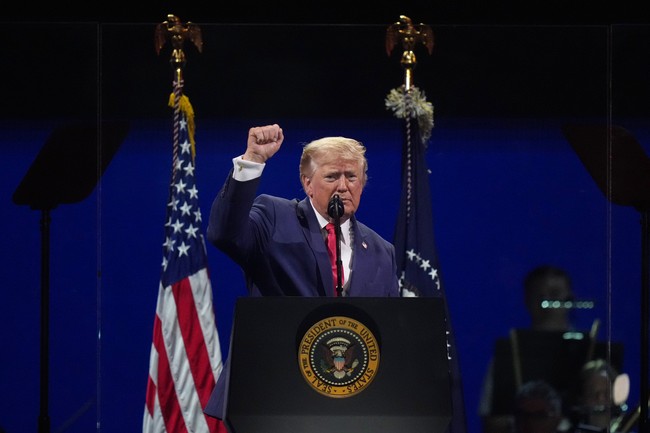
The article explains escalating Democratic plans to remove the Senate filibuster and expand the Supreme Court if they retake Congress, highlights President Trump’s stark warning about the consequences for the Republican Party, and outlines the public admissions from House and Senate Democrats that these moves are being seriously discussed as a first-day agenda item.
The Democrats no longer seem interested in hiding ambitions that would rewrite long-standing rules of governing. Key House caucus leaders have endorsed a resolution signaling they would move quickly to eliminate the Senate filibuster and expand the Supreme Court as soon as they take control. Those gestures are not casual suggestions; they are early markers indicating a priority list for a future Democratic majority.
The resolution was advanced by progressive, black, and Hispanic caucus chairs and presented as a response to recent court decisions the groups oppose. The plan they have put on paper is meant to be a quick fix for what they see as judicial and legislative obstacles. For Republicans, it reads like an open declaration of a sweeping agenda once power is restored.
President Trump seized on the news with blunt language in social posts, framing the stakes as existential for the GOP. “They do this, and the Republican Party is DEAD!” he warned in a Truth Social post, underlining how immediate and total these changes could feel to conservative voters. That kind of rhetoric makes clear that the party views the possible rollback of the filibuster and the packing of the courts as a direct threat to future Republican governance.
Donald J. Trump Truth Social Post – 12:32 PM ET 07.05.26: They do this, and the Republican Party is DEAD! Key House caucus leaders target Supreme Court, Senate filibuster:
Trump followed up with additional posts predicting that Democrats would scrap the 60-vote Senate threshold on day one and use that power to reshape the judiciary and the Electoral College. He warned this would open the door to packing the Supreme Court with activist-leaning judges and altering statehood politics to tilt the Electoral College. The implied result, he said, is a decades-long lock on the federal government for one party.
He singled out the filibuster as the linchpin of that strategy and repeated a common GOP talking point that eliminating it would make minority protections vanish overnight. “There is nothing Americans can’t do except get Voter ID (Identification), Proof of Citizenship or, most importantly of all, TERMINATE THE FILIBUSTER,” he quipped, keeping the original capitalization and emphasis. The post framed the filibuster as the last institutional barrier to a wholesale partisan rewrite of federal power.
https://x.com/trumptruths247/status/2073810243591565510?ref_src=twsrc%5Etfw
“(When, not if, Dems nuke the filibuster), it will be impossible for a Republican to ever be elected President again,” Trump warned. “I don’t want to be the last Republican President!” Those sentences were posted verbatim in his social feed and repeated in his messaging to warn Republican voters and lawmakers that action is required now to prevent a permanent disadvantage.
“GET SMART REPUBLICANS, IF YOU DON’T, YOU WON’T BE IN OFFICE FOR LONG!” he added, using the exact phrasing from his online post. The directness of the plea reflects a strategy to force Republicans into decisive moves on contested issues like voter ID and proof-of-citizenship before the filibuster can be abolished. The urgency in the language is meant to push Senate Republicans toward immediate, controversial votes.
Sen. Chris Murphy acknowledged publicly that Democrats see the filibuster as a barrier to their agenda and said “we’re going to have to compromise, but we’re not going to get any of this stuff done as long as the filibuster stops us from doing it.” He argued reform or elimination would be necessary if Democrats regain control so they can move on core economic priorities. That admission from a sitting senator confirms what grassroots conservatives have feared: the filibuster is squarely in their sights.
Murphy said he prefers a “reform” approach first but also conceded the party views the filibuster as part of a system “rigged” against them, making outright elimination a real option. Republicans interpret those comments as proof that the next Democratic majority would act quickly and decisively to remove institutional checks. That prospect has sparked renewed calls among some conservatives for preemptive measures to protect longstanding rules and election safeguards.
Meanwhile, Republican leaders have been urged to act now to lock in laws that require voter identification and proof of citizenship so those protections cannot be undone if the filibuster goes away. The argument from the GOP side is straightforward: better to secure these rules while the filibuster exists than to leave them vulnerable to a future majority intent on sweeping changes. The debate about timing and tactics is now front and center inside both parties.
For voters watching from the outside, the clash is about more than procedure; it is about whether a future majority will change the rules of the game. With both sides signaling that institutional reforms and appointments are on the table, the next elections will be framed as a choice over whether the country keeps familiar checks and balances or hands one party the power to remake federal institutions. The political stakes could not be higher, and both parties are preparing accordingly.

Add comment