
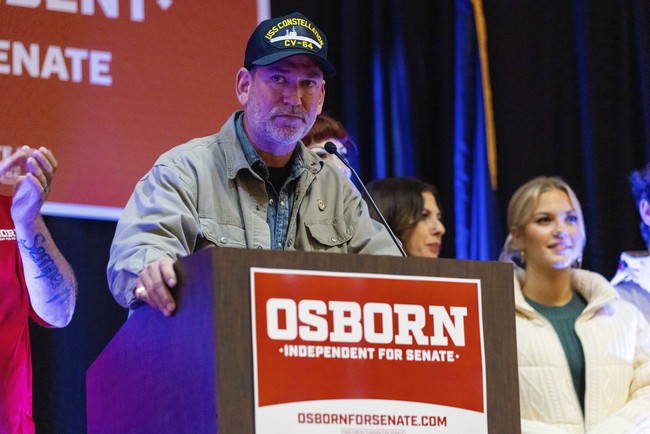
Nebraska’s 2026 Senate contest is drawing attention as incumbent Republican Pete Ricketts seeks a full term while “independent” Dan Osborn runs a campaign that looks anything but neutral. Osborn refuses to say who he’d caucus with but clearly echoes Democratic priorities in interviews, raising questions about what his independence really means. This piece breaks down the key moments from a recent TV interview and why Ricketts remains the strong favorite. Embedded clips from the interview are preserved here for context.
Pete Ricketts was appointed to the seat on January 12, 2023, and then won election in 2024 with 62.6 percent of the vote against Democrat Preston Love Jr. He is now campaigning for a full term, and most handicappers rate the seat as “Likely Republican.” That standing does not stop challengers from trying to reshape the narrative, but the facts still favor Ricketts at this stage.
Democrat Cindy Burbank bowed out of the race, saying she saw no realistic path to victory, which left room for an “independent” challenger to enter the spotlight. Dan Osborn claims an independent label while declining to commit to caucusing with either party, a position that sounds principled until you listen to his policy answers. His answers often mirror standard Democratic talking points, which makes his claimed neutrality hard to square with his stated positions.
Osborn recently sat down with CNN’s Manu Raju on Inside Politics and repeatedly dodged the clear choice most independents face: who will you work with to secure committee assignments and influence? The exchange highlighted both his refusal to name a caucus and a belief that his vote would be sought after, even without formal alignment. The embedded clip follows for readers who want to see the exchange firsthand. :
https://x.com/RNCResearch/status/2091517363359268915
Raju: Yeah, but again, you won’t be able to sit on committees. You need to get a committee assignment, that’s how the Senate operates. If you don’t do the caucus, you say you’re not going to caucus with anyone, you won’t sit on a committee. Won’t that make you less effective?
Osborn: Well, you say I won’t be able to sit on committees, but I beg to differ, I think I’ll uh, be able to get on many committees. LIke I said, people are going to want to be able to, uh, earn my vote (?) to get things done.
That exchange exposes a basic misunderstanding of Senate mechanics or an optimistic political fantasy. Committee seats are allocated through caucus deals, and a lone independent without an agreement would almost certainly be left off those panels. Voters should be skeptical when someone claims independence yet expects the perks of caucus membership without the commitment that makes those perks possible.
Osborn also reiterated positions that line up closely with current Democratic priorities, which makes his “independent” brand look more like a messaging tactic than a substantive stance. He said he’d support codifying Roe v. Wade, opposed a major Republican bill, backed tax increases on the wealthy, and criticized Trump on tariffs. These are classical Democratic positions dressed up in independent language, not a neutral mix of conservative and libertarian ideas.
Again, the interview contains moments where Osborn appears to admit philosophical alignment while insisting on the independent label. The clip below continues the conversation and shows how he frames his bipartisanship as openness to good ideas regardless of origin.
Raju: Yeah, but Mr. Osborn, based on your statement, it sounds like you’re in line with a lot of Democratic positions. You said you support codifying Roe v. Wade, you oppose the president’s Big Beautiful Bill, supported raising taxes on wealthy taxpayers, you’ve criticized Trump on tariffs. So would you agree then, on a lot of major issues, you’re philosophically aligned with most Democrats?
Osborn: I agree, I think a good idea’s a good idea, uh, really, it doesn’t matter to me where it comes from. I’m a lifelong independent, I come from a conservative household, and, you know, I don’t care what party comes up with a solution for health care, because both parties have had control of both the House and Senate in Congress since I’ve been alive, and healthcare still sucks.
Osborn’s line about being open to ideas “no matter where they come from” sounds reasonable until you map those ideas to a clear policy pedigree. When most of the “good ideas” he praises are standard Democratic proposals, independence becomes an optics tool rather than an ideological position. Nebraska voters deserve clarity, not branding tricks that mask predictable policy choices.
Strategically, a self-styled independent who leans Democratic can function as a spoiler or a stealth Democrat in a state that leans Republican. That reality makes the race more interesting, though not necessarily more competitive for Osborn. Pollsters and analysts still tilt toward Ricketts, and party infrastructure in Nebraska remains strongly aligned behind the incumbent.
At the ballot box, labels matter less than actions and alliances. Candidates who refuse to disclose who they’ll work with should be pressed for specifics, because failure to commit has real consequences for committee access and legislative influence. For voters who want conservative representation, those practical outcomes are the deciding factor, not clever marketing or fuzzy independence talk.
Embedded video and audio from the interviews are preserved above for readers who want to watch the moments described. These clips show the awkward dance between a candidate claiming independence and repeatedly endorsing policies associated with the Democratic caucus. The remainder of the campaign will test whether that gap between label and substance matters at the ballot box.
Add comment