
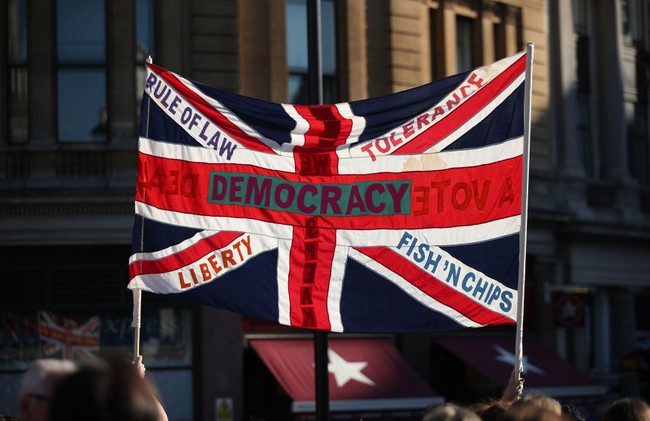
This piece examines the sudden resignation of Keir Starmer, the likely installation of Andy Burnham as prime minister, and the growing public demand in the United Kingdom for a snap general election, with reactions ranging from outrage to calls for accountability.
The swift collapse of Keir Starmer’s leadership has left British politics scrambling and Conservatives smelling opportunity. Andy Burnham, a familiar Labour figure, appears poised to take over with a mandate critics call embarrassingly thin. Across the political spectrum, there’s a loud public voice demanding a fresh vote rather than anointing a new leader behind closed doors.
A recent online poll reported that roughly nine in ten respondents favor a snap election, a figure that would terrify any party relying on a fragile hold on power. Online polls skew toward the disgruntled, sure, but they capture a real sense of national unease. Voters are fed up with opaque political maneuvers and want major decisions returned to the ballot box.
Andy Burnham is set to be installed as Prime Minister in just three weeks – despite having the feeblest mandate in British political history.
The self-styled ‘King of the North’ is on course for a ‘coronation’ next month after Keir Starmer dramatically resigned less than two years after his landslide election win.
But Daily Mail readers led the call for an early election on Monday night, with 90 per cent of more than 100,000 online votes telling Mr Burnham to go to the ballot box.
Opposition figures and commentators are highlighting how narrow Burnham’s local backing was in his Makerfield win, arguing that such a tiny personal vote total hardly qualifies as a national mandate. Nigel Farage and others have bluntly called for immediate elections, saying it would be “ridiculous to pretend that Andy Burnham has any kind of meaningful mandate to lead the country”.
On Monday night, the former Greater Manchester mayor was scrambling to draw up a programme for government after Sir Keir set a timetable that could see him anointed as Prime Minister as early as July 17.
Opposition leaders questioned the right to govern of a man who was backed by just 25,000 voters in the Makerfield electorate – barely 0.05 per cent, or one-2,000th, of the electorate.
Nigel Farage called for an immediate general election, saying it was ‘ridiculous to pretend that Andy Burnham has any kind of meaningful mandate to lead the country’. He added: ‘If Labour thinks it can shove another professional politician into No 10, it has another thing coming.’
Labour’s hesitation to call a snap election looks like simple fear of the ballot box and a reasonable concern they could lose control. The party may prefer a quiet transition rather than risk exposing its weaknesses to voters already angry about immigration, economic mismanagement, and quality-of-life issues. When voters feel ignored, they tend to punish the party in power — especially when a new face feels like more of the same.
Immigration has come up repeatedly in the public’s complaints, as communities report strains on services, pressures on housing, and a sense that national identity is being reshaped without consent. These are the issues that drive turnout and political realignment, and they are the reasons many want a general election now rather than waiting years for the routine schedule.
There’s also a cultural angle. Longstanding British institutions and norms are being tested, and many feel the political class treats ordinary concerns as secondary. That disconnect fuels populist movements and bolsters parties promising to restore order, control borders, and prioritize local communities. When elites move leaders around without public input, it confirms the worst suspicions about how decisions are really made.
G.K. Chesterton’s lines about the quiet English people who “have not spoken yet” feel oddly timely as the country braces for a political shakeup.
Smile at us, pay us, pass us; but do not quite forget.
For we are the people of England, that never have spoken yet.
There is many a fat farmer that drinks less cheerfully,
There is many a free French peasant who is richer and sadder than we.
There are no folk in the whole world so helpless or so wise.
There is hunger in our bellies, there is laughter in our eyes;
You laugh at us and love us, both mugs and eyes are wet:
Only you do not know us. For we have not spoken yet.
Whatever happens next, the pressure for a clear democratic answer is real and growing. The new leader may step into Number 10, but governing without the clear consent of the people invites instability. If Labour wants to calm the nation, the simplest route is to let voters decide at the ballot box rather than pushing a coronation through Westminster.

Add comment