
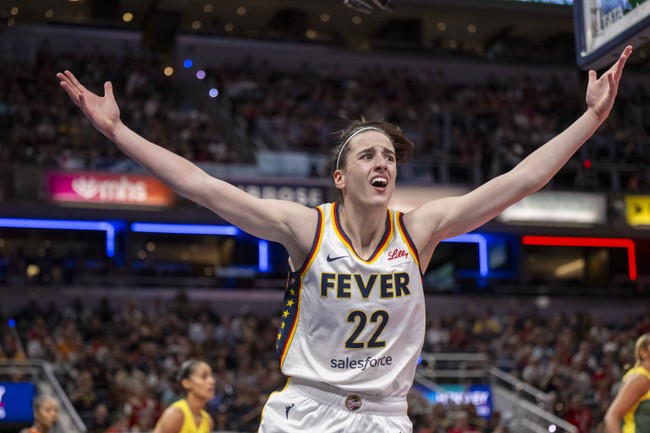
The piece describes an incident at a WNBA game where a mother and daughter were told to cover shirts that read “XX-XY” and faced possible ejection, exploring how teams and venues are handling politically charged apparel and fan reactions amid the broader debate over sex, gender, and women’s sports.
A Georgia mom, Kasey Thomason, and her daughter, Annie, sat courtside at the Fever vs. Dream matchup wearing XX-XY Athletics shirts to support Sophie Cunningham and her stance on keeping women’s sports female. Their shirts were visible and intentionally supportive of a viewpoint about biology and athletic competition. They were enjoying the game until overtime, when security approached them about what they were wearing.
The security guard told them that other fans were offended by their shirts and presented them with a choice: put on provided Atlanta Dream shirts or be escorted out of the arena. Reluctantly, they agreed to wear the provided shirts so they could stay and see the last minutes of play. The Fever won 95-91, but the confrontation left the pair and others asking why a political message about biology warranted removal.
The exchange prompted strong reactions online, with critics calling the action discriminatory and heavy-handed. Outkick’s Jon Root was among those who labeled the treatment as discrimination, arguing the women were singled out for expressing a viewpoint that others found unpopular. The incident sparked debate about free expression at public sporting events and whether teams are applying policies consistently.
Video and interviews from the night captured the women’s surprise and frustration at being forced to cover their shirts. They told a YouTuber they couldn’t understand why their shirts drew negative attention, especially when other fans wearing pro-trans apparel were shown on the jumbotron. The mom and daughter said they saw another fan’s jacket zipped over a shirt reading “protect trans rights” and felt both instances were wrong if stadium staff were selectively policing messages.
Jennifer Sey, founder of XX-XY Athletics, reacted to the incident by calling attention to the team’s response and saying, “What’s up with that?” She later described the garment as the “T-shirt of the resistance” and said she planned to wear it with supporters at an upcoming game in New York. The brand’s response framed the episode as part of a broader pushback against what supporters see as the erasure of biological sex from discussions about women’s spaces.
The controversy did not exist in a vacuum: it comes as the WNBA and other organizations struggle with how to manage conversations around sex, gender identity, and competition. Sophie Cunningham, who recently said she believes biological men should not compete in women’s sports, drew backlash for her remark, and the league reportedly convened discussions about the definition of “woman” without producing a clear policy. That uncertainty filters down to staff at events and leaves enforcement uneven.
Fans and observers described the episode as evidence that the debate has become chaotic and inconsistent. Some commenters labeled it “peak stupidity,” pointing to the oddity of a security guard mediating competing political messages at a basketball game. Others viewed it as symptomatic of a cultural tug-of-war where venues feel pressure to placate whichever side vocalizes offense most loudly in the moment.
The mom and daughter’s account shows how venue staff may be making on-the-spot decisions without uniform guidance, and how those decisions can escalate into public controversies. When a private venue chooses to police speech inconsistently, it invites accusations of bias and fuels further polarization among fans. The situation also raises questions about whether sporting events are equipped to handle politicized apparel and whether clear, neutral policies could prevent similar incidents.
https://x.com/JonnyRoot_/status/2089188991224393877
For many, the incident underscored frustration that simple statements about biology are now treated as provocative. The action taken by arena staff against the XX-XY shirts produced a public reaction from brand founders, content creators, and the broader sports audience. That reaction suggests the matter will continue to draw attention as teams, players, and fans navigate the intersection of politics and athletics.
The episode leaves open practical questions about how franchises will define and enforce dress codes without appearing to endorse one viewpoint over another. Until leagues and teams establish clearer, consistently applied policies, these sorts of confrontations are likely to repeat, with fans on both sides feeling censored or unfairly targeted. The debate over what belongs in women’s sports and how venues should respond to competing messages remains unsettled, and this night in Atlanta is only the latest flashpoint.



Add comment