
Checklist: Rename ICE to highlight political theater; defend federal law enforcement; amplify conservative reactions and satire; cite notable endorsements and history; include official multimedia embeds.
This piece argues, from a conservative perspective, that renaming U.S. Immigration and Customs Enforcement to NICE would be a clever, provocative move that exposes leftist rhetoric as absurd. The idea trades on irony and optics: call the agency something pleasant and force critics to choose words that sound ridiculous. It’s a political prank with the potential to puncture the media’s most overheated narratives while spotlighting the real work agents do at the border and beyond.
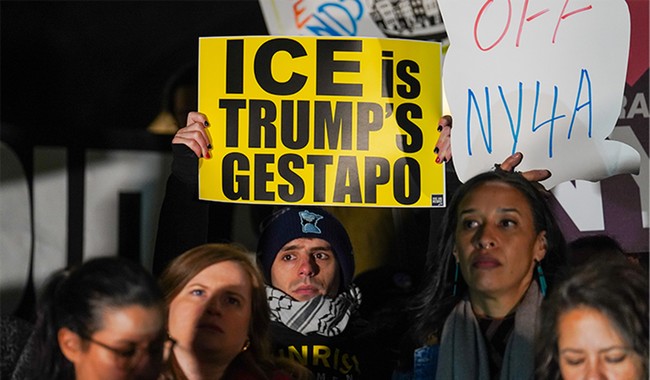
The left has spent years turning federal law enforcement into a caricature of evil, assigning labels like Gestapo and secret police to professionals who enforce immigration law. That fevered rhetoric often ignores the practical consequences of porous borders and policy choices that invite chaos. Conservatives argue that this demonization puts public servants at risk and skews the public conversation away from security and order.
Alyssa Marie recently floated the idea of changing ICE to NICE, with the N standing for national, and it immediately landed as perfect political theater. The suggestion is playful but pointed: it forces opponents to say things that sound extreme, such as “Abolish NICE,” which strips some of the gravitas from their attacks. The concept isn’t brand new; it traces back to a proposal from 2018 by Scott Adams, who suggested renaming the agency to flip the narrative.
President Trump picked up on the idea and publicly reacted with enthusiasm, posting, “GREAT IDEA!” on his platform. That moment turned a clever social media brainstorm into an actual talking point, one that conservatives can deploy to highlight hypocrisy. Whether the president will push a formal name change remains uncertain, but the political value of the idea is clear: it creates a constant, amusing juxtaposition between name and the accusations hurled by critics.
Critics on the left often paint federal law enforcement as villainous while ignoring heroic and mundane acts that protect citizens. When agents respond to violent incidents, render emergency medical aid, or step in to save a child, those stories rarely fit into the caricature that gets repeated on cable news. Conservatives say those concrete examples undercut the caricature and should be amplified without apology.
White House officials have reminded the public that federal law enforcement officers are people with families who perform dangerous jobs. One recent comment put it plainly: “They perform their duties daily, and they have children and families, too.” That line underscores the humanity of people often reduced to political shorthand. It’s a useful counterpoint to the dehumanizing slogans that keep getting recycled.
The Department of Homeland Security released a video highlighting agents’ courage and service, and conservatives point to that material as evidence that mission matters more than labels. Visuals that show bravery and competence make it harder to sustain constant moral panic about a single agency. For critics who trade in overheated metaphors, seeing the real work helps anchor the debate in reality.
Renaming the agency to NICE would be an in-your-face rhetorical tactic designed to make critics choose between principle and optics. If opponents continue to use words like Gestapo while the agency’s official name reads NICE, the cognitive dissonance becomes the story. Conservatives relish the prospect of watching pundits and politicians grapple with language they regularly weaponize.
Some prominent Democrats and progressive activists have built careers attacking law enforcement at the border, and a name change would put a spotlight on that strategy. For conservatives, forcing those figures to say absurd phrases is a way to reveal the performative nature of their outrage. It’s political theater meant to puncture a narrative that seeks to delegitimize enforcement as a policy tool.
There’s also a tactical benefit: reframing the debate around concrete incidents and service-oriented narratives shifts attention away from abstract denunciations. When a 4-year-old is saved or a violent incident is disrupted, those stories resonate with voters more than slogans. Conservatives argue that amplifying those events, alongside a provocative name change, would break the media cycle that often rewards the loudest accusation rather than the most accurate account.
All of this rests on a simple proposition: language matters, optics shape debate, and forcing opponents into awkward verbal corners can be an effective political weapon. Whether the administration actually legislates a new name or simply uses the idea as a rhetorical device, the payoff comes from exposing the gap between rhetoric and reality. For many conservatives, that exposure is long overdue and politically satisfying.
Beyond the laughs, the larger conservative claim is that the left’s rhetoric contributes to a climate of hostility toward public servants who are trying to enforce the law. Name changes won’t fix every problem, but they can shift the battleground. If nothing else, the NICE idea spotlights how absurd political language can be when divorced from the daily work of protecting communities.
Mockery and satire have a role in politics, and renaming an agency for effect is part of that toolkit. The aim isn’t to erase accountability but to challenge a narrative that paints millions of professionals as villains. If the result is awkward cable panels and strained headlines, many conservatives would consider that a small and satisfying victory.
They perform their duties daily, and they have children and families, too.



Add comment