
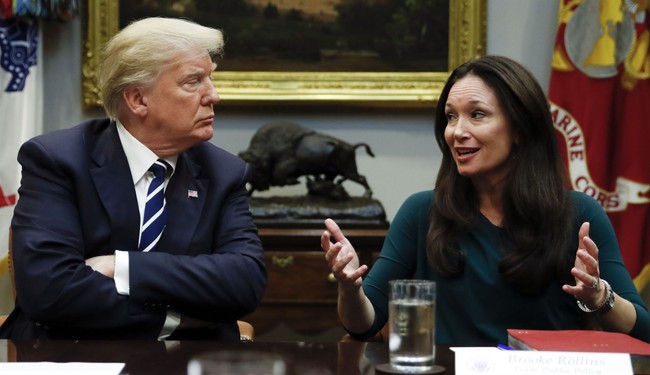
The USDA under Secretary Brooke Rollins is moving to withhold administrative funds from states that refuse to share SNAP enrollee data, framing the move as a necessary crackdown on fraud and protection of taxpayers while prompting fierce objections from Democratic-led states and media outlets.
The Biden-era expansion of SNAP spending has drawn scrutiny, and the USDA says better data-sharing is essential to stop abuse. Secretary Rollins told the cabinet the agency asked states to share their enrollment records so the federal government can help verify eligibility and protect taxpayer dollars. Red and blue states split over that request, and Rollins announced funding will be paused for noncompliant states until they cooperate.
SNAP serves tens of millions of Americans each month and represents a major federal outlay. The program’s scale makes even small fraud rates costly, and the USDA is arguing that more oversight will ensure benefits reach those truly eligible. The administration frames the move as both a fiscal responsibility and a defense of the program’s integrity.
SNAP is the nation’s primary way of providing nutrition assistance to people living at or below the poverty line. It serves approximately 42 million people in 22.4 million households. For those challenged by numbers, that means about one in eight Americans, and about one in six households, use SNAP. About 39 percent of the recipients are children, about 10 percent are disabled between 18 and 59, and another 20 percent are elderly.
The federal government spent $100.3 billion on SNAP in Fiscal Year 2024. Of that sum, about $7 billion went to the states to administer the program. SNAP benefits for FY2024 were about $6 per day per person in a household. The TikTok videos you saw during the shutdown of SNAP recipients with several thousand dollars available on their EBT card are either faked for clout or they are proof of a criminal conspiracy.
Rollins described the scope of cooperation to the president and the rest of the cabinet, saying that a majority of states agreed to the data-sharing plan but many refused. She explicitly tied the refusal by certain blue states to a reluctance to allow federal partnership in rooting out fraud. Her remedy is blunt: pause the administrative funding stream until the states relent and provide the data the USDA requested.
WATCH:
At the heart of the debate is who controls the purse strings. The federal government pays the bulk of benefits and a large share of administrative costs, and the USDA is asserting that federal funding comes with conditions. From Rollins’ point of view, protecting taxpayers by verifying eligibility is a reasonable condition for federal support.
In February of this year we asked for all of the states, for the first time, to turn over their data to the federal government. To let the USDA partner with them to root out this fraud, to make sure that those who really need food stamps are getting them, but also to ensure the American taxpayer is protected. Twenty-one states said yes… 29 states said yes — not surprising the red states — and that’s where all of that data of that fraud comes from. But 21 states, including California, New York, and Minnesota — the blue states — continue to say, “No.” So, as of next week, we have begun and will begin to stop moving federal funds into those states until they comply. And they tell us and allow us to partner with them to root out this fraud and to protect the American taxpayer.
As Joe Biden was working to buy an election a year ago, he increased food stamp program funding by 40 percent, so, now we continue to roll that back.
Critics argue the USDA request raises privacy and legal concerns, and some news outlets question whether the department has the authority to demand state-held enrollee records. Those objections predict legal fights, and Democratic governors are already pushing back. But the administration insists this is not about politics; it’s about ensuring program integrity.
Opponents characterize the move as punitive and say refusing states are defending constituent privacy and state authority. Proponents counter that when the federal government funds a program heavily, accountability must follow. Rollins’ actions make clear the administration is willing to use funding levers to secure that accountability.
Another line of attack from critics is that SNAP fraud is minimal and the USDA is overstating the problem to justify cuts and oversight. The USDA counters with concrete cases and audits showing long-running schemes and regional spikes in abuse that undermine public trust. That tension between perceived scale and documented cases fuels the fire over data access and enforcement tools.
There are also cultural flashpoints complicating the discussion, including the revelation of fraud schemes in specific communities that has raised public frustration. Those cases have hardened resolve among some policymakers to pursue aggressive cleanup. Rollins’ announcement signals the administration intends to press its advantage while legal and political battles play out.
As funds are suspended and states consider their next steps, the debate will likely move into the courts and into the 24-hour news cycle. The stakes are real for administration of SNAP, the millions who rely on its benefits, and the taxpayers who fund it. How this standoff resolves will set a precedent for federal oversight of state-administered benefit programs.
In its statement to The Post, USDA claimed baselessly that states that refuse to turn in their constituents’ data are choosing to “protect illegals, criminals, and bad actors over the American taxpayer.” While Rollins and other Trump administration officials have claimed that SNAP is rife with fraud, experts have said that fraud in the program is minimal.
Rollins’ program of conditional funding and data requests will continue to provoke resistance, and Democrats will continue to frame the move as weaponization of federal power. The administration, for its part, is betting that tougher oversight and targeted pressure will yield cooperation or force a legal resolution that clarifies federal authority. The coming weeks will show which states cave, which fight, and how far the USDA will go to protect taxpayer dollars.


Start now generating extra home based cash by doing very easy and simple job from home. Last month i have earned $19753 from this job in my part time. This job is just awesome and its earning are greater than 9 to 5 office job.
Here is I started_______ EarnApp1.Com