
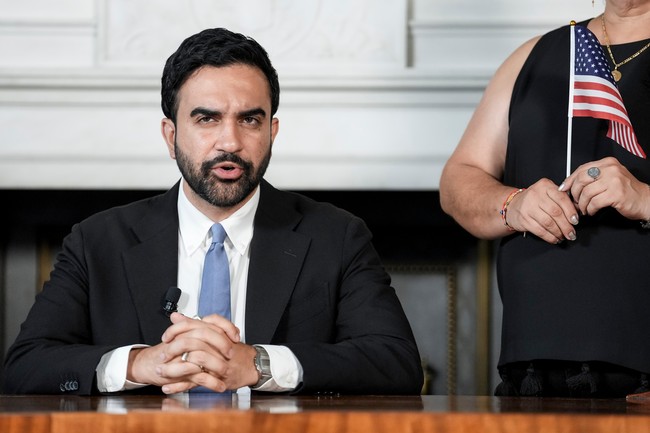
This article examines the backlash in New York after Mayor Zohran Mamdani posted Tisha B’Av wishes shortly after a fiery public attack on Israeli Prime Minister Benjamin Netanyahu, showing how tone-deaf political gestures can spark fierce responses from Jewish leaders and commentators across the city and beyond.
The mayor’s short message, posted hours after a highly charged press appearance, landed like a cold apology dropped into a political firestorm. “Wishing a peaceful Tisha B’Av to Jewish New Yorkers across the five boroughs,” Mamdani said. “May all observing have a safe and meaningful fast.”
The timing was the issue more than the words. Many residents saw the greeting as a shallow attempt to pivot away from his earlier rhetoric, which labeled Netanyahu a “war criminal” and the “architect of a horrific genocide.”
The response on social media was immediate and savage, and not just from anonymous accounts. Many replies of Barstool Sports founder Dave Portnoy, who kicked off the barrage with, “This f***ing guy.” That blunt reaction reflected a wider sense that sincerity matters more than optics on days of mourning.
Others offered fuller critiques that put the post in historical and moral context. “You should understand how insulting this is at some level. Tisha B’Av is a day of mourning for the destruction of ancient Jerusalem and also for every other tragedy in Jewish history,” wrote one critic . “Mamdani is a contemporary incarnation of that evil. This is like wishing Americans a happy 9/11.”
https://x.com/NYCMayor/status/2080063411337978114?ref_src=twsrc%5Etfw
The metaphor-heavy responses kept coming, sharpening the point that this was not merely nitpicking but a genuine cultural and emotional misstep. “You’ve got to be kidding me, right? This is like Satan wishing you a Happy Easter,” another voice observed . Those comparisons framed the post as an insult rather than a comfort.
Several prominent Jewish voices joined the chorus, posting comments and videos that called out the mayor’s record on matters important to the community. The exchanges were not just about a single tweet; they were tied to a pattern of statements and associations that rankled many observers.
At the same time, the mayor’s office has been under scrutiny for other moves that raised eyebrows, including reported outreach efforts to hostile foreign actors. That background amplified the sense that the Tisha B’Av greeting was politically calculated rather than heartfelt.
Critics noted that the mayor’s earlier press remarks had been confrontational and theatrical, and that the sudden note of condolence felt inconsistent with his behavior. As one thread of the controversy highlighted, a top aide reportedly moved to arrange meetings with unfriendly foreign diplomats around the same time the mayor was publicly attacking an allied leader. That contradiction deepened mistrust.
The mayor’s admission that he lacked authority to arrest a foreign head of government only added fuel to the fire. Observers argued that the grandstanding served to mobilize the most extreme elements of his base rather than to govern responsibly. For many in the city, leadership should be about protecting citizens and stabilizing institutions, not theater that inflames international tensions.
Those who warned about the consequences of this approach painted a picture of a city paying the price for political performance. They argued that when public officials prioritize attention-grabbing stunts, the practical problems facing New Yorkers—crime, services, and public safety—get sidelined. The criticism was framed bluntly: if the mayor is focused on grandiose gestures, the day-to-day damage to the city follows.
Across the debate, questions about sincerity and competency overlapped with deeper fears about ideological sympathies and alliances. For many critics, a simple holiday greeting could not erase years of rhetoric and connections they find troubling. The pushback made clear that gestures on sacred days carry heavy weight, and when those gestures feel hollow they provoke a powerful, and often unforgiving, response.
The exchanges that followed show how political theater and community standards collide in a city where faith, history, and politics are tightly entwined. In this case, a brief message intended as consolation turned into a lightning rod, exposing fractures between the mayor’s language and the expectations of many Jewish New Yorkers.



He needs to be charged, prosecuted and found guilty then locked away!!!