
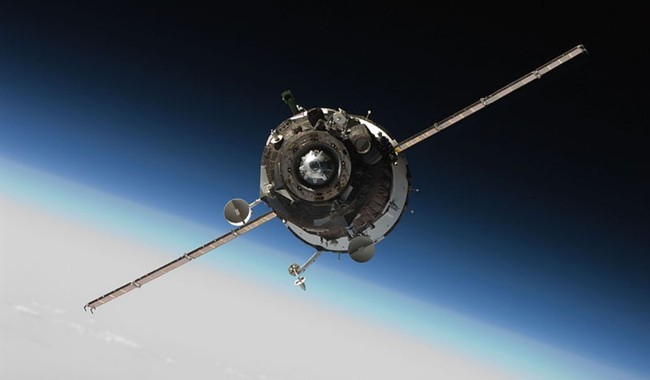
The Neil Gehrels Swift Observatory, launched in 2004 and now facing orbital decay, is being rescued by a private robotic servicer in a move that highlights how commercial partnerships can extend valuable space assets, cut costs, and address solar-driven atmospheric drag that threatens satellites in low Earth orbit.
The Swift telescope has far outlived its original two-year design life and continues to deliver critical data on gamma-ray bursts and other high-energy phenomena. Recent increases in solar activity have heated and expanded Earth’s upper atmosphere, raising density at higher altitudes and increasing drag on satellites like Swift. That extra drag has accelerated Swift’s descent and created a real risk of reentry by the end of 2026 unless action is taken.
NASA contracted Katalyst Space Technologies to send the LINK robotic spacecraft on a Northrop Grumman Pegasus XL to rendezvous with Swift, capture it, and raise its orbit. The quoted price for this rescue effort is roughly $30 million, a fraction of what a new mission would cost. This operation is being billed as a first-of-its-kind practical on-orbit servicing mission rather than a mere demonstration.
Solar flares and geomagnetic storms increase thermospheric temperatures and expand the atmosphere upward, which in turn produces greater aerodynamic resistance for anything in low Earth orbit. The physics is straightforward: more particles at a given altitude mean more drag, and over time that drag subtracts orbital energy and lowers altitude. That process can turn decades of steady operation into an urgent recovery mission during a period of heightened solar activity.
https://x.com/manavspeakfacts/status/2071226785446899793
On-orbit servicing moves the conversation from replacement to stewardship, and that matters for both science and taxpayers. Swift covers a rapid-response niche that larger observatories do not, reacting to transient events and alerting the broader community. Preserving that capability with a relatively modest commercial contract stretches past investments and keeps unique scientific capabilities online.
Practical experience with robotic rendezvous, grappling, and orbit raising also builds expertise useful across civil, commercial, and defense space sectors. The technical skills proved here can translate to refueling, debris removal, or life-extension services for communications and reconnaissance satellites that otherwise lack onboard propulsion. Those capabilities could reduce the need for costly replacements and improve resilience across the orbital economy.
Critics will argue about spending on aging hardware when instruments like the James Webb Space Telescope are operational, and that debate is fair. Swift’s role is complementary: it excels at fast reaction and wide-area alerts, which feed follow-up observations by larger telescopes. The choice to spend modestly to extend a functioning asset rather than fund a full replacement is a pragmatic allocation of limited resources.
This mission also exposes the reality that many valuable satellites were designed without indefinite orbital maintenance in mind, and that design choice is increasingly consequential. Hubble, for example, operates in a similar altitude regime and faces similar drag dynamics without easy solutions if its propulsion is inadequate. Anticipating atmospheric variability driven by the solar cycle should be part of long-term mission planning going forward.
Partnering with agile private firms allows federal agencies to get capabilities into space faster and at lower cost than some traditional procurement paths. When a commercial vendor can deliver a targeted service for tens of millions of dollars, that frees public money for other priorities and accelerates solutions. That model of government enabling private innovation rather than trying to do everything in-house deserves more attention.
The Swift rescue will be watched closely for lessons on operational procedures, risk management, and cost-effectiveness. Success would validate on-orbit servicing as a practical tool for extending mission lifetimes and protecting investments in space infrastructure. Failure would still yield technical lessons and underscore the need for redundancy and contingency planning in satellite architectures.
Beyond immediate technical outcomes, this operation has policy implications for how we think about space stewardship. Recognizing environmental factors like solar-driven atmospheric expansion and planning for them makes missions more resilient. Using commercial solutions to solve focused problems can preserve capabilities, protect taxpayer investments, and broaden the industrial base the nation relies upon for space access and defense.
NASA’s move to employ a commercial booster-servicer to save Swift reflects an approach that prioritizes results and value. Extending proven assets through partnership and targeted intervention keeps vital science online while building practical skills for future missions. The effort balances scientific need, fiscal restraint, and technological innovation in a way that could become standard practice as more satellites face similar pressures.
NASA’s Swift Boost mission is set to launch on June 27, aiming to extend the life of the nearly 22-year-old Swift Observatory. As Earth’s thin upper atmosphere slowly pulls the satellite into a lower orbit, this bold mission will raise its altitude, giving the legendary space telescope more years to continue studying gamma-ray bursts, black holes, neutron stars, and the universe’s most powerful cosmic explosions.



Add comment