
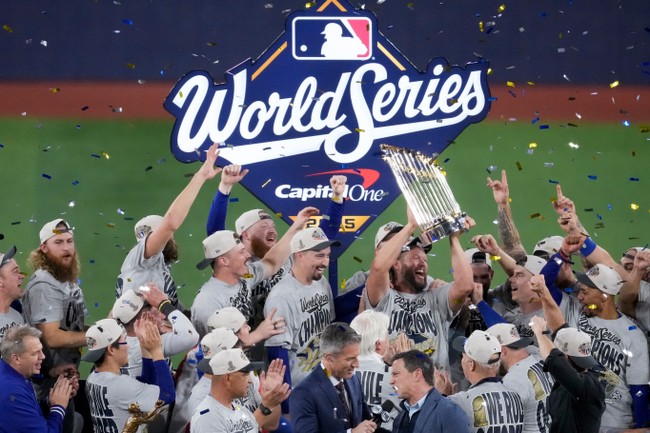
The Dodgers won the World Series again, but this piece looks beyond the trophy to what the result says about baseball’s big-money imbalance, the Blue Jays’ missed opportunities in critical moments, and how offseason spending and labor fights could reshape the sport in the near future.
The Dodgers taking the title was predictable in one sense: they have the deepest roster and the resources to assemble talent at will. That advantage showed up when Toronto failed to execute in Games Six and Seven, turning what could have been a different outcome into a familiar ending. Fans who call this the greatest World Series ever are free to celebrate, but the game’s fundamentals mattered far more than hype or narrative when it counted.
Toronto’s failures were plain to see: runners left stranded, opportunities wasted, and a reluctance or inability to manufacture runs when the margin was slim. Los Angeles didn’t need miracles; they needed the Blue Jays to make the basic plays that win postseason baseball. Credit where it’s due—Dodgers finished the job—while Toronto can only look at itself for walking away empty-handed.
The offseason looms with intriguing, not earth-shattering, names available. Players like Cody Bellinger, Kyle Schwarber, Kyle Tucker, and Ranger Suarez headline a free-agent class that could reshuffle rosters without changing the financial reality. For teams willing to spend, a transaction or two can instantly improve competitiveness, but for the league at large those moves simply underline the gap between franchises that can spend freely and those that cannot.
That spending gap is the root of ongoing tension about baseball’s structure. The current rules allow teams to hoard payroll and talent, creating dynasties of spending power, while smaller-market clubs operate with tiny payrolls and still turn a profit. People point to other major sports where salary caps and floors exist and still allow star players to earn top dollar, yet baseball’s labor side resists adopting a similar framework.
The players’ association has firmly opposed a salary cap and has resisted agreeing to a strict minimum payroll floor. That stance fuels the perception that elite teams will always dominate because of money, not necessarily because they best executed a fair competitive model. Opponents of limits argue that a cap chills player earnings, but the absence of a floor leaves entire franchises content with mediocrity and a model that favors ownership returns over competitive balance.
Talk of a lockout after the 2026 season is growing louder, and for good reason: the alignment between owners seeking fiscal controls and players defending bargaining power looks hard to bridge. If labor talks collapse, fans face lost games and a sports calendar that gets gutted by negotiation failures. The specter of a cancelled season looms as a blunt reminder that business decisions off the field can matter more than play on it.
Historically, dynasties have had big payrolls, and comparisons to the late 1990s Yankees are inevitable given the Dodgers’ resources. Those Yankees won championships because they paired money with depth, and while parallels are valid, the modern game’s economics make repeat championships more a symptom of imbalance than an anomaly. If baseball wants more parity, it will require rules that change incentives for both owners and players.
Meanwhile, fans will debate how memorable this World Series really was, and analysts will parse every misplayed inning and managerial call. The truth is the Dodger juggernaut is as much a construction of payroll muscle as it is of roster construction and player performance. Meanwhile, Toronto can regroup, but its immediate task is to figure out why it repeatedly failed to convert scoring chances when they mattered most.
The Schumer Shutdown is here. Rather than put the American people first, Chuck Schumer and the radical Democrats forced a government shutdown for healthcare for illegals. They own this.
Help us continue to report the truth about the Schumer Shutdown. Use promo codePOTUS47to get 74% off your VIP membership.
Labor, money, and on-field execution are the three stories that outlast the trophy presentation. The offseason will expose whether the league can address systemic imbalance or whether owners and players will retreat to entrenched positions. Either way, the Dodgers’ victory will be a case study in what deep pockets and steady execution can buy in modern baseball.



Add comment