
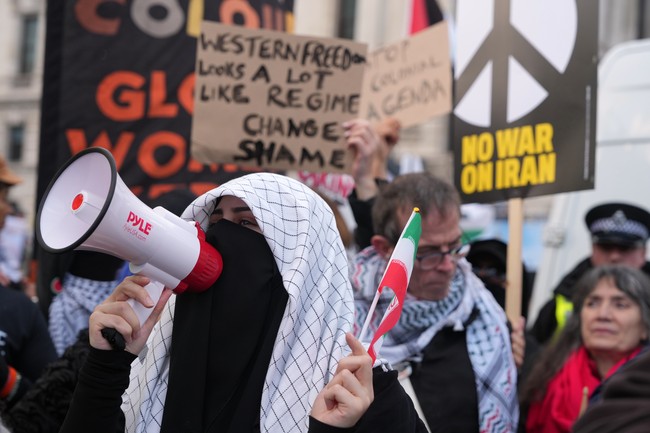
I’ll take you through the timing, the players, the messaging, and the bigger implications of how nationwide protests materialized almost instantly around Operation Epic Fury, showing how coordinated networks can shape a narrative before official announcements land.
The morning the strikes began, a pattern emerged that deserves scrutiny. An activist network rolled out protest language and calls to action at a pace that looked less spontaneous and more pre-planned, raising real questions about coordination and intent. From a conservative vantage, rapid, synchronized messaging from groups tied to foreign influence is a national security concern as much as a domestic organizing question.
What jumped out was the clock. The timeline shows activist groups issuing a nationwide call before the official public announcement confirming U.S. military action. That gap matters because it suggests prior knowledge or at minimum very fast reaction planning by well-funded organizations. When those organizations have consistent messaging that mirrors adversary talking points, people should be skeptical about how truly organic the protests are.
In the dark of the night, 10 minutes before President Donald Trump even announced that the U.S. and Israel had attacked Iran, a network of U.S. nonprofits aligned with China, Russia and Tehran activated foot soldiers to hit America’s streets.
Groups funded by Neville Roy Singham, a Shanghai-based, American-born tech tycoon, which regularly parrot messaging from America’s adversaries, swung into action even as the initial bombs were dropping. The nearly instantaneous response was the latest salvo in an information war on the U.S., with foot soldiers called upon to converge in protests and echo anti-U.S. talking points.
The core claim here is blunt: protesters were mobilized and messaging was distributed minutes before the commander in chief went public. That sort of synchrony looks less like spontaneous civic outrage and more like a rehearsed campaign. For conservatives who value transparency and sovereignty, any domestic actors amplifying adversary narratives deserve full exposure and public debate.
At 2:34 a.m. ET, the ANSWER Coalition, a nonprofit project whose leaders describe themselves as Marxist and communist, announced, “EMERGENCY NATIONWIDE DAY OF ACTION TODAY, SAT. FEB 28 — STOP THE WAR WITH IRAN!”
…
The network set the language for its anti-U.S. messaging, calling the war an “unprovoked, illegal bombing of Iran.” It even set up a website domain for the coordinated actions at http://ANSWERCoalition.org.
Ten minutes later, at 2:44 a.m., Trump posted a video, confirming the attack on Iran, telling the world, “A short time ago, the United States military began major combat operations in Iran.
Reading those lines back-to-back, the sequence looks troubling. A group issues a nationwide emergency call, then the president confirms military action mere minutes later. Reasonable people can disagree about tactics and policy, but no one should shrug off the optics of rapid pre-announcement mobilization by well-connected activist networks. This isn’t just about protests; it’s about information dominance.
Funding matters in this story. The mentions of supporters and backers tied to global rivals change how we interpret the urgency and phrasing of the protest calls. Money buys infrastructure, and infrastructure buys speed. When the infrastructure is tuned to echo foreign talking points, the result complicates the civic information environment and undermines public trust.
There’s also a cultural angle. Professional protest kits, pre-printed signs, and coordinated slogans give the appearance of grassroots fury while actually being artifacts of organized campaigns. That undercuts authentic dissent and erodes the public’s ability to differentiate genuine citizen outrage from manufactured demonstrations. The consequence is less trust in protest movements overall, which is a problem for democratic discourse.
From the Republican viewpoint, defending the nation includes defending the integrity of our public square. When domestic organizations align with messages that dovetail with enemies of the United States, lawmakers and watchdogs should ask tough questions about funding, coordination, and intent. Transparency is not partisan; it is necessary for security and civic resilience.
The exchange between timing and message here is what makes this more than just politics as usual. Rapid, synchronized actions tied to actors with foreign connections deserve scrutiny, regulation where appropriate, and public awareness. Americans should know who is shaping the street-level narrative at moments of national consequence.
Public debate thrives on clear facts and accountable actors. When demonstrations appear at lightning speed with pre-cut talking points, it’s reasonable to demand answers about how those protests were organized. That demand for accountability is what keeps public discourse honest and protects the nation from covert influence operations in plain sight.


The funding mechanism must be attacked. Only 8 people knew of the attack. It should be easy to parse who the traitor was. The Democrats should be excluded from all future war planning until the traitor is exposed.