
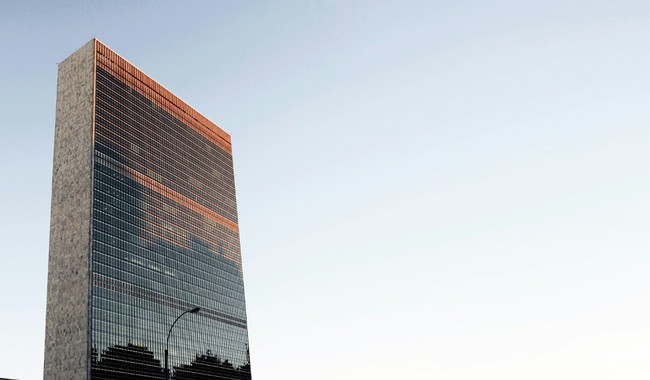
The United Nations has handed Iran a significant policy role, and that decision demands a direct Republican response: this is wrong for American interests, wrong for human rights, and a clear sign the UN has drifted from serious international leadership into cynical politicking.
The UN’s latest move to seat Iran on a committee influencing human rights, women’s rights, disarmament, and counterterrorism is beyond tone-deaf. The country in question is a state sponsor of terror with a horrific record on basic freedoms, and giving it influence over these subjects is the political equivalent of inviting the arsonist to inspect fire codes. America should not legitimize regimes that systematically abuse rights and fund terrorism.
For decades many Republicans have viewed the UN as an organization that prioritizes bureaucratic consensus over core American principles. We have seen peacekeeping missions go sideways, aid funneled through corrupt channels, and votes that consistently single out democracies while ignoring brutal autocracies. Those patterns have hollowed out any remaining argument that continued U.S. membership automatically advances liberty or our strategic interests.
Western democracies have options when it comes to protecting the rules-based order they claim to defend. They can demand higher standards for membership in key committees and refuse to reward serial human rights violators with policy influence. The refusal to block Iran’s election suggests either a failure of political will or a cynical calculation that scoring diplomatic points matters more than standing up for human rights.
The decision drew sharp criticism from UN Watch, a Geneva-based watchdog group.
Hillel Neuer told Fox News Digital: “By their cynical actions at the UN, major Western states have betrayed their own human rights principles, severely undermining the rules-based international order that they claim to support.”
“We note that the EU states clearly had another option. They did take action in recent years to stop Russia from getting elected to similar bodies, and so we deeply regret that they failed to do the same now to stop the election of serial violators such as Iran, China, China, (sic) Cuba, Nicaragua, Saudi Arabia and Sudan.”
The public outrage this decision triggers is not just partisan noise; it reflects a real strategic dilemma. Iran’s regime sponsors proxies across the Middle East, suppresses dissent at home, and treats women and minorities as second-class citizens. Allowing such a regime to claim legitimacy on questions of human rights makes a mockery of institutions designed to defend the vulnerable.
Beyond principle, there are practical consequences for American taxpayers. The United States provides a large share of the UN budget and underwrites many of its operations. That funding effectively subsidizes the same forums that hand influence to adversaries and abusers. Many Republicans argue that if our money props up an organization that repeatedly rewards bad actors, then Congress and the president should reconsider whether that money is being well spent.
There is also an electorate angle. Voters who care about national security and traditional values see this as a betrayal by Western governments that had the ability to stop such elections. If democratic states want to maintain moral and geopolitical credibility, they must use their leverage. Allowing Iran to sit on influential committees without consequence erodes faith in collective institutions and in the leaders who tolerate it.
Some will say leaving the UN is extreme. Others will push for reform from within. Both positions deserve debate, but the baseline Republican view should be clear: the United States must prioritize national dignity and security. When international bodies reward regimes that oppose our values, we must respond with policies that protect American taxpayers and American principles.
Concrete moves could include conditioning funding on governance reforms, demanding stricter criteria for committee membership, and coordinating with like-minded allies to block candidates that violate basic human rights. If reform proves impossible, withdrawing financial support and reconsidering membership becomes a legitimate tool to force meaningful change. The central point is accountability—institutions that no longer honor their stated missions should face consequences.
History shows that great powers withdraw diplomatic cover when necessary, and sometimes that pressure produces reform. If Washington made clear that UN privileges were tied to adherence to minimum standards, the institution might rethink who it elevates. Until then, American leaders should not pretend that business as usual serves our national interest when institutions repeatedly reward those who abuse the vulnerable.
The U.S. government must weigh its options and speak plainly. Standing by while Iran gains policy influence is not a neutral act; it is an endorsement by omission. Republicans who care about liberty, security, and fiscal prudence should demand a reassessment of our relationship with an organization that allows such contradictions to persist.


Get the UN the hell out of America; it is now serving Satan along with all of the Globalist, Freemason, Illuminati Cabal of Demons!