
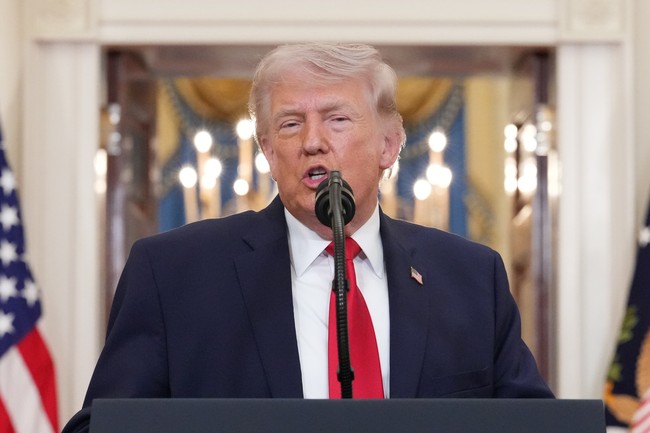
President Donald Trump told the nation that the campaign against Iran is far from over, warning of a stepped-up phase if negotiations fail and laying out specific targets and timelines. He said U.S. strikes have already degraded Tehran’s military capability, stressed a refusal to allow a nuclear-armed regime, and threatened strikes on critical infrastructure if talks collapse within weeks. His message combined blunt military rhetoric with economic and energy claims meant to reassure Americans while signaling harsher measures ahead.
Trump opened his address by claiming broad operational success after a month of strikes and raids, portraying Iran’s forces as severely damaged. He emphasized disruption of missile and drone networks and focused on structures tied to the Islamic Revolutionary Guard Corps. In his telling, this campaign was not random but a targeted effort to deny Iran the ability to wage conventional or nuclear war.
“Tonight, Iran’s Navy is gone. Their Air Force is in ruins. Their leaders… are now dead… their weapons factories and rocket launchers are being blown to pieces… Never in the history of warfare has an enemy suffered such clear and devastating, large-scale losses in a matter of weeks.”
That quote framed the administration’s narrative: decisive action that has inflicted rapid, large-scale damage. From a Republican perspective this tone underscores a policy of strength and deterrence, not endless negotiation or appeasement. Trump framed the U.S. approach as finishing what previous leaders talked about but failed to accomplish.
“Their command and control… is being decimated as we speak… their ability to launch missiles and drones is dramatically curtailed.”
He repeatedly returned to the theme that degrading Iran’s military is only step one. The explicit aim, he said, is to prevent Tehran from rebuilding key capabilities, and particularly anything related to nuclear weapons. This sets a higher bar for what the administration considers acceptable outcomes from diplomacy.
“We totally obliterated those nuclear sites… the regime then sought to rebuild their nuclear program at a totally different location.”
Trump insisted that the potential of an Iranian nuclear weapon is intolerable and portrayed the strikes as a necessary preventative measure. He used blunt language about permanent consequences for any regime that pursues such weapons, positioning the U.S. as willing to act decisively rather than rely solely on negotiations. The message is clear: deterrence backed by action.
“For these terrorists to have nuclear weapons would be an intolerable threat… I will never let that happen.”
After 32 days of operations, Trump stated the administration’s assessment that Iran’s conventional threat had been largely neutralized. He did not suggest immediate withdrawal of pressure; instead, he warned that Washington would escalate if talks fail and made a specific timeline central to his warning. That deadline creates leverage and forces other governments to reckon with the implications of continued talks.
“We are in this military operation… for 32 days, and the country has been eviscerated and essentially is really no longer a threat.”
His most striking escalation was the pledge to return Iran to the “Stone Age” if diplomacy collapses, an intentionally severe threat aimed at compelling a deal. He spelled out targets beyond military assets, naming electric generating plants as potential simultaneous strikes that would cripple basic infrastructure. Moving to those targets would be a major step and signals that the administration is prepared to impose costs that reach deep into the regime’s capacity to function.
“Over the next two to three weeks, we’re going to bring them back to the Stone Age where they belong.”
He made the consequences concrete: if no agreement is reached in the stated window, the U.S. would “hit each and every one of their electric generating plants very hard and probably simultaneously.” That language aims to deter by outlining a predictable, harsh response to stalling or bad-faith negotiations. From his perspective, the goal is to make reconstruction impossible without surrendering nuclear ambitions and disruptive regional behavior.
“If during this period of time, no deal is made… we are going to hit each and every one of their electric generating plants very hard and probably simultaneously.”
Trump also addressed economic fallout and energy, blaming recent short-term gas price movements on Iranian attacks on commercial tankers. He argued that domestic oil and gas production leaves the U.S. less vulnerable than in the past, citing increased output as a strategic advantage. That claim ties energy policy to national security in his argument for a tougher posture toward Tehran.
“This short-term increase has been entirely the result of the Iranian regime launching… attacks against commercial oil tankers.”
He reiterated that Iranian oil facilities had not been targeted so far, but warned they could be struck and removed from play, framing that as another lever. The speech included a pointed admonition to nations reliant on the Strait of Hormuz: do not always expect the United States to guarantee free passage without consequences for those who threaten it. The administration’s position, he said, is to protect American interests while making clear the costs to adversaries.
“Because of our ‘drill baby drill’ program, America has plenty of gas… we produce more oil and gas than Saudi Arabia and Russia combined.”
Wednesday’s address left negotiations open but set a short window and a clear set of consequences if Tehran fails to agree. The administration is presenting strength as the surest path to preventing nuclear proliferation and securing regional stability, insisting that action, not mere rhetoric, will decide the outcome. Watch the full speech below:



Add comment