
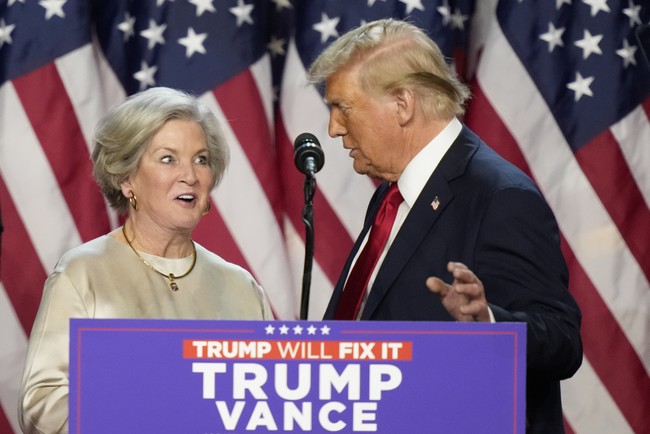
Susie Wiles says President Trump will go all-in for GOP candidates in the 2026 midterms, treating the campaign like a continuation of 2024. This article explains that strategy, why it departs from midterm convention, the argument about turnout, and how nationalizing races could help Republicans regain momentum.
White House Chief of Staff Susie Wiles has made a clear choice: put President Trump at the center of the midterm strategy and actively campaign for Republican candidates nationwide. That approach rejects the long-standing midterm playbook of keeping federal figures at arm’s length. It signals a confident, unapologetic embrace of the message and energy that produced a decisive victory in 2024.
Historically, parties have tried to localize midterms and shield candidates from controversial national figures to avoid energizing the opposition. This time, Wiles argues the opposite: bring the top of the ticket into play because he mobilizes voters who might otherwise sit out. The idea is straightforward—if he’s a turnout machine, put him to work where turnout matters most.
“Typically, in the midterms, it’s not about who’s sitting at the White House. You localize the election, and you keep the federal officials out of it,” Wiles said in an appearance on “The Mom View” podcast. “We’re actually going to turn that on its head and put him on the ballot.”
Wiles doubled down on the turnout argument by noting real-world examples where his absence showed up in results. “Because so many of those low propensity voters are Trump voters,” she said, pointing to 2025 outcomes that revealed what happens “when he’s not on the ballot and not active.” Her case rests on a pragmatic view of who actually votes in tight races.
“He’s going to campaign like it’s 2024 again…He’s a difference maker, and he’s certainly a turnout machine.”
The decision to nationalize the midterms reflects a strategic calculation: the issues and personalities that motivated voters in 2024 can do the same work in 2026. Republicans can leverage rallies, endorsements, and the President’s profile to drive turnout in swing districts. That kind of energetic ground game targets the working-class voters who swung key states and who are prime movers in close contests.
Some Republicans will bristle, recalling midterm missteps where the party underperformed despite favorable circumstances. The losses in 2018 and the missed “red wave” in 2022 left a sour taste for those who prefer a low-profile White House during midterms. But the core question is whether hiding a major political asset made sense when the alternative is to use that asset to deliver votes and margins.
Critics point to analyses that argue blanket mobilization could backfire in some scenarios, and those points deserve attention. A data-based critique has been offered by opponents of pure nationalization, who warn about overreaching. Still, the pro-Trump argument emphasizes proven turnout benefits among demographics the GOP needs to lock down to win close races.
One well-known Democrat analyst noted the scale of the 2024 advantage when Trump was on the ballot, arguing that broader turnout favored Trump even more than the media suggested. David Shor, a Democrat data scientist and political consultant, challenged the idea that mobilizing everyone would help Democrats, saying, “The reality is if all registered voters had turned out, then Donald Trump would’ve won the popular vote by 5 points [instead of the roughly 1.6+ points].”
“So, I think that a ‘we need to turn up the temperature and mobilize everyone’ strategy would’ve made things worse.”
The contrast between the President’s mobilizing power and the GOP Congress’s mixed record since returning to leadership provides political cover for Wiles’ plan. If nationalizing the midterms brings rallies, energy, and clear messaging to the ballot, it can offset the disappointment voters felt about legislative inertia. The strategy bets that voters reward visible activism more than passive stewardship.
Operationally, this means a full-throttle campaign calendar with appearances and endorsements tied to local races that need the extra lift. It’s a simple, aggressive bet: put the most consequential political figure in modern American politics in front of the voters who decide close contests. If turnout is the margin, then turnout is the target.
Republicans who worry about backlash should weigh that fear against the alternative—allowing opposition voters to set the narrative and hope localized strategies carry the day. Wiles’ plan is built on a different faith: that an assertive, national message built around Trump’s strengths will deliver the working-class turnout and enthusiasm necessary to flip seats. The coming months will test whether that faith pays off.

Add comment